The New Hybrid Customer: From Retail to the Metaverse, How to Design Marketing Without Physical or Digital Borders
 Yacarlí Carreño · 27 Oct, 2026 · Digital Marketing · 10 min
For years, companies have organized their marketing strategies around an apparently logical distinction: the physical world on one side and the digital on the other. Stores had their own business objectives, ecommerce functioned as an independent channel, and social networks were responsible for generating visibility and attracting traffic. Each space had its managers, budgets, and performance indicators. The consumer, however, was never particularly interested in respecting these divisions.
Today, it is possible to discover a product while browsing Instagram, check its features on a brand’s website, look for reviews on other platforms, visit a store to check its quality, and end up buying it from a mobile device several days later. From there, the experience can continue through an email with complementary recommendations or participation in a digital community linked to that same brand. For the company, each interaction may belong to a different channel. For the consumer, however, they are all part of a single experience.
This behavior is not entirely new, but its normalization is transforming marketing rules. The hybrid customer is not simply someone who buys both online and offline. It is a consumer who moves between physical and digital environments naturally, uses each to meet different needs, and expects brands to recognize the continuity of their journey.
The real transformation, therefore, does not consist of the emergence of new channels. It consists of the fact that the boundaries companies continue to use to organize themselves make less and less sense from the consumer’s perspective.

The hybrid customer doesn’t think in channels, they think in needs
One of the most widespread ideas about the digitization of commerce is that the internet would progressively displace physical stores. For a time, much of the conversation about the future of retail revolved around this supposed substitution: ecommerce represented modernity, and the traditional establishment seemed doomed to lose relevance.
Reality has turned out to be much more complex.
In an analysis published in 2021, McKinsey noted that approximately 60 to 70% of consumers, depending on the category, combined research and shopping in physical stores and online channels. The study also highlighted that the presence of physical establishments could boost digital sales in their areas of influence. Although these figures correspond to the context of that time and should not be interpreted as a current snapshot of the market, they help understand something fundamental: both environments do not necessarily function as competitors, but as complementary spaces within the same purchase decision.
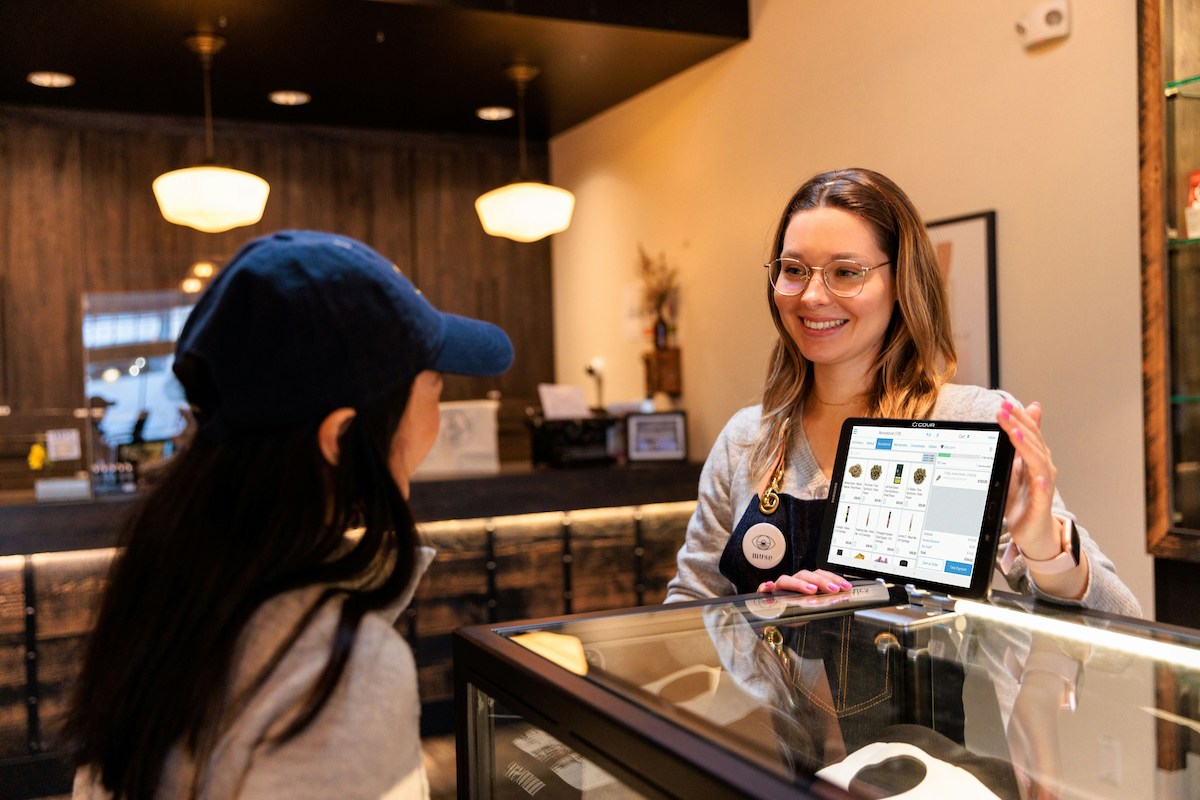
The physical store still offers experiences that a screen can hardly fully reproduce: touching a fabric, checking the real size of an object, receiving personal advice, or enjoying the social component of a purchase. The digital environment, on the other hand, facilitates comparison, expands access to information, and allows the process to continue without depending on a specific location or schedule.
Hybrid customers uses these possibilities in a complementary way. They do not necessarily feel like they are leaving one channel to enter another. They simply continue moving towards what they need.
Source: Unsplash
And here arises one of the main challenges for brands: the shopping experience may be continuous for the consumer, but it remains fragmented within the organization.
A person who has checked a product several times on an online store may later encounter a completely generic campaign. Someone who has purchased in a physical store may receive a digital promotion that ignores that purchase. A customer who starts an inquiry on social networks may have to repeat all the information when contacting via email.
Each interaction, considered in isolation, may work correctly. What fails, however, is the relationship between them.
From Multichannel to Omnichannel: A Difference Beyond Technology
It is worth pausing here because two concepts that are often used as synonyms describe very different realities.
Multichannel consists of offering different points of contact. A company can have stores, a website, social profiles, and email marketing campaigns and still function completely fragmented. Being present in many spaces does not guarantee a strategy capable of connecting them.
Omnichannel, on the other hand, involves designing these points of contact as parts of the same experience. It does not mean repeating exactly the same message everywhere, but ensuring that each interaction makes sense within the customer’s overall journey.
McKinsey addresses this distinction in its analysis of omnichannel marketing and explains how consumers expect to be able to check information online, verify product availability in a store, or physically pick up a digital order without facing disconnected systems. The experience stops being organized exclusively around the channel and starts doing so around the user’s needs.
This change requires something deeper than incorporating tools. It forces a review of how companies understand their business relationships.

Source: Unsplash
Let’s think, for example, of a cosmetics brand. A multichannel strategy might consist of promoting a new product through social media ads, offering it on their online store, and sending a newsletter to their database. A truly omnichannel strategy would have to ask what each person needs at each moment: perhaps discovering the product’s benefits, receiving information about its composition, trying it in a store, resolving doubts, or learning how to incorporate it into their routine.
The content, channel, and timing of contact should respond to those needs, not just the company’s promotional calendar.
The Role of Emailing
This also changes the role of email marketing. Far from being relegated in favor of social platforms or immersive experiences, email can become one of the elements that provide continuity to the relationship. It allows for maintaining direct and consented contact with the customer, recovering commercial conversations, and offering relevant information after interactions that began in other environments.
But for that possibility to materialize, having a database is not enough. It is necessary to understand what information is collected, how it connects with people’s real needs, and what communications justify occupying space in their inbox.
The challenge is not to be present everywhere. It is to ensure that this presence makes sense.
And that leads us to an even more interesting question: if the consumer no longer strictly separates the physical from the digital, what happens when brand experiences also start to develop in virtual, interactive, and immersive spaces?
From Retail to the Phygital Universe: When Experience Matters More Than Location

Source: Unsplash
The evolution of the hybrid customer has given rise to a concept increasingly present in conversations about commercial innovation: phygital, a combination of the terms physical and digital that describes experiences where both environments integrate to offer new forms of interaction.
Although it may seem like just another label within the marketing vocabulary, its meaning is particularly interesting because it proposes a change in perspective. It is no longer about transferring to the digital environment what used to happen in a store, nor about incorporating screens or technological tools into physical establishments to modernize their appearance. It is about leveraging the possibilities of each environment to build experiences that would not be the same if one of them disappeared.
Augmented reality is probably one of the clearest applications of this transformation. It allows visualizing a product in the real space, virtually trying certain items, or interacting with information that could previously only be consulted through photographs and descriptions. Deloitte has analyzed how these technologies expand commerce possibilities by offering three-dimensional representations and interactive experiences that help better understand product characteristics before purchasing them.
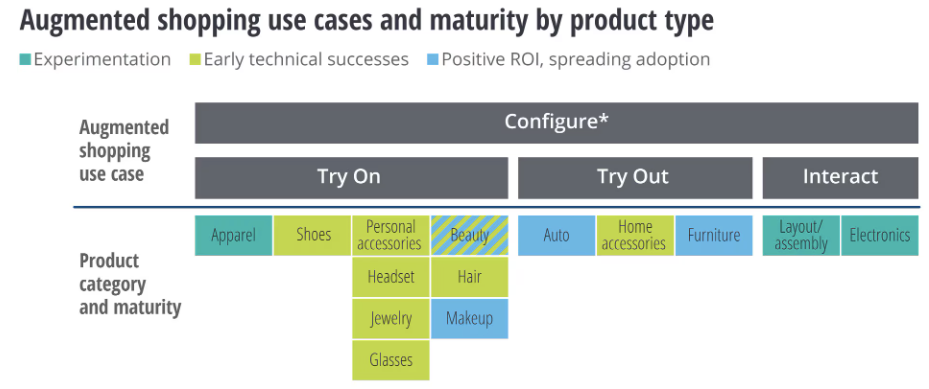
However, the true interest of these solutions does not lie in their technical sophistication, but in their ability to solve everyday problems. An immersive experience that requires too much effort, complicates navigation, or does not provide relevant information will hardly improve the relationship with the consumer. Innovation only gains value when it reduces uncertainty, facilitates a decision, or provides something that traditional channels could not offer.
IKEA Kreativ: Using Technology to Solve a Real Doubt
Source: IKEA
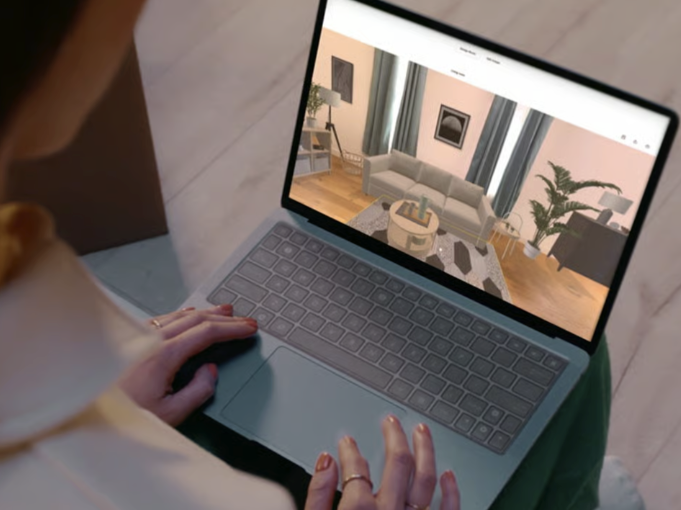
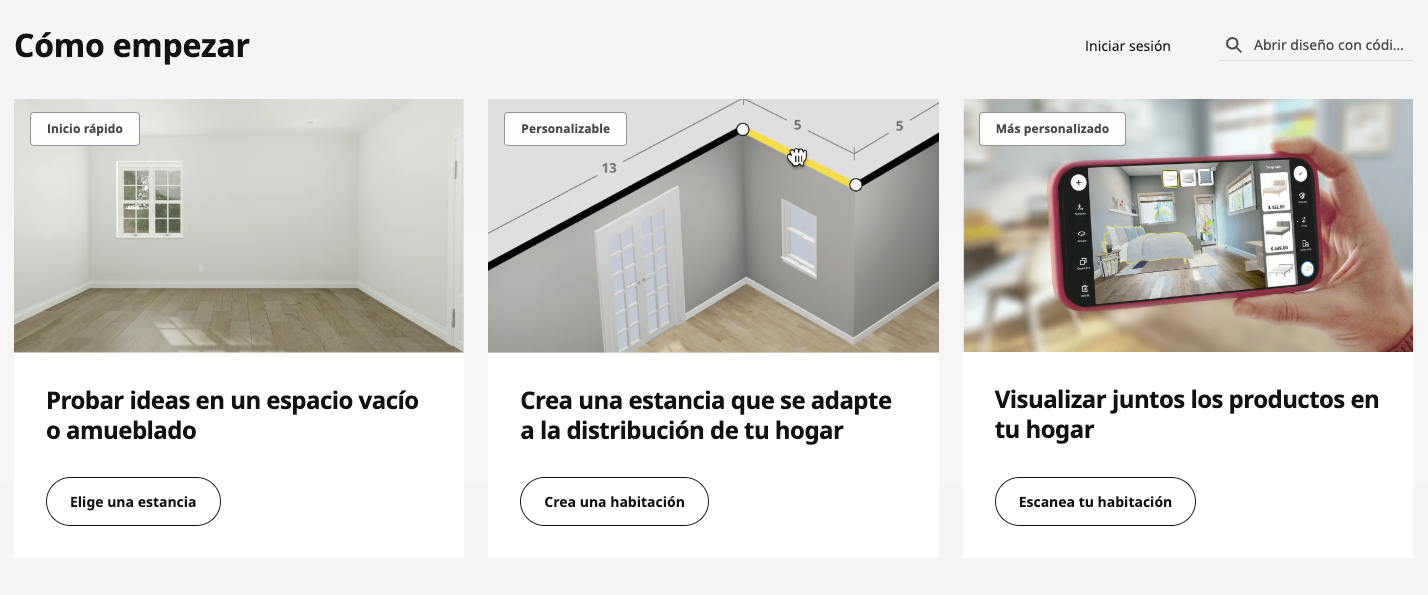
The launch of IKEA Kreativ in Spain in May 2023 is a particularly illustrative example. The tool allows scanning a room in the home and digitally recreating it to incorporate, move, or replace furniture and decorative elements from the IKEA catalog. It also offers the possibility to save designs, share them, and add products to the cart.
The proposal stems from a very specific difficulty: imagining how a piece of furniture will look in a real room. As explained by IKEA during its launch, the tool aimed to precisely reduce that barrier, allowing experimentation with different configurations before making a purchase decision.
What is interesting about this case is not only that IKEA has incorporated artificial intelligence and three-dimensional visualization into its shopping experience. It is that it has connected a physical need—checking how a product will fit at home—with a digital solution that allows progress in the decision without going to a store.
In addition, the company maintains its planning and advisory services, both in-person and remotely. Technology does not necessarily eliminate the value of human contact, but it can complement different stages of the commercial process.
We do not have sufficiently specific public results to attribute a certain increase in conversions or sales to IKEA Kreativ. But its operation allows drawing a strategic conclusion: hybrid experiences make more sense when they arise from a consumer need than when they are developed solely to demonstrate that a brand is innovative. Putting the hybrid customer at the center is key.
And the Metaverse? Between Experimentation and Commercial Utility
The conversation about the metaverse took this integration between the physical and the digital to an even more ambitious territory. The possibility of creating persistent virtual spaces, interacting through avatars, or participating in brand experiences within immersive environments opened new questions about the future of consumption.
For a time, much of the commercial discourse focused on the possibility of reproducing stores, events, and products within digital universes. However, it is important to distinguish between technological experimentation and the existence of a consolidated business model. That a brand can create a virtual store does not necessarily mean that its consumers need to visit it, nor that this experience is more valuable than other alternatives.
These initiatives allow observing how a brand can relate to its audiences in spaces where entertainment, digital identity, and social interaction take center stage. But they also highlight an issue often overshadowed by technological enthusiasm: not all audiences are interested in participating in these environments, and not all companies will find a relevant commercial opportunity in them.
An academic study published in 2024 in the Journal of Retailing and Consumer Services examined precisely the sensory dimensions of phygital experiences within the metaverse. Its results suggest that trying to reproduce all senses does not necessarily add value: while sight and touch showed positive effects, other stimuli presented mixed or unfavorable results.
The lesson is applicable far beyond the metaverse. Designing marketing for the hybrid customer does not mean chasing every new technological space, but identifying which ones provide an experience worth integrating into the brand relationship.

Source: Unsplash
The Challenge
Ultimately, the challenge is not to get consumers to be present in more channels, but to prevent each new interaction from increasing the fragmentation of a relationship that should be coherent.
And it is precisely there where marketing still has an outstanding task: transforming information from different points of contact into useful, relevant, and respectful communications with each person’s context.
Designing Marketing for the Hybrid Customer: Fewer Channels, More Continuity
Understanding the hybrid customer requires reviewing one of the most ingrained habits of digital marketing: designing strategies based on available channels, instead of doing so from people’s needs and behaviors.
The question should no longer be how to get more traffic to an online store, increase interactions on social networks, or independently increase the frequency of commercial shipments. The truly relevant question is what role each of these points of contact plays within a relationship that begins long before the purchase and continues after it.
This implies abandoning the idea that each interaction must pursue an immediate conversion. A store visit can serve to discover a product; an augmented reality experience, to resolve doubts; a digital community, to generate belonging; and an email, to recover a conversation, offer useful information, or accompany a decision that has not yet been made.
The integration of these spaces also requires responsible information management. First-party data, obtained directly from interactions with consumers and treated with an appropriate legal basis, allow for a better understanding of their interests and adapting communications. But having more information does not automatically equate to knowing people better. Its value depends on the ability to interpret it, respect individual preferences, and turn it into experiences that offer more than just a new sales opportunity.

Source: Unsplash
The Role of Email Marketing
In this context, email marketing retains a particularly interesting advantage: it allows maintaining direct communication with subscribers without relying solely on the distribution algorithms of social platforms. Through tools like Acumbamail’s automations, it is possible to design communication journeys adapted to certain actions or moments of the commercial relationship, as long as there is adequate data integration and the corresponding permissions are respected.
However, technology should not become the center of the strategy. Automating a communication does not guarantee its relevance, just as incorporating an immersive experience does not automatically make a brand innovative. In both cases, value appears when there is a real understanding of the consumer and a clear intention behind each interaction.
The Future of Marketing Is Not About Choosing Between Physical and Digital
Perhaps the most important transformation of the hybrid customer is precisely that it forces us to abandon a distinction that has conditioned the way marketing is understood for too long.
People do not live a completely separate physical and digital experience. They build relationships, discover products, make decisions, and develop preferences through spaces that constantly intertwine. Technology expands interaction possibilities but does not necessarily change the motivations that sustain them: finding solutions, feeling understood, trusting a brand, and getting something valuable in exchange for their attention.
Therefore, the future of marketing will not depend solely on who incorporates a new platform, an augmented reality experience, or a virtual environment first. It will depend on who is capable of connecting all these resources without losing sight of the person on the other side.
Because, as long as companies keep thinking in channels, the customer will keep thinking in experiences.
And probably the true innovation consists, finally, in starting to do the same.