Trust as an Asset: The Role of Email in Times of Misinformation
 Pablo Díaz · 24 Apr, 2026 · Email Marketing: First Steps · 6 min
You’ve been posting on social media for a while. You upload content, respond to comments, try to make the algorithm work in your favor… And yet, you increasingly feel that the effort doesn’t translate into proportional results.
Email marketing stability is often underestimated in a digital world dominated by algorithms and constant platform changes…
It’s not just you. The problem is deeper and has to do with something that affects all brands that rely on social platforms to communicate with their customers: trust in those environments is eroding at a speed few anticipated.
In this article, you’ll understand why email has become the most solid channel for building real relationships with your customers, what structurally differentiates it from social media, and what you can do, specifically, to turn it into a trust asset for your business.
When noise distorts everything, where is your customer?
According to the Digital News Report 2025 from the Reuters Institute, 56% of users globally admit that they find it difficult to distinguish true information from false on the internet.
It’s not a minor concern; it already affects more than half of the people who connect every day to get informed, shop, or follow brands like yours.
On top of that, there’s another fact that should make us think. According to the Jumio 2025 online identity study, only 37% of consumers firmly believe that most social media accounts are authentic. That is, almost two out of three users view what appears in their feed with a considerable dose of skepticism.
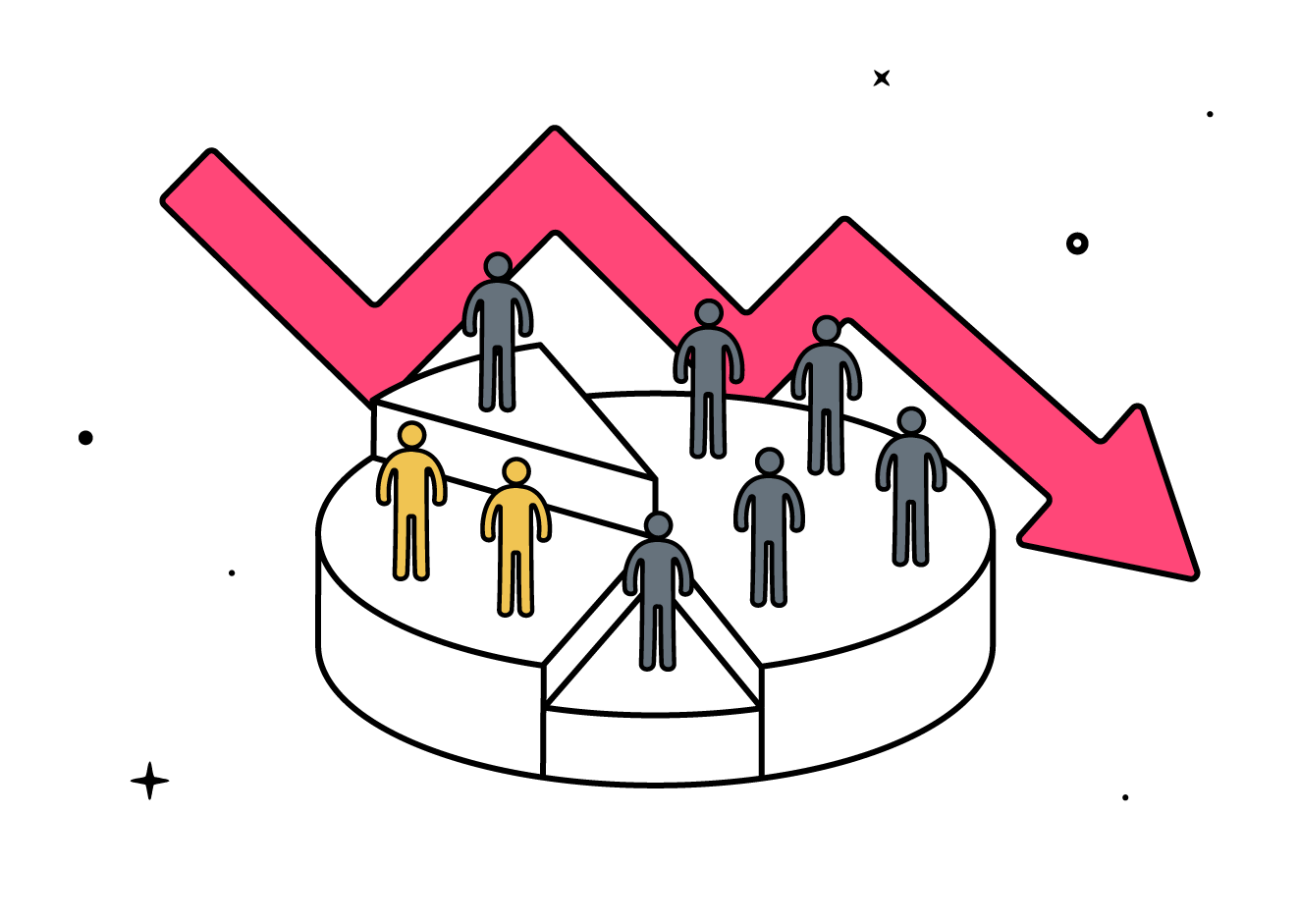
And if we talk about influencers and content creators, the trend is just as clear. In Latin America, trust in these types of profiles fell from 58% to 38% between 2022 and 2024, according to data from Bain & Company. In two years, twenty percentage points less.
Why does this matter for a business like yours? Because when you post on Instagram or TikTok, your content appears in the same environment as hoaxes, deep fakes, and fake accounts. You’re not responsible for that context, but you share it. And that association, even if unfair, affects how you’re perceived.
The question worth asking is this: is there a channel where you can reach your customer without carrying that background noise?
Spoiler: yes, there is 😉
Email works differently, and that’s no coincidence
The fundamental difference between email and social media is not just technological. It’s relational.
When someone subscribes to your mailing list, they make an active decision. They don’t follow you because the algorithm suggested you during a moment of scroll. They don’t see you because you paid to appear in their feed. They consciously chose to receive your messages. That is the structural foundation upon which everything else is built.
That consent matters because it changes the nature of the relationship from the start. The subscriber knows they’re there, knows they can leave whenever they want, and while they stay, it’s because something you offer is relevant to them.
Added to this is another difference that brands often underestimate: in email, there’s no algorithm deciding for you who reads you. On Instagram, an organic post can reach less than 5% of your followers depending on the timing and content. In email, if your deliverability is good, the message gets through. No editorial filters, no bidding, no platform changing the rules mid-game.
The inbox is also a space that users actively defend. They delete what doesn’t interest them, mark as spam what bothers them, and open what they consider worth their time. When someone opens your email, it’s not a passive scroll: it’s a real sign of attention.
In a digital environment where dubious content floods feeds, email offers something rare: a direct, clean channel based on a relationship the user themselves initiated.
The numbers that are rarely compared
The intuition that email works is fine. But the data makes it an argument hard to ignore.
Let’s look at some of them supported by their sources.
Email marketing generates an average return of 36 dollars for every dollar invested, equivalent to a 3,500% ROI. Social media, in comparison, hovers around 250%.
Quite a difference, right?
That data explains why, according to various industry statistics compilations, 80% of marketers would prefer to give up social media before email. And why 44% of online shoppers say an email influenced their last purchase decision, compared to 18% who attribute that influence to organic social media.
Regarding customer acquisition, email is 40 times more effective than Facebook or Twitter.
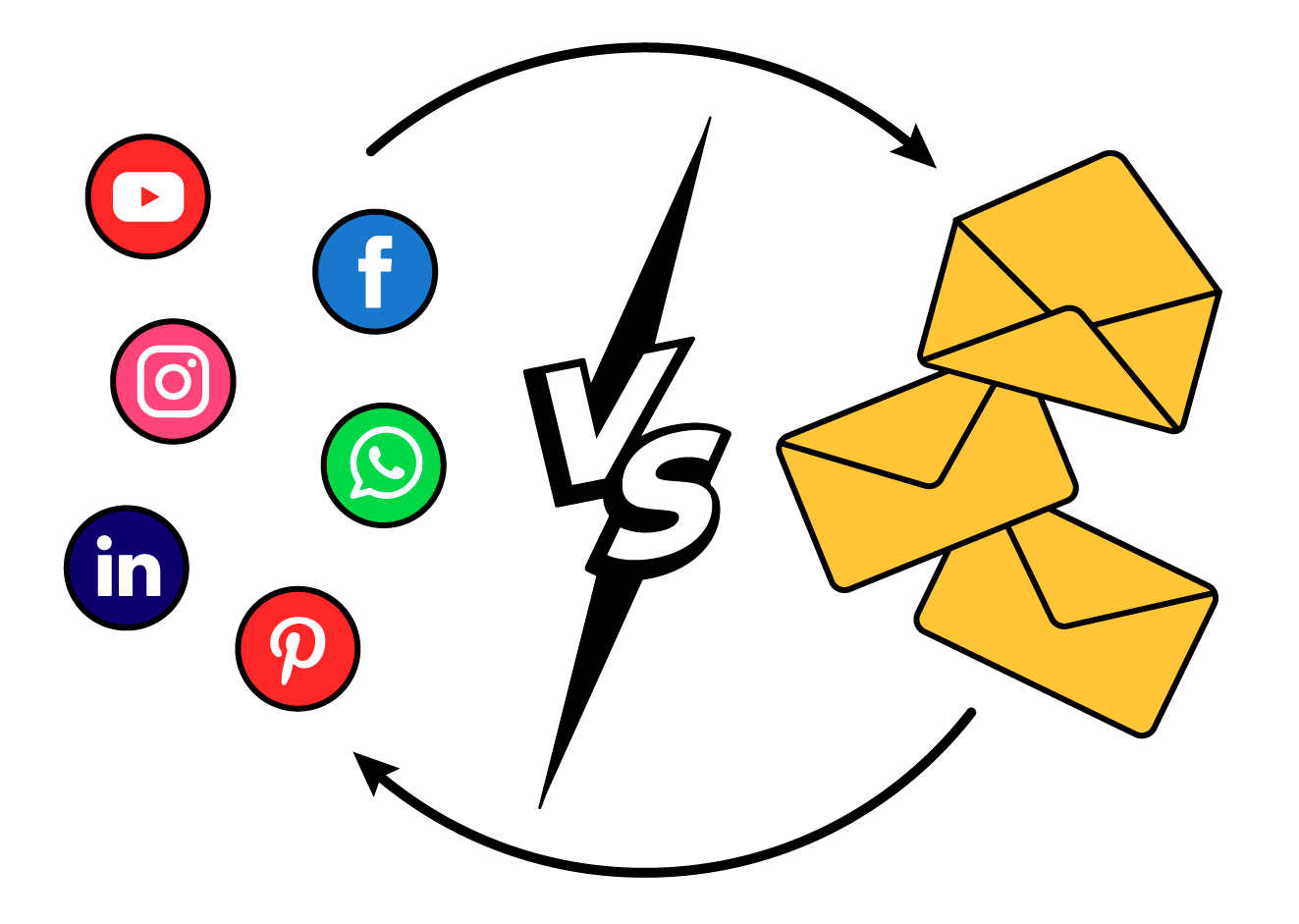
That said, it’s important not to fall into the mistake of framing this as a war between channels.
Social media has its role, and it’s an important one: they are very useful for new people to discover your brand, to generate awareness, and to create community. The problem arises when they’re expected to do everything, including converting and retaining. That’s where email clearly takes over.
It’s not that one is better than the other in absolute terms. It’s that each channel has a moment in the customer journey where it shines more. And when it comes to building a long-term trust relationship, email wins.
Building trust from email: what successful brands do
Having a subscriber list doesn’t guarantee trust. It’s the starting point, not the result. What turns a list into a real asset is what you do with it.
Consistency over frequency
You don’t need to send every day. You need to send when you said you would. A newsletter that arrives every Tuesday at 9 a.m. generates more trust than five erratic sends a month. Regularity creates expectation, and expectation is the prelude to habit and trust.
Here we talk in detail about how to choose the ideal sending frequency.
Human signature, not corporate
Emails that work have a sender with a first and last name, not an “info@” or a “no-reply@”. People trust people, not logos. A small business has a real advantage here over big brands: it can speak one-on-one without sounding forced.
That’s why, whenever you can, humanize your email campaigns and do your best to have a team member sign them. That will generate more trust.
Value content over promotion
If every email you send is an offer or a discount, your list learns to ignore you.
Brands that generate trust provide something useful first: a practical tip, a clear explanation, a relevant story for their sector. The promotion comes later and works much better when the reader already holds you in good regard.
Transparency from the first contact
Clearly stating who you are, what type of content you’re going to send, and how often, from the welcome email, reduces unsubscribes and improves the quality of your list. The subscriber knows what they’ve “signed up for,” so to speak, and that eliminates friction.
Segmentation as a sign of respect
Sending the right message to the right person is not just a conversion tactic. It’s a way to show the subscriber that you know them and that you’re not wasting their time. A business with a well-segmented list can compete in relevance with much larger brands.
Here you can learn more about segmentation.
Tools like Acumbamail allow you to apply all this without needing advanced technical knowledge. From creating capture forms to automating personalized flows based on each subscriber’s behavior, it’s designed so that a small business can do real email marketing, not just send mass emails.
Email is not the flashiest channel, but it is the most solid
To be honest, email is not going to win a trend contest. It doesn’t generate virality, it doesn’t have the immediate appeal of a well-produced reel, nor the potential reach of a campaign with influencers.
But it also doesn’t depend on an algorithm changing its rules tomorrow. Nor on a platform deciding to suddenly cut organic reach, as Meta has done several times. Nor on the trending network losing relevance in six months.
For a business like yours, that stability has a value that is sometimes underestimated. Your subscriber list is yours. You don’t rent it, you don’t need anyone’s permission to access it, and it doesn’t disappear if a platform closes or changes its terms. It’s an asset you build and that remains.
And at a time when users are actively seeking sources they can trust, a well-crafted newsletter can become one of those sources within your sector or community. Not as an interruption channel, but as a space the subscriber turns to because they know they’ll find something there that’s worth their time.
That’s what sets email apart from almost any other marketing channel: it doesn’t compete for stolen attention, but for earned attention.