First-party data: how to build your own audience before it’s too late
 Pablo Díaz · 18 May, 2026 · Email Marketing: First Steps · 7 min

Imagine you’ve been building your digital business for two years. You have thousands of followers on Instagram, a YouTube channel that grows every month, and retargeting campaigns that work well. Your audience exists. The problem is that it’s not yours.
An algorithm change cuts your organic reach in half. Your ad account is mistakenly suspended, and it takes days to recover it. Or an Apple operating system update limits your ability to track users. Any of these scenarios can happen, and if they do, you realize that all that audience you thought you had was rented.
The only way to avoid that risk is to build something that no one can take away from you: your own database. And the best channel to do this is email.
In this article, you’ll understand why first-party data has become a priority for any digital business, what’s changing in the environment making this urgent, and most importantly, how to start building your own audience from scratch.
What is first-party data and why is email its most valuable form?
The data handled by a brand or business can be classified into three categories based on their origin.
- First-party data
- Second-party data
- Third-party data
Let’s look at them in detail so you understand each one.
First-party data is the data you collect directly from your own users: what they do on your website, what they buy, the forms they fill out, the emails they open.
They are yours, obtained with explicit consent, and you don’t depend on anyone to access them.
Second-party data is data from another company that is shared directly, usually through a partner agreement.
For example, a clothing brand that shares behavioral data with the logistics platform managing its shipments.
Third-party data is aggregated data collected and sold by an external provider with no direct relationship with your users.
A company that buys a database segmented by age, location, and interests to launch an advertising campaign is using third-party data.
Let’s see it with an ecommerce example.
An online store illustrates it well. It knows which products each user has visited on its website: that’s first-party data. It shares order information with its logistics partner: second-party data. And it buys a list of potential buyer profiles from an external provider for advertising: third-party data.
The difference is not just technical. It’s strategic. First-party data is the only one you have total control over. No one can restrict your access, change the usage conditions, or disappear overnight.
And among all the proprietary data a brand can have, email holds a special place. It’s a direct communication channel, without intermediaries, that doesn’t rely on any algorithm to reach the recipient. A well-built email list is one of the most solid assets a digital business can have.
The moment everything changed
We are not facing a passing trend. Three structural forces are converging at the same time, all pointing in the same direction: third-party data is running out.
Privacy regulations
The GDPR, in effect in Europe since 2018, establishes that companies must obtain explicit consent to collect and use personal data.
A pre-checked box or small print at the bottom of the page is not enough. The user has to consciously and actively accept. Non-compliance has real economic consequences: fines can reach 4% of the company’s global annual turnover.
Platform restrictions
In 2021, Apple introduced App Tracking Transparency with iOS 14, requiring apps to ask for explicit permission before tracking user behavior across apps and websites.
The result was immediate: the ability to do precise retargeting on platforms like Facebook was drastically reduced. Many advertisers saw their campaigns lose effectiveness from one quarter to the next without changing anything in their strategy.
The end of third-party cookies
Google has been in the process of phasing out support for third-party cookies in Chrome, the browser with the largest market share worldwide. Although the timeline has been adjusted, the direction is clear and irreversible. The advertising ecosystem based on anonymous user tracking across different websites has its days numbered.
These three pressures do not act separately. They reinforce each other and are redrawing the rules of digital marketing.
Brands that already have their own database will hardly notice the change. Those that don’t are racing against time.
Which team are you on?
How to start capturing emails from scratch?
Knowing you need an email list is easy. The challenge is building it.
But don’t worry because we’re going to look at some of the most effective tactics to get started.
Strategic forms on your website
It’s not enough to place a form in the footer and wait. The key is where and when it appears.
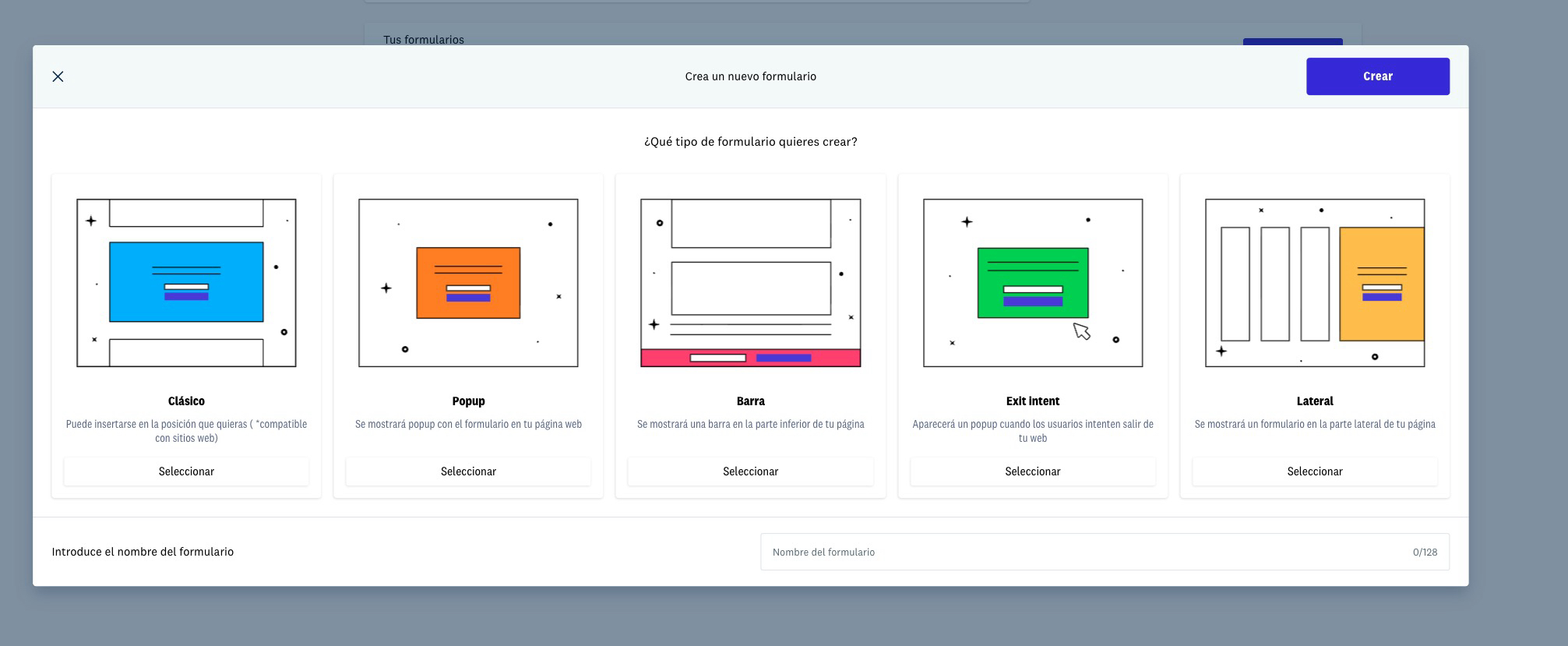
A popup that activates when the user has been on the page for 30 seconds converts much better than one that appears as soon as they enter.
A fixed bar at the top is discreet but always visible.
And the exit intent form, which appears just as the user moves the mouse to close the tab, is especially effective because it acts at the moment of greatest risk of loss.
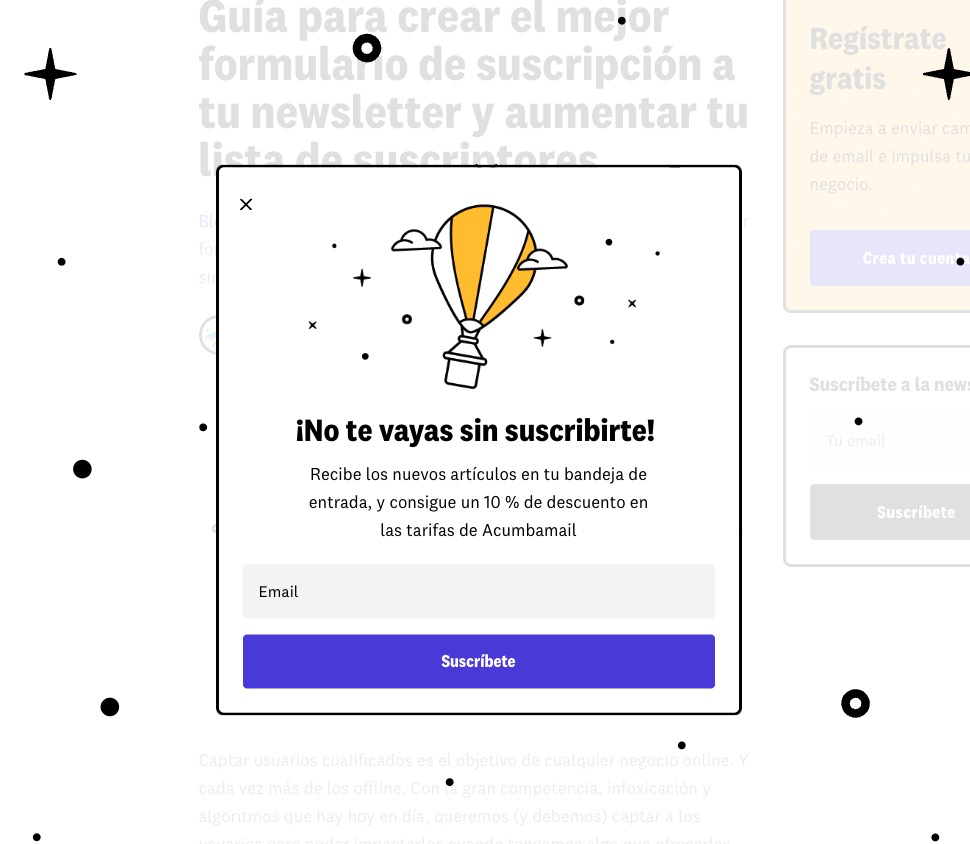
At Acumbamail, you can create all these types of forms directly from the platform and customize them without needing technical knowledge.
In this article, you'll learn how to create a good capture form
Lead magnet
Offering something of value in exchange for an email is one of the most effective strategies out there.
The key is that what you offer is truly useful to your audience, not a generic PDF that no one will read.
A cosmetics store offering a personalized skincare routine guide based on skin type has a much better chance of capturing qualified emails than one that simply asks for newsletter subscription.
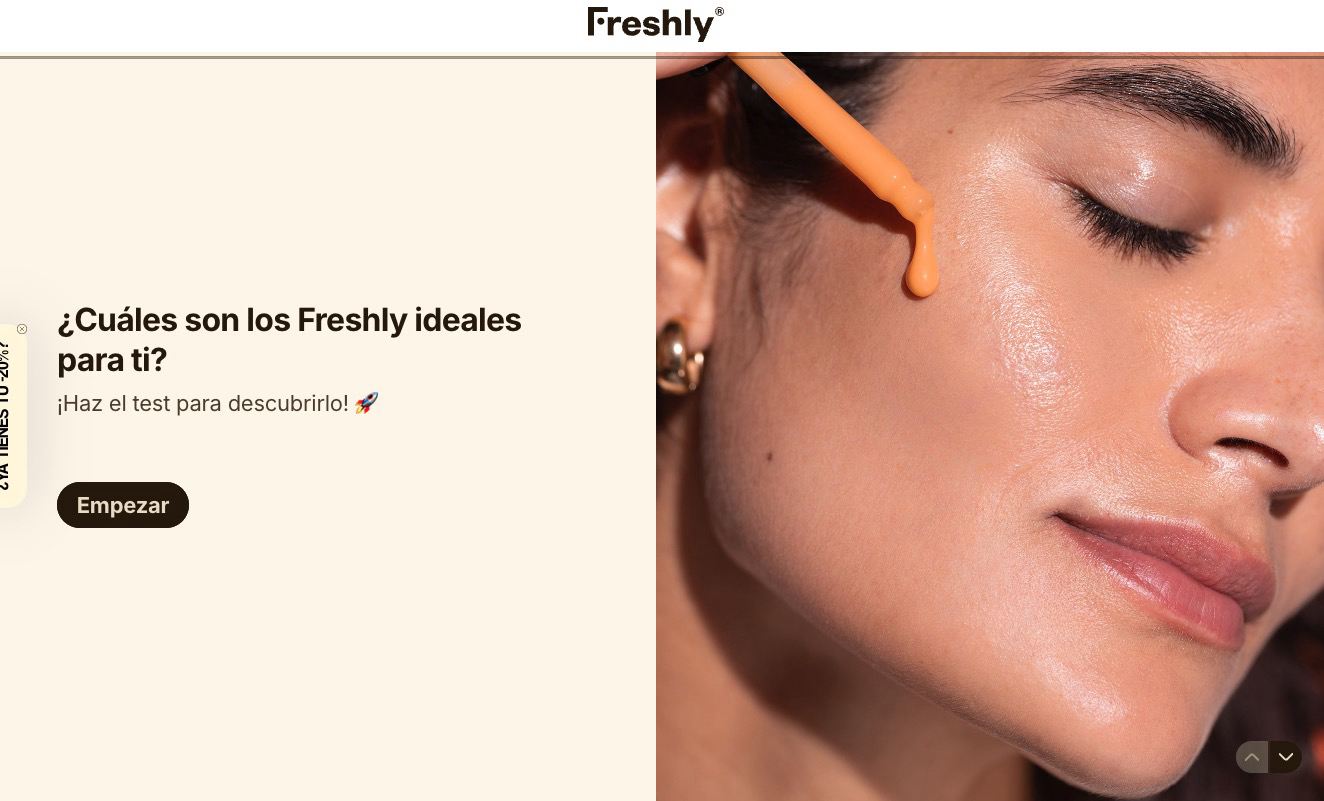
Other examples that work well: mini email courses, downloadable templates, calculators, checklists, early access to an offer, or a discount on the first purchase.
In this article, you can see more examples of types of lead magnets you can create
Content with registration access
A variant of the lead magnet that works especially well in training and service sectors. Instead of giving free access to all content, a part is reserved for subscribers.
An online academy offering free access to an introductory class in exchange for an email is capturing people who have already shown real interest in the topic. A blog offering an extended article or a complete report only for subscribers applies the same logic.
Integration with the purchase process
The moment a user is completing a purchase or creating an account on your platform is when they have the highest intention. Taking advantage of it to capture the email, with explicit consent, is a tactic that requires no additional effort from the user and generates high-quality contacts because they have already made an active decision with your brand.
Double opt-in as a quality guarantee
Double opt-in means that after leaving their email, the user receives a confirmation message and is only added to the list when they click the verification link.
It’s an extra step that reduces the number of subscribers but ensures that everyone on the list is real and has confirmed their interest. This improves deliverability, reduces bounces, and, in the long run, makes the list much more profitable.
From list to business: how to activate that data with Acumbamail
Having an email list is the first step. The real value appears when you start activating it.
For this, any email marketing tool worth its salt has three functionalities to activate it.
Segmentation
Not all subscribers are at the same point or have the same interests.
Sending the same message to the entire list is a missed opportunity. An online store that distinguishes between customers who have already purchased and users who haven’t can send each group a different message: to the former, a recommendation based on their history; to the latter, an incentive to take the first step.
The result is a higher open rate, more clicks, and more conversions.
Automations
Once set up, automations work on their own.
- A welcome email sent as soon as someone subscribes.
- An onboarding sequence that guides the new user through the key features of the product during the first days.
- An abandoned cart reminder that recovers sales that would otherwise be lost.
- A reactivation campaign for subscribers who haven’t opened any emails in months.
- A SaaS that activates a sequence of three emails when someone registers for its free trial, explaining specific use cases in each one, has a much better chance of converting that user into a paying customer than one that simply waits for them to explore the product on their own.
Think about which ones make sense for your business and start designing them.
Here you'll find more examples of automations for your email campaigns.
Personalization
Using the subscriber’s name is just the beginning. Real personalization involves adapting content based on behavior: what they’ve opened, what they’ve clicked on, what they’ve purchased, how long they’ve been inactive.
A message that arrives at the right time and speaks exactly about what interests that person has a completely different impact than a generic mass mailing.
Acumbamail allows you to do all this without needing advanced technical knowledge. From creating capture forms to designing complex automated flows, the platform is designed so that any business can build and activate its own database easily and effectively.
Conclusion
Every day that passes without your own email list is a day building on someone else’s land. Platforms change their algorithms, cookies disappear, ad accounts get suspended. What remains is what you control.
First-party data is not a competitive advantage reserved for large companies. It’s a decision any digital business can make today, with the right tools and a clear strategy.
The question is not whether it’s worth building your own audience. The question is how much longer you can afford not to.
If you want to start, Acumbamail gives you everything you need to capture, manage, and activate your email list from day one.