Agentic Commerce: What It Is and Why ChatGPT Backtracked
 Lucía Pérez · 13 Aug, 2026 · AI · 7 min
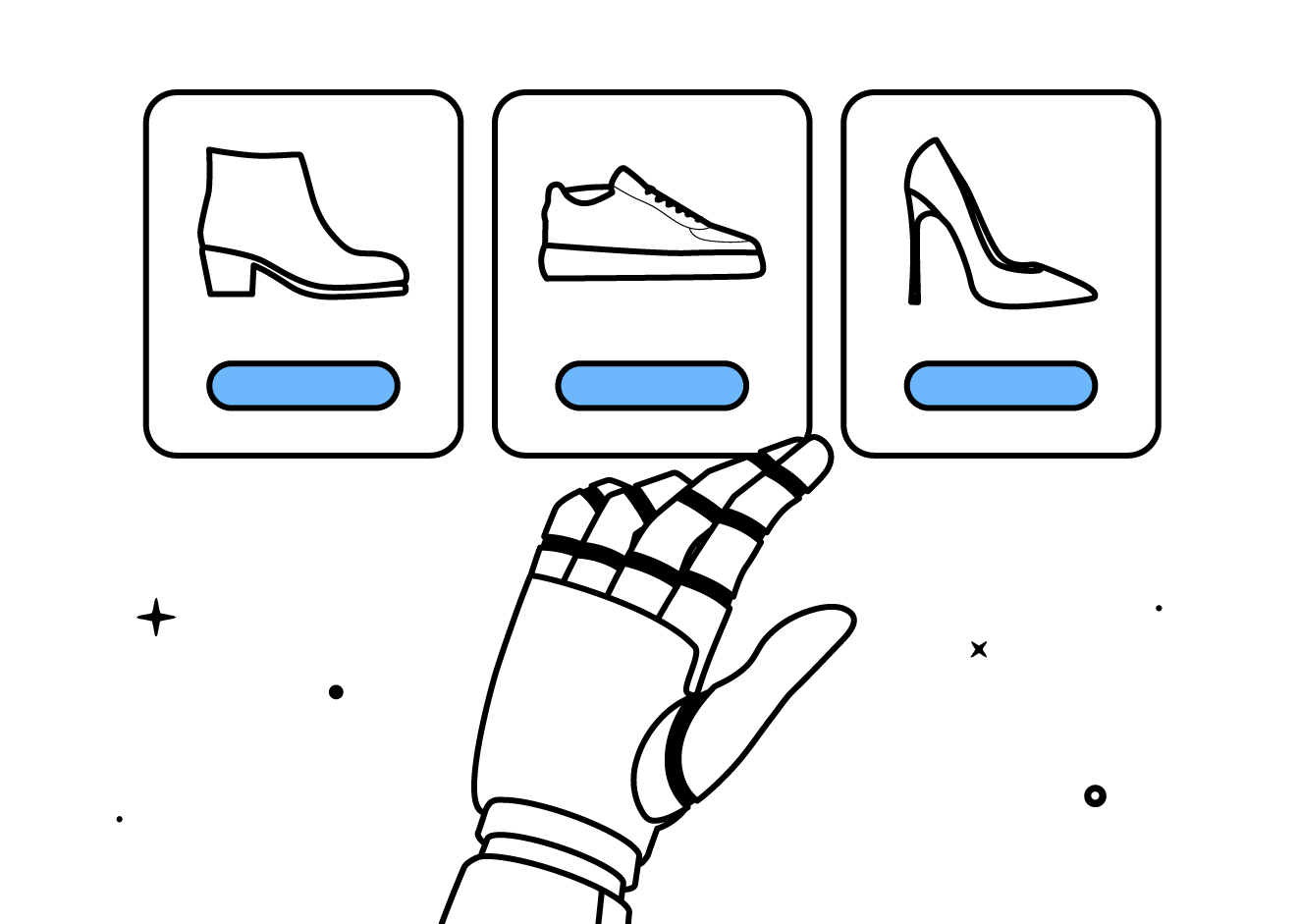
You ask your AI “find me the best running shoes for under €80” and, twenty seconds later, the order is already placed. No one has opened your website. No one has read your newsletter from last week. That discount banner you worked so hard on in Canva, no one has seen it. The “customer” didn’t even know you existed until they received the order confirmation.
This is not the typical science fiction image we might imagine: it’s a reality five years from now. It’s what is already known as agentic commerce: AI agents that not only recommend but also buy for you without you even seeing the email. If you work in marketing —and even more so if you rely on email marketing— it’s important to understand what’s happening before your entire funnel stops making sense, because it’s going to change what determines whether someone buys from you.

AI-generated visual with Magnific as part of the creative content development.
What is agentic commerce (without marketing jargon)
Strip it down and it’s this: delegating the purchase to an AI agent that acts on your behalf. It compares prices, filters options, fills the cart, hunts for coupons if available, and in some cases, even pays. As Retail Dive aptly summarizes, the AI stops being a passive assistant to become an autonomous buyer that analyzes needs, compares options, and decides. You give it the goal —”I need a birthday gift for €40 that arrives by Friday”— and the agent does the rest.
The difference from the traditional search engine is not subtle: a search engine returns a list for you to decide. An agent decides for you. And that radically changes who you need to convince: it’s no longer just the person, it’s also the machine that represents them.
Alexa for Shopping (formerly Rufus): the real case of autonomous purchase
In 2024, Amazon launched Rufus, a shopping chatbot integrated into its app that answered product questions and compared options. It quickly gained traction: by 2025, over 300 million customers used it, generating nearly $12 billion in incremental sales, with a 60% higher conversion among those who used it compared to those who didn’t.
The next step came in January 2026 with Auto Buy: Prime members set a target price for any item, and Rufus monitored that price every 30 minutes until it bought it as soon as it was met, using the default payment method and address (with a 24-hour window to cancel). That’s where an assistant stops “notifying you” and starts “acting”: it no longer tells you the price dropped, it buys it for you.
On May 13, 2026, Amazon announced it was taking a step further and began phasing out Rufus as a standalone chatbot, merging it into Alexa for Shopping: a single assistant integrated directly into Amazon’s search bar. The change is being rolled out gradually, so don’t be surprised if Rufus still appears in your app today. There, three layers coexist: product discovery (what Rufus did), Buy for Me (buying from external stores on your behalf), and Alexa+ (more conversational and ambient commerce).
Here’s an important nuance: Amazon has not joined open protocols like ACP or UCP. Everything operates within its own closed ecosystem, which gives it total control and a very polished experience — but it also means you only buy where Amazon allows you to. It’s a different model from what OpenAI pursues with ACP, designed for any commerce to join. Neither is “the good one”: they are two different bets on how agentic commerce should work, each with its own pros and cons.
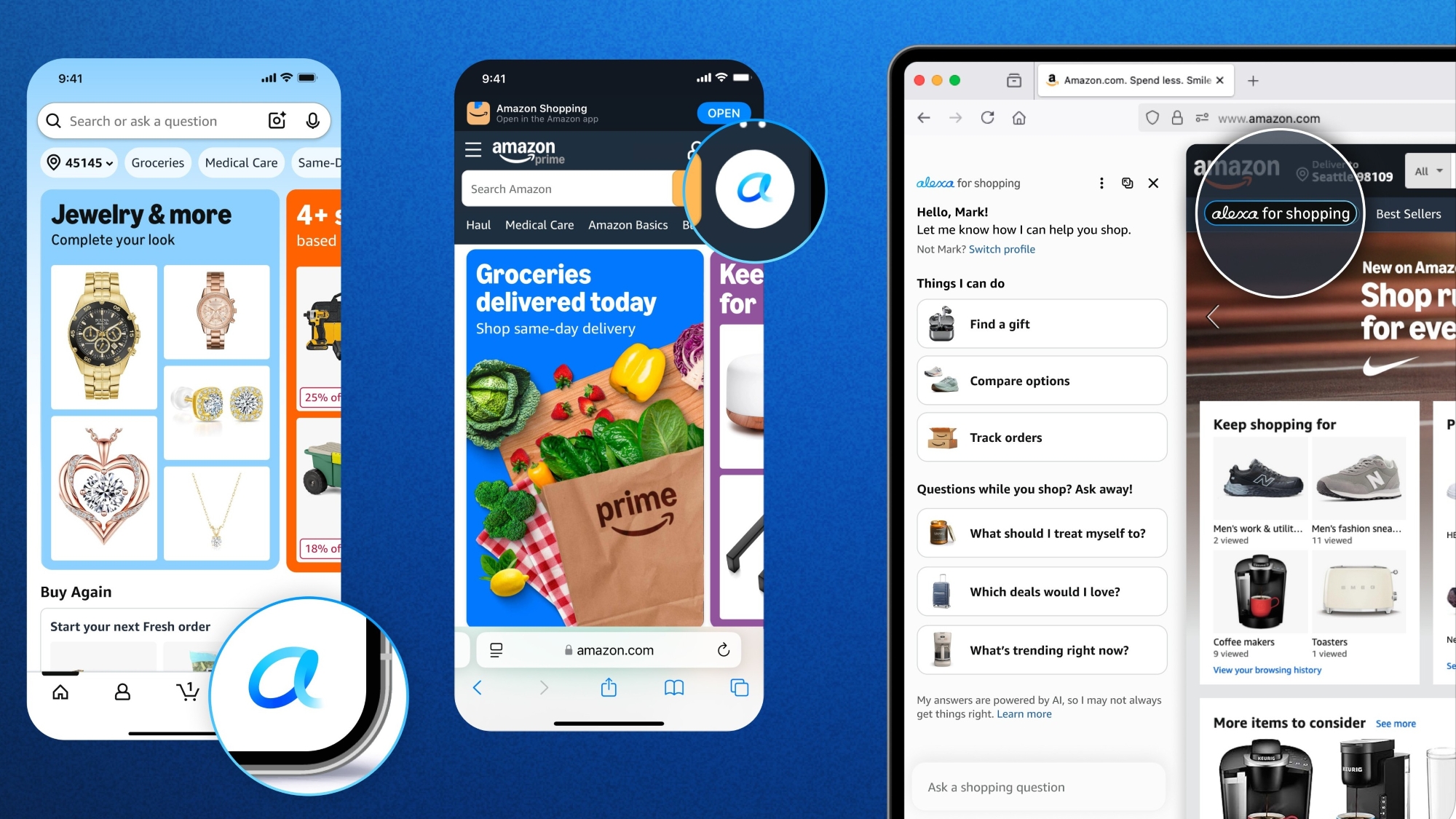
Alexa for Shopping, Amazon’s agentic commerce.
The real case: what happened when ChatGPT allowed purchases without leaving the chat
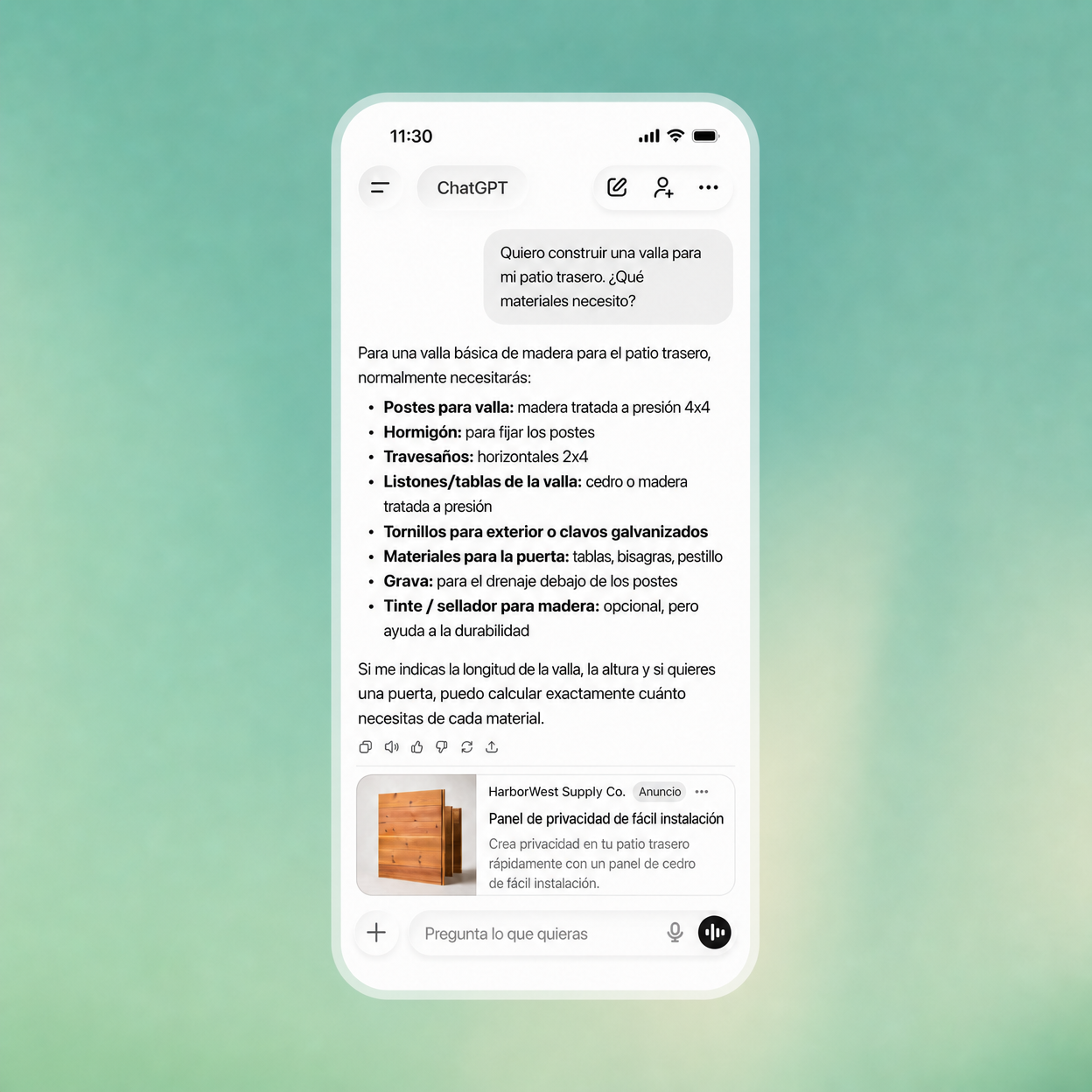
This is not trend report theory with pretty graphs. In September 2025, OpenAI launched an instant purchase feature within ChatGPT, starting with Etsy stores. In February 2026, it expanded to over a million Shopify stores, including brands like Glossier and Spanx. That same year, PayPal announced it would add its own payment server to the protocol, opening the door to tens of millions of additional small businesses.
A month after the expansion with Shopify, in March 2026, OpenAI reversed course: it ended Instant Checkout and began redirecting purchases to the merchants' own websites —via an integrated browser in the app or in a separate tab— instead of closing them within the chat. The reason? Walmart, one of the launch partners, canceled its integration: the feature had accuracy issues and didn’t fit with their internal tools, and the conversion of orders via OpenAI fell significantly below what was usual in their own channels. Within OpenAI, they saw the same pattern: many people asking about products, few people buying without leaving the chat.
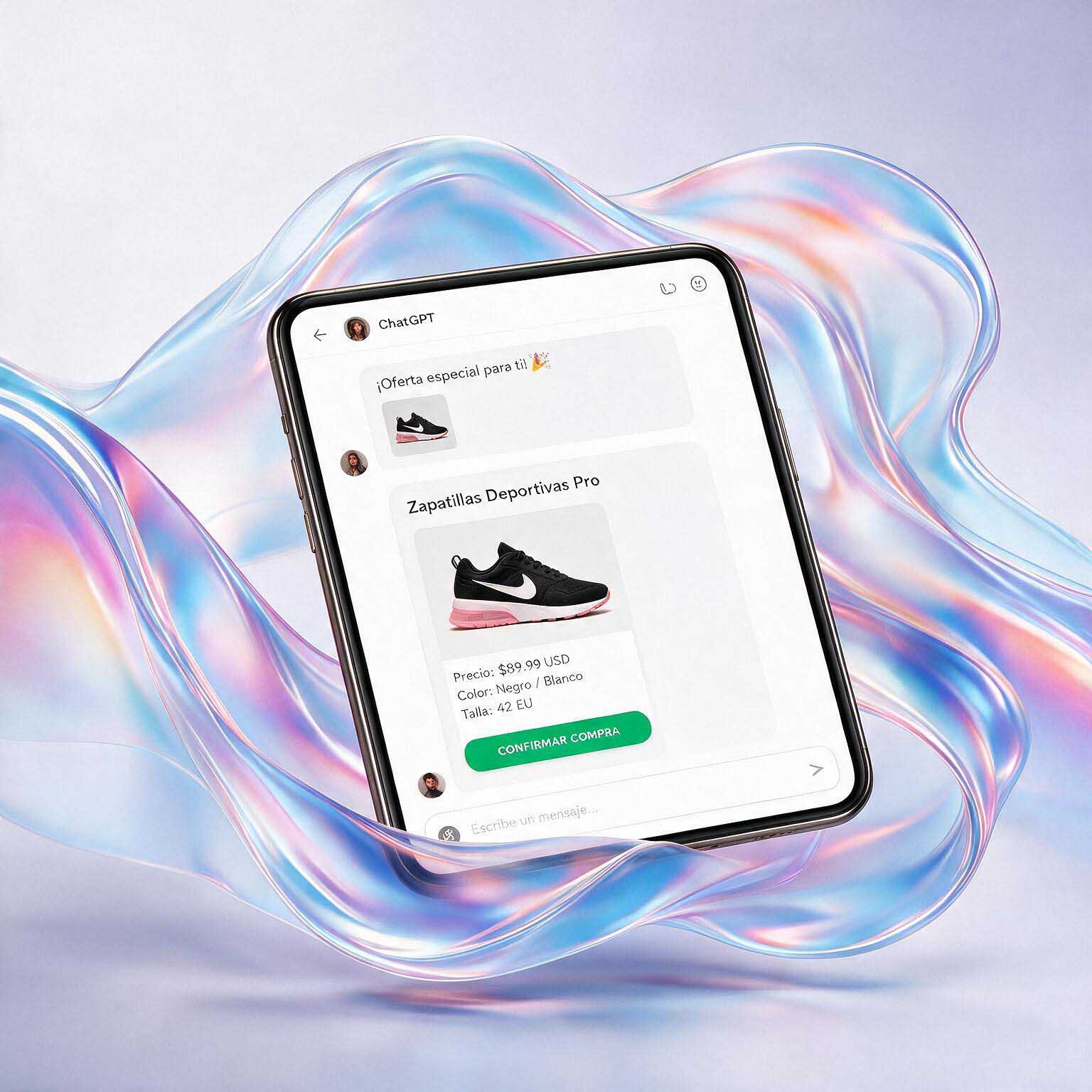
ChatGPT Instant Checkout / Shopping.
The takeaway for us is not “agentic commerce has failed.” It’s quite the opposite: AI is already a real channel for discovery and initial contact, but the closing of the sale —and the subsequent relationship with that customer, which is what we’re concerned with here— still happens through the usual site. That’s exactly where email comes in.
Why this matters especially for email marketing
And if someone —or something— opens your email and it’s not a person, what happens to everything you’ve built to convince a human?
Email has been the channel for decades where someone decides calmly, saves offers in the inbox, and clicks when something truly convinces them. That behavior is precisely what agentic commerce skips: an agent is not swayed by a good subject line, doesn’t get moved by a brand story, doesn’t “decide calmly.” It reads data, compares it, and acts. So the real question is not if your email is opened, but who —or what— is reading it, and if what’s inside is useful to them.
The short answer: your email now has to speak two languages at once. These are the fronts where it shows the most:
Subject lines are no longer written just for human eyes. If an agent starts “reading” inboxes to make purchase decisions —something already being tested on several platforms— your copy has to play on two boards: the emotional hook that grabs a person, and the factual clarity (price, stock, delivery time) that a model can extract without ambiguity. A clever but vague subject works for a human; for an agent, you lose them directly.
Structured data weighs as much as design. A beautiful email with product info hidden in an image or ambiguous text is, for an agent, invisible. Price, availability, and conditions must be in plain text and well-tagged, both on the web and in the emails themselves. This is where having your flows well set up in a tool like Acumbamail makes a difference: automating that information to update itself in each send prevents an agent from discarding your product due to outdated data.
Remarketing and abandoned carts gain weight, not lose it. If the purchase is closed by an agent on the web and not in the email, the moment where you still hold the reins is the after: cart recovery, confirmation, post-purchase upsell. These are the sends you can already automate and personalize in Acumbamail today, and they are precisely the ones that gain the most relevance as the “choose and compare” part becomes more automated.
So, is email marketing on its last legs?
No, and this is where many analyses get dramatic unnecessarily. Email remains the channel where people —real ones— review what an agent has decided. They manage returns, receive confirmations, and, above all, build a long-term relationship with a brand. No agent replaces that yet. What changes is who you speak to first: it used to always be the person, now sometimes it’s the machine that represents them.
How to start adapting your campaigns (without going crazy)
You don’t need to reinvent your email marketing strategy this month. But there are sensible moves to start with now.
What you need to prepare now:
Structure your product data cleanly. Price, availability, deadlines, and conditions must be “readable” easily, both on your website and in transactional emails. If an agent can’t extract that information clearly, your product is out of its comparison. No exceptions.
Treat transactional emails as if they were your brand’s front page. Confirmations, shipments, and returns will gain relative weight compared to purely promotional emails. They are the point where the human takes control again after the agent has acted.
Review your return and warranty policies. An agent comparing options for its user will prioritize clear and favorable conditions. A confusing return policy can take you out of the game before you even start playing.
What you shouldn’t lose sight of:
Don’t abandon human personalization. Precisely because part of the decisions is being automated, the email that does reach a real person needs to feel more human than ever. The cold automation is already covered by the agent; you can cover what it doesn’t do: trust.
Start measuring “who decides,” not just “who opens.” Watch for patterns that don’t fit typical human behavior —almost instant opens and clicks, without prior navigation. It’s not to be alarmed, it’s to better understand your data.
Prepare for the pattern “discover with AI, buy on your website.” It’s exactly what happened with ChatGPT: the AI brings the first visit, but the purchase is still closed on your own website. Make sure that first welcome email or recovered cart is fine-tuned, because that’s where the sale is truly decided today.
The elevator pitch summary
AI agents will increasingly buy things on behalf of people. Your email marketing doesn’t disappear, but it has to speak two languages at once: the language of the person seeking connection and trust, and the language of the machine seeking clear and comparable data. Those who prepare now, calmly, won’t be caught off guard when this stops being a trend and becomes simply “how shopping is done.”
And if you still don’t know where to start automating and structuring your email flows, you can always let Acumbamail do the heavy lifting, agent or no agent involved.