How to Create Emotional Campaigns Without Being Cheesy: Storytelling Keys in Email and Social Media
 Yacarlí Carreño · 14 May, 2026 · Marketing Online · 6 min

Discover how to create effective emotional campaigns in email and social media without being cheesy. Storytelling keys, practical examples, and step-by-step guide with Acumbamail.
February always pushes us to talk about emotions. Valentine’s Day, connections, bonds, stories. And in digital marketing, this often translates into a barrage of campaigns trying to “pull at the heartstrings.”
The problem is that not all of them succeed.
In the quest to generate an emotional connection, many brands cross a very fine line: the one that separates the authentic from the cloying, the human from the forced, the emotional from the cheesy.
And the consumer of 2026 does not forgive.

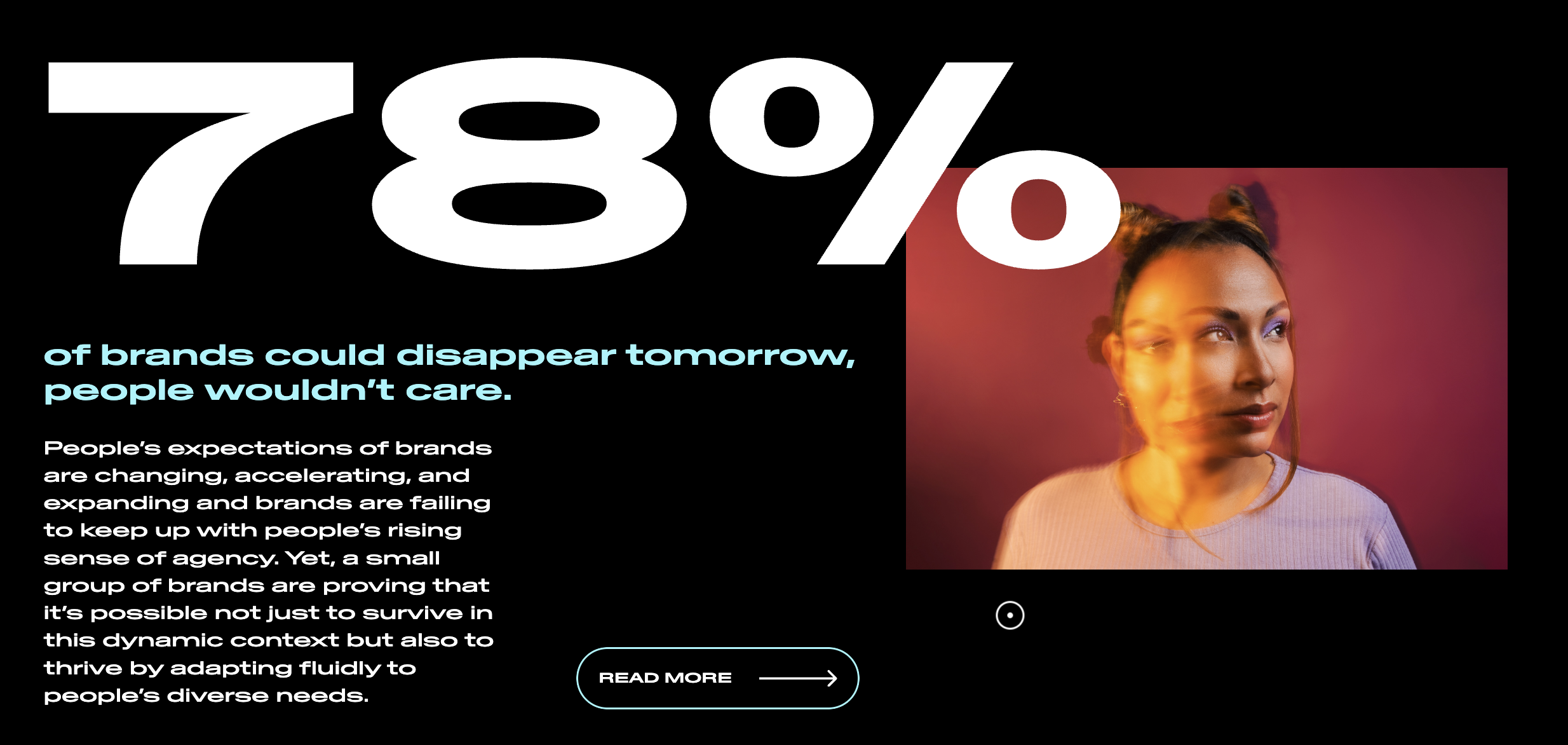
According to the Meaningful Brands report by Havas, 73% of brands could disappear and most people wouldn’t care. Why? Because they don’t generate a meaningful connection.
The key is not to evoke “more.” The key is to evoke better.
In this article, we will see how to create emotional campaigns in email and social media that truly connect, with a clear roadmap and practical examples.
Why does storytelling work in digital marketing?
Storytelling is not a trend. It’s biology.
According to research published by Princeton University, when we hear a well-constructed story, a phenomenon known as neural coupling is activated: the listener’s brain synchronizes its activity with that of the narrator.
Moreover, studies compiled by the Harvard Business Review show that purchasing decisions are strongly influenced by emotional processes, not purely rational ones.
In summary:
- We don’t remember features.
- We remember stories.
- We don’t connect with discounts.
- We connect with meanings.
But beware: telling a story is not writing a long paragraph full of adjectives. It’s structuring a message with intention.

Emotional does not mean cheesy: where is the difference?
Here’s the key point.
An emotional campaign is:
✔ Authentic✔ Concrete✔ Based on a human truth✔ Consistent with the brand
A cheesy campaign is:
✘ Forced✘ Full of clichés✘ Overly sentimental✘ Disconnected from the product’s reality
For example:
❌ “Because love is the most important thing in the world, gift our premium subscription.”
✔ “Last year, Marta used our service to save 3 hours a week and have dinner with her father every Friday. This isn’t about software. It’s about time.”
The difference is in the context and the truth.

The most common mistake in emotional campaigns
The most frequent mistake I see (and that we also detect when analyzing metrics in campaigns sent from Acumbamail) is this:
Talking about emotions without talking about real people.
Emotions don’t float in the air. They arise from specific situations.
Saying “celebrate love” is not storytelling. Telling how a customer used your product to solve something important in their life is.
How to build an emotional campaign with storytelling (clear roadmap)
Here’s the process I recommend—and apply—to create emotional campaigns that work both in email and on social media.
Step 1: Define the root emotion (not the event)

Don’t start with “Valentine’s Day.” Start with the emotion you want to activate:
- Security
- Belonging
- Nostalgia
- Pride
- Relief
- Overcoming
Powerful campaigns don’t talk about the calendar. They talk about universal emotions.
Step 2: Find the real story
Ask yourself:
- What specific moment is my client experiencing?
- What problem are they facing?
- What change do they desire?
- What transformation do they achieve?
If you can’t answer this with real examples (customers, cases, testimonials), your campaign will be superficial.
In Acumbamail, you can use advanced segmentation to identify specific profiles (recurring customers, new users, inactive users…) and adapt the story according to their stage in the life cycle.
(In my experience, emotional campaigns work much better when they are hyper-segmented.)

Step 3: Structure the story correctly
Good storytelling in email can follow this simple structure:
- Initial situation (real context)
- Conflict or tension
- Solution or learning
- Connection with the reader
- Coherent call to action
Example applied to email:
Subject: “What changed when we stopped selling”
Body:
- A year ago, we realized we talked too much about ourselves…
- Our clients didn’t want more features. They wanted clarity.
- We changed the approach.
- Today we send fewer emails, but more relevant ones.
- Do you want to try it too?
That’s storytelling. No hearts, no violins. With a story and a circumstance / situation that many can connect with.

Step 4: Adapt the emotion to the channel
A story is not told the same way in:
- SMS
In email, you can delve deeper. On social media, you need more visual micro-stories.
And if you integrate both channels from a multichannel strategy (something you can easily coordinate from Acumbamail by combining email and SMS marketing), the narrative must be coherent but adapted to the format.

Practical example: well-executed emotional campaign
Let’s imagine an online training company.
Instead of:
“This Valentine’s Day fall in love with your professional future.”
It could do:
Email 1 – Real story“Laura had been in the same position for 12 years. Every Monday was the same.”
Email 2 – Conflict“Until one day she decided to invest 30 minutes a day in learning something new.”
Email 3 – Transformation“Today she doesn’t work more hours. She works with more enthusiasm.”
CTA: “Start today. No pressure. At your own pace.”
Emotion: hope and self-efficacy. Nothing cheesy. All real.

Practical tips for creating effective emotional campaigns
Here’s a direct and applicable list:
What you SHOULD do
- Use real examples or testimonials.
- Write as you speak (naturalness above all).
- Eliminate unnecessary adjectives. Less is more.
- Be specific (stories live in the details).
- Maintain consistency with your brand tone.
- Personalize using name, behavior, or segment.
- Test emotional vs. rational subjects (A/B testing in Acumbamail).
What you should avoid at all costs
- Empty universal phrases (“Because you’re worth it” version 2026).
- Excessive emojis in professional emails.
- Grandiose statements without proof.
- Unbelievable exaggerations.
- Using emotions that don’t fit your product.
- Forcing commercial dates if they don’t make sense for your sector.

How to measure if your emotional campaign works
It’s not enough to “feel it turned out nice.”
Measure:
- Open rate
- CTR
- Reading time
- Direct responses
- Final conversions
And something very important: compare with non-emotional campaigns.
In Acumbamail you can easily analyze opens, clicks, and behavior by segment to detect which type of narrative connects best with your audience.
Emotions must translate into action.

Authenticity as a competitive advantage in 2026
We live in an era of saturation.
According to the Digital 2025 report by DataReportal, the average user is exposed to thousands of digital impacts a day.
In this context, the winner is not the one who shouts the loudest. The winner is the one who connects better.
And connecting better doesn’t mean being more sentimental/cheesy. It means being more human.
Strategic emotion, not digital sugar
Creating emotional campaigns without being cheesy is not a matter of inspiration. It’s a matter of method.
Summary of the roadmap:
- Define the root emotion.
- Find a real story.
- Structure it correctly.
- Segment.
- Adapt to the channel.
- Measure and optimize.
Storytelling is not decorating an email. It’s turning it into an experience.
And when you do it well, the results are noticeable.
Because people don’t buy products. They buy what those products mean in their lives.
And that’s where your narrative comes in.