The End of Linear Funnels: Circular Relationships, Loyalty Loops, and Marketing as a Community
 Yacarlí Carreño · 05 Mar, 2026 · Digital Marketing · 6 min
Discover why linear funnels have become obsolete and how to create loyalty loops and community-based marketing with email and automation.
Something broke in the funnel 👁️
For years we were taught that marketing was a funnel.
Attraction → Consideration → Conversion → End.
A linear, almost mathematical journey. As if the customer entered from the top, obediently moved through each phase, and exited converted… and satisfied.
But something changed.
People no longer consume content linearly. They don’t buy linearly. Nor do they interact with brands linearly. Did you notice?
And if user behavior stopped being linear, why are our strategies still linear?
In 2026, talking about traditional funnels without questioning them is falling short. It no longer applies. Today we need to talk about slightly more novel/differential concepts: circular relationships, loyalty loops, and marketing understood as a community, not as a one-time conversion.
Where does this come from? Let me give you some context:
The classic funnel: useful, but insufficient
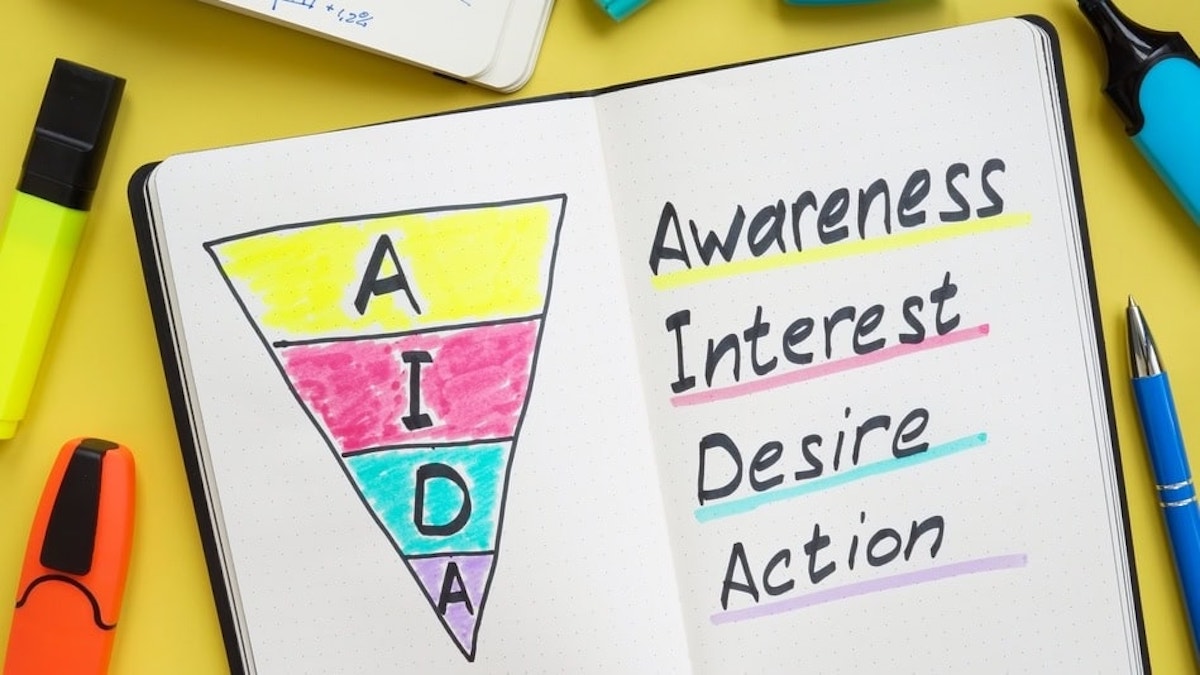
The AIDA model (Attention, Interest, Desire, Action), formulated at the end of the 19th century, was one of the first representations of the conversion funnel. For decades it has been a solid foundation for understanding the purchase process.
But, the digital environment has profoundly altered that journey.
According to the Digital 2025 Global Overview Report by DataReportal, users combine multiple channels, compare, research, and return before making a decision. The process is not sequential; it is dynamic.
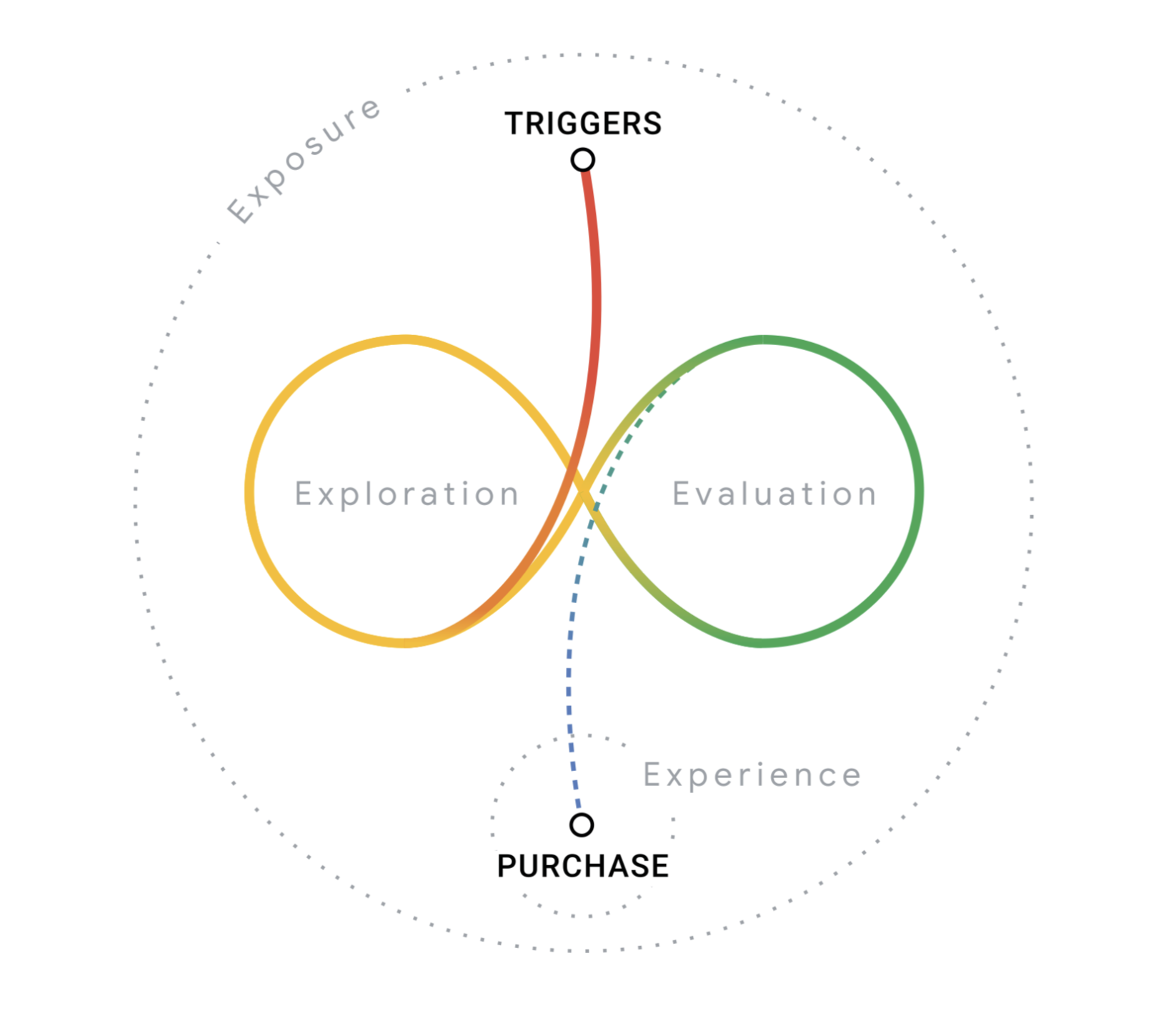
Furthermore, Google has been talking for years about the concept of messy middle: that chaotic space between the initial stimulus and the final purchase where users constantly explore and evaluate.
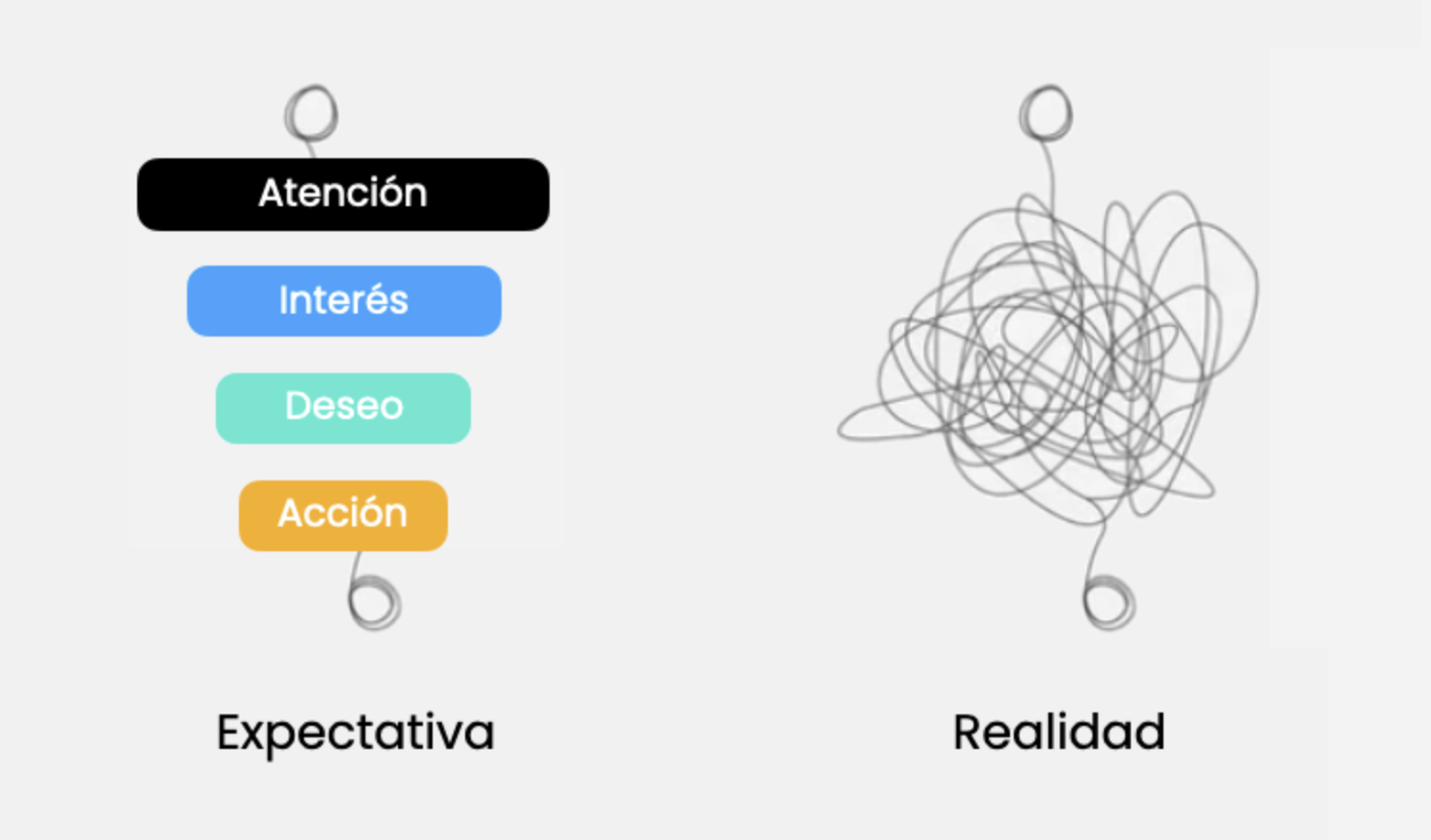
Practical translation: the customer enters, exits, returns, compares, gets distracted, returns.
The classic funnel does not account for that.
So, now what?
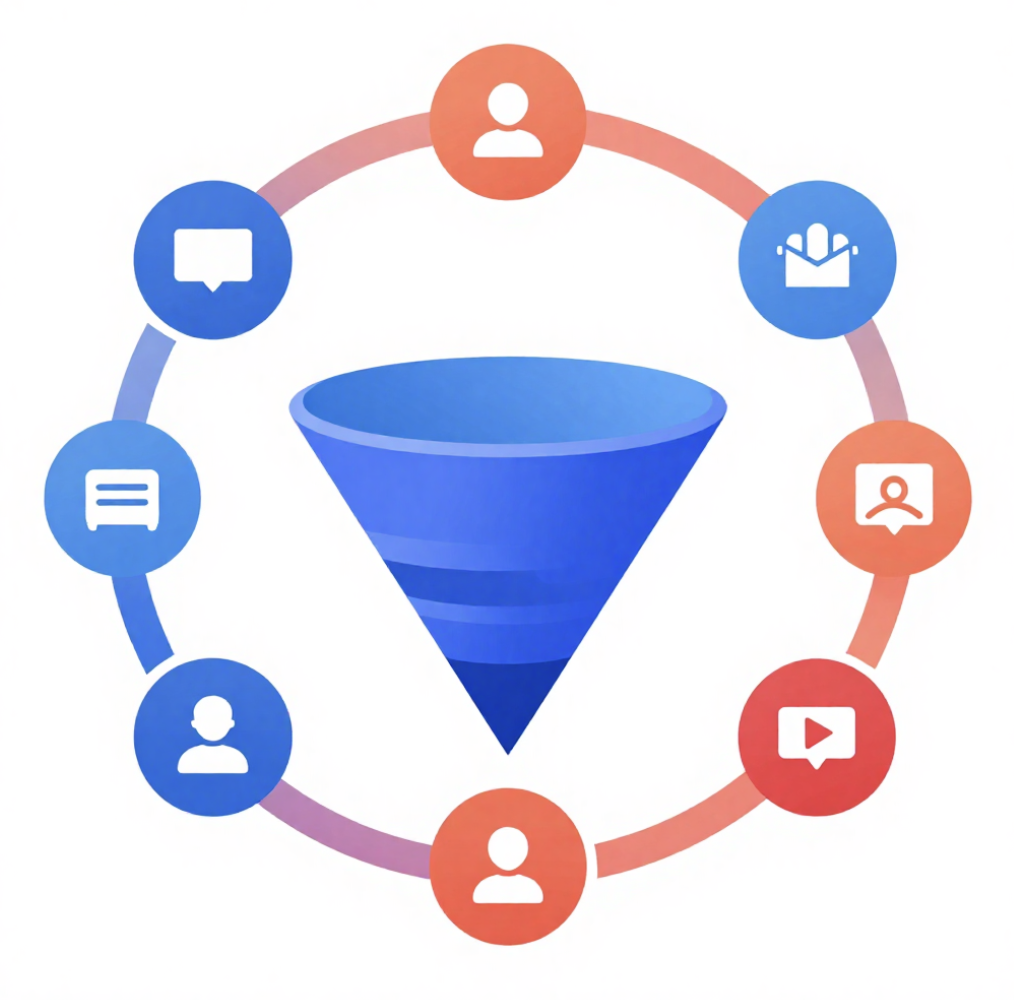
From funnel to flywheel: the customer as the center
In recent years, the concept of flywheel began to replace the funnel in many strategic environments. Popularized by HubSpot, this model places the customer at the center and understands growth as a circular process driven by satisfaction and recommendation.
But beyond the name, the idea is what’s relevant:
- It’s not about closing sales.
- It’s about generating relational inertia.
So, when a person has a good experience:
- They buy.
- They repeat.
- They recommend.
- They generate content.
- They buy again.
That’s a loop.
And loops generate sustainable growth.
What are loyalty loops (and why do they matter)
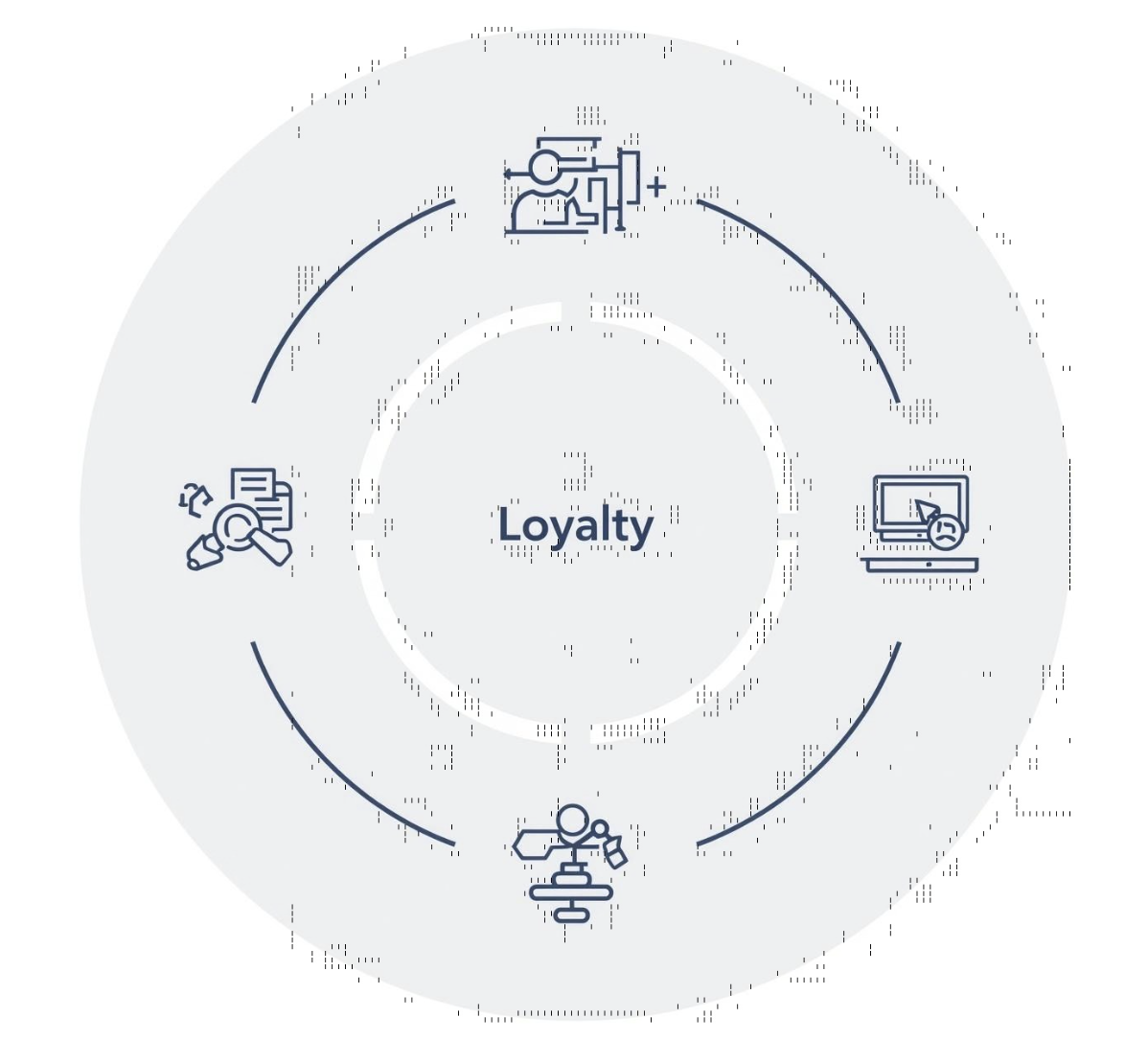
A loyalty loop is a system where each customer action feeds the next interaction with the brand.
Simple example:
- They subscribe to your newsletter.
- They receive valuable content.
- They buy.
- They receive personalized follow-up.
- They share their experience.
- They invite others.
- They remain active.
There is no “end of the process.” There is continuity.
According to the study The Value of Getting Personalization Right—or Wrong—Is Multiplying by McKinsey, companies that apply advanced personalization can generate up to 40% more revenue than those that do not.
Personalization does not work in linear models. It works in continuous relational systems.
Email marketing in the new circular paradigm
This is where many brands go wrong.
They continue to use email as a final push tool:
“Buy now.” “Last chance.” “Limited discount.”
But email marketing is, in fact, one of the most powerful channels for building circular relationships. –> In the long term.
Why?
- Because it is an owned channel.
- It allows for advanced segmentation.
- It facilitates complex automations.
- It creates direct conversation.
From my experience working with Acumbamail, the brands that achieve the best results are not those that send more promotions, but those that structure their communication as a continuous relationship system.
In Acumbamail, you can design automations that not only convert but accompany the user throughout their lifecycle.
From one-time conversion to continuous relationship
Let’s look at a comparative example.
Linear model:
- Lead magnet
- Sales sequence
- Purchase
- End
Circular model:
- Lead magnet
- Welcome sequence
- Educational content
- Purchase
- Post-sale follow-up
- Feedback request
- Advanced segmentation
- New personalized offer
- Private community
- Recommendation
In the second model, the customer does not disappear after conversion. They integrate.
Marketing as a community: the cultural shift
The concept of community is not new, but its strategic relevance is.
According to the Edelman Trust Barometer 2024, people trust “people like them” more than brands or traditional advertising.
This implies that:
- Brands are no longer broadcasters.
- They are facilitators of connection.
Marketing as a community involves:
- Active listening.
- Encouraging conversation.
- Creating shared spaces.
- Giving voice to customers.
*It seems like all new concepts, but it’s all very Cluetrain, very foundational to the digital marketing era.
And email marketing can be the organizing axis of that community.
Let’s get to it:
How to build real loops with Acumbamail
Here we go practical.
1. Behavior-based automations
Instead of sending only mass campaigns, use segmentation by:
- Openings
- Clicks
- Purchase history
- Inactivity time
This allows for creating dynamic journeys.
2. Post-sale flows
Do not end the relationship after the purchase.
Design automatic sequences that:
- Thank.
- Educate.
- Request feedback.
- Offer exclusive content.
3. Strategic re-engagement
An inactive user is not a lost user. It’s a loop node that needs reactivation.
Well-designed re-engagement campaigns can reinsert the user into the cycle.
Applied real example
Imagine an online academy.
Traditional model:
- Ad
- Webinar
- Sale
- Silence
Circular model:
- Ad
- Webinar
- Sale
- Welcome email to the community
- Exclusive group
- Weekly newsletter with real cases
- Quarterly survey
- Free online event
- Referral program
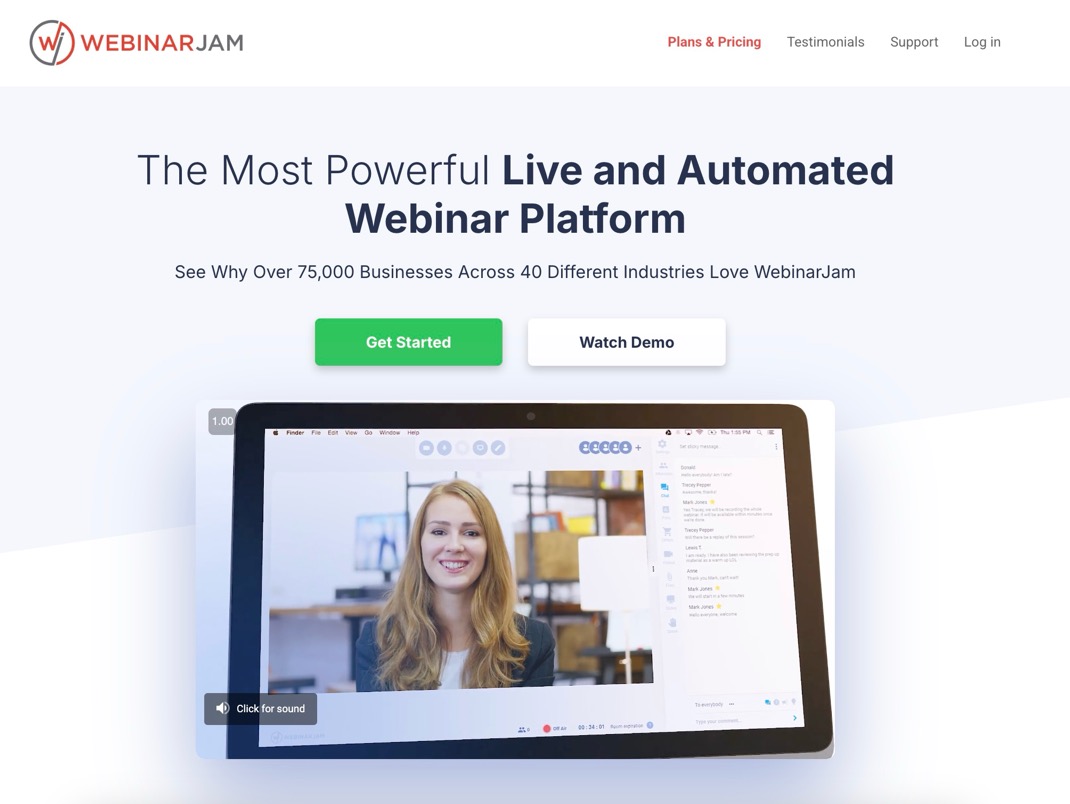
Here we are not talking about a funnel. We are talking about an ecosystem.
Metrics that change in the circular model
Instead of obsessing only over:
- Initial conversion rate
We should measure:
Lifetime Value (LTV)
The Lifetime Value measures how much money a customer generates throughout their entire relationship with your brand, not just in their first purchase.
In a circular model, the goal is not to close a one-time sale but to increase that value over time through repetition, loyalty, and recommendation.
Repetition rate
Indicates how many customers return to buy after their first conversion.
A high repetition rate means that your offer not only convinces but satisfies and builds trust. It’s a clear sign that the loop is working.
Recommendation rate
Measures how many customers actively recommend your brand to others. It can be calculated through referral programs or indicators like NPS (Net Promoter Score).
In circular marketing, recommendation is the fuel that keeps the system moving.
Continuous engagement
It’s not just about opening an email once. Continuous engagement evaluates sustained interaction over time: recurring opens, clicks, responses, participation in events or community.
It’s proof that the relationship is alive and not just an isolated conversion.
According to Harvard Business Review, increasing customer retention by 5% can increase profits by 25% to 95%, depending on the industry.
That’s circular power.
A different perspective: marketing as a living system
The mistake is not using funnels. It’s thinking they end.
Modern marketing resembles more a biological/social system than an industrial funnel.
- It evolves.
- It adapts.
- It learns.
- It feeds back.
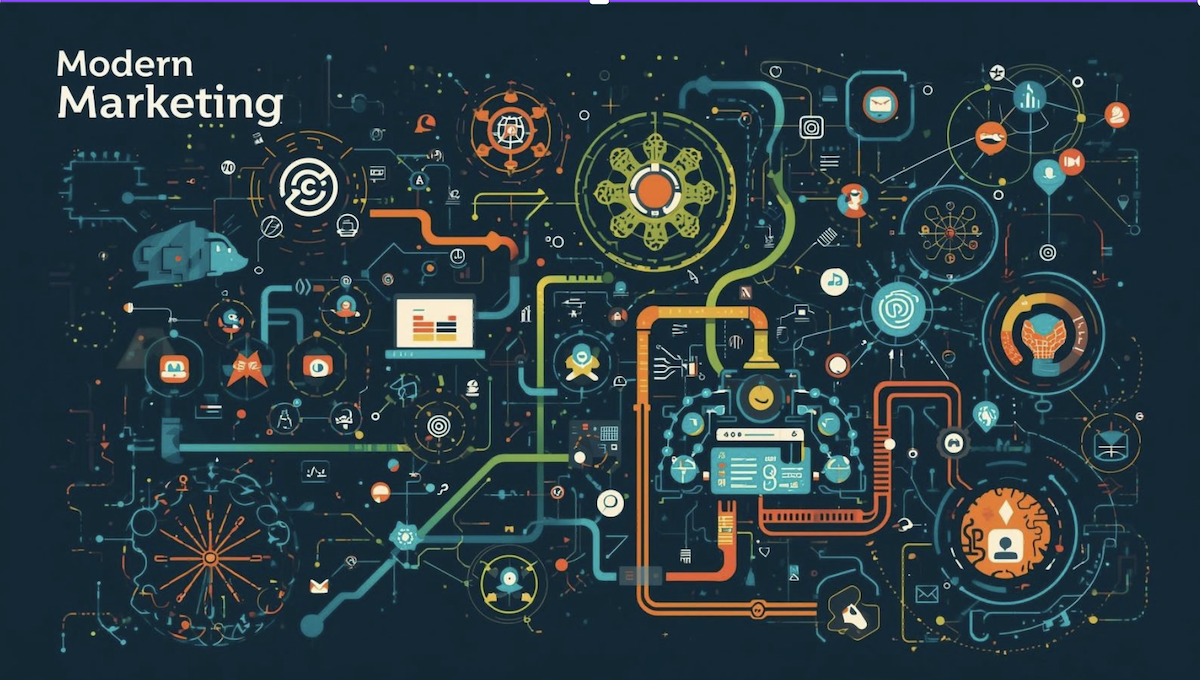
And in that system, well-executed email marketing is the central nervous system.
With tools like Acumbamail, you can design structures that not only convert but connect, accompany, and retain.
Because now, it’s not about who converts faster.
It’s about who builds longer relationships.
Closing: from closure to continuity
The end of linear funnels does not mean abandoning strategy.
It means expanding it.
It means understanding that:
- The customer is not the end of the process.
- It’s the beginning of the next cycle.
When you shift from thinking in funnels to thinking in loops, everything changes:
- Your content.
- The segmentation.
- Your automations.
- Your relationship with the audience.
And that’s where marketing stops being a transaction and becomes a community.
And when that happens, growth stops depending on constant acquisition and starts feeding from within.
That’s circular marketing: real loyalty, digital sustainability.
Do you want to start applying all these concepts in the world of email marketing?