How Subscription Pages Can Help Increase Conversions (with Examples)
 Yacarlí Carreño · 29 Jan, 2026 · Landing pages · 7 min
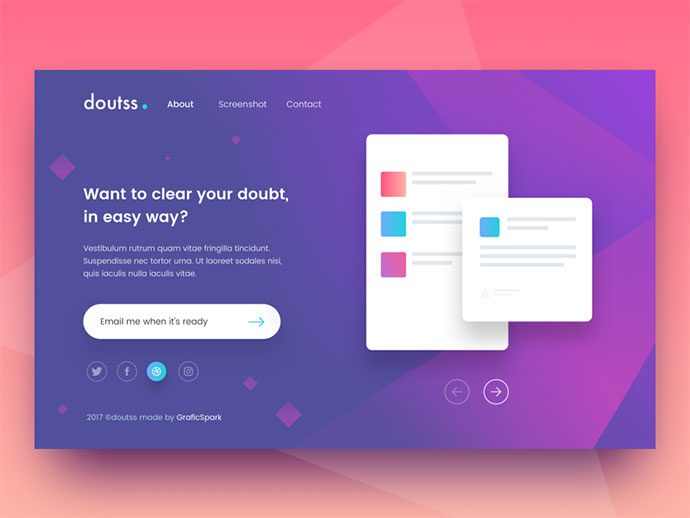
There are many allies to help you increase conversions in your business… Subscription pages are one of them, and here we tell you how.
What are landing pages for?
Collect customer information
Get leads/subscribers
Generate conversations/sweet moments, a good impression on the audience
Inform
*If this topic interests you, here is a guide to creating and optimizing landing pages.
How to make a single page fulfill all those functions?
Forms can be a great tool.
A good form page can do the heavy lifting, if we set it up well.
This clever tool enhances the visitor experience to boost landing page results.
That’s why today we want to talk about the benefits of landing page forms and what it takes to build a good one.
Why use forms?
Forms on landing pages increase conversions through three main benefits:
- Ease of use: for visitors, filling out an online form is better than calling or emailing because it requires less time and effort. Additionally, they will know exactly what information is needed to get what they want from the brand.
- Versatility: online forms solve many business challenges, such as obtaining customer feedback and generating leads.
- Device adaptability: it’s easy to adapt an online form to mobile landing pages. With so many people using mobile devices to browse the Internet, the tools we use must be able to adapt to the format.
What makes a form help increase conversions?
Two main factors drive an optimal landing page form:
1. User experience:
A conversation won’t go well if someone asks you all their questions at once, right? What if the conversation drags on too long? The same rules apply to online forms.
The best online forms use the breadcrumb technique: asking questions little by little. We suggest presenting one question at a time to create a less overwhelming and more focused experience for your visitors.
They also don’t last longer than they should. More than a quarter of form users will abandon a form if it’s too long. Think about the amount of information you really need from your visitors to achieve your goal.
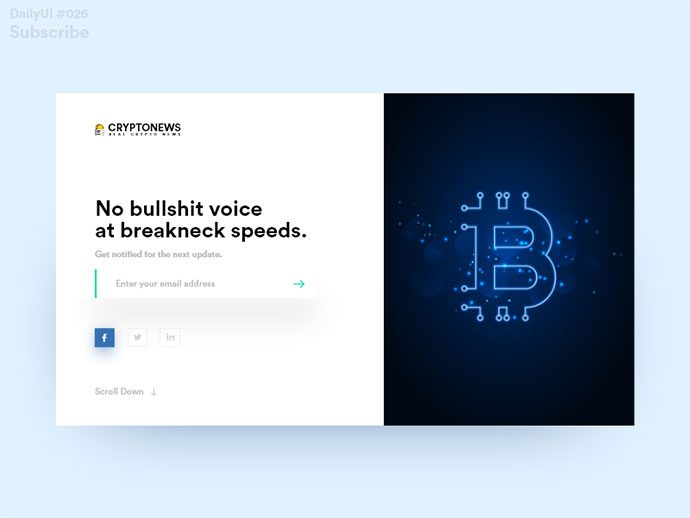
*Check out this Guide to Creating the Best Newsletter Subscription Form and Growing Your Subscriber List.
2. Form logic:
Well-designed online forms adapt their questions to the visitor’s responses as they progress. For example, if someone answers that they live in a house, a form shouldn’t ask for their floor/apartment number. A good form will direct a visitor to questions relevant to them and skip any unrelated questions.
5 Types of Forms to Improve Landing Pages and Increase Conversions
Try one of these five types of forms:
1. Contact
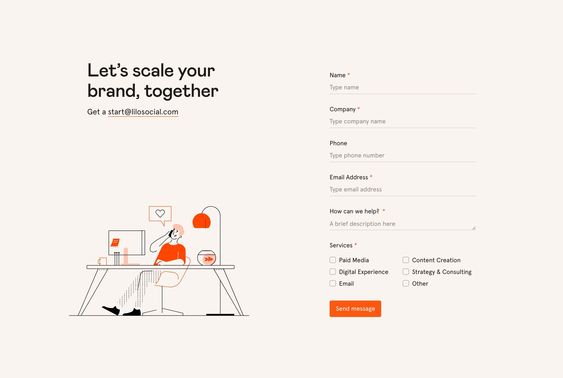
The “contact us” form is one of the most classic forms used on a landing page. It asks the visitor for basic contact information such as their name and email and offers open fields to write.
This form is basic for a good reason. It reduces friction by allowing visitors to communicate directly from the website, without the need for additional steps. When you share a contact form upfront on your landing page, you help the brand appear authentic and open.
2. Lead Generation
According to the latest IAB study: A surprising 84% of marketers use online forms for lead generation, capturing contact information for use in the sales funnel. In the world of landing pages, most lead capture pages have a lead magnet (a resource that visitors can download in exchange for entering their contact information into a form. We discuss this in more detail in this article). But they can also take unconventional formats like quizzes or surveys that send their results to the email provided by the visitor and provide valuable information.
Lead generation forms keep businesses sustainable by adding new prospects to the sales funnel. They make the process smooth by converting visitor information into a format that can be sent to your CRM or other sales software.
Let’s see a lead generation form in action. This form uses another popular strategy: newsletter subscriptions (which can provide value):
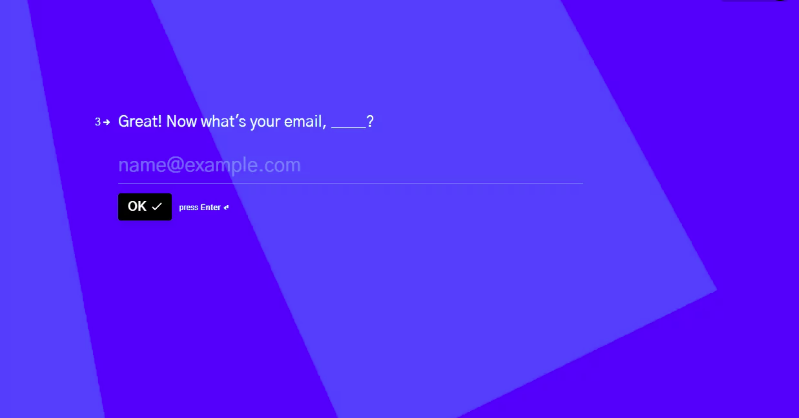
After requesting the visitor’s name, this form addresses them by name when requesting their email (hence the “___” in the screenshot). This is a good way to add a personal touch to the registration process.
3. Customer Feedback
Not all landing pages are so focused on sales. Some have softer goals, such as requesting customer feedback. A customer feedback form asks questions about the visitor’s perception of a business and their preferences for future experiences.
The information obtained from a customer feedback form is business gold. After all, is there a better place to get optimization advice than directly from your audience?
Additionally, delegating the customer feedback process to a form creates more momentum for visitors. Instead of contacting directly, they can fill out the form whenever they want. As a result, they will be more likely to give their opinion, feel heard, and this is a necessary approach by today’s brands.
Since forms have different response formats, such as scales, ratings, and multiple choices, they make it easier for customers to express their opinions. See how this form allows the user to rate aspects of their order from 1 to 5:

4. Online Quote
When you run a service-based or customized business, you usually can’t tell a customer the prices right away. You need more information from them to quote the correct number. An online quote form does the hard work for you, collects your customers’ specifications, and provides a personalized quote.
Both the business and the customer will benefit from an online quote form. They get transparent pricing… And if someone leaves due to the estimate they get from the form, you will have weeded out a potential customer who wasn’t a good fit for your business.
To get only qualified leads from an online quote form, you have to keep it real. See how this translation quote form asks customers if they want to proceed with the transaction after receiving their quote:
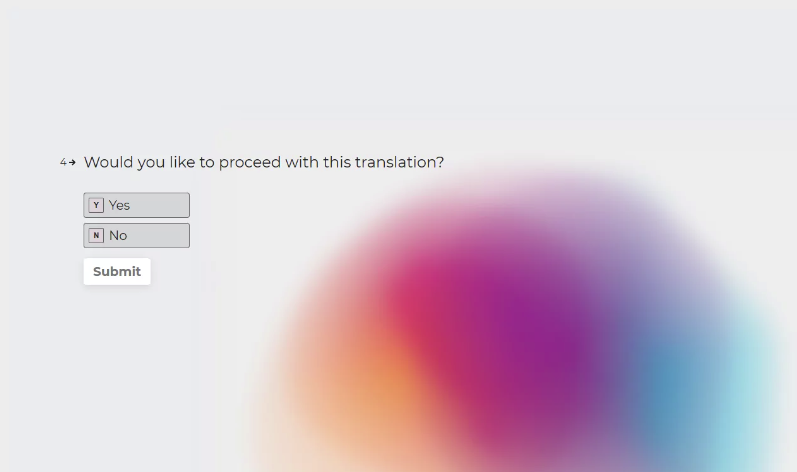
Customers who are no longer interested in the service can withdraw before the form adds them to a contact list, saving both parties an awkward conversation.
5. Order
Not all online sales items go to a virtual cart. Custom and wholesale orders need additional information in the ordering process. An online order form captures all of a customer’s specifications and takes their payment so they can get their orders right every time.
Like quote forms, online order forms make a complicated part of the business smooth. They facilitate the conversion process by simplifying it for your customers, and who isn’t a fan of that? Small businesses especially like online order forms as they add a professional touch with little effort.
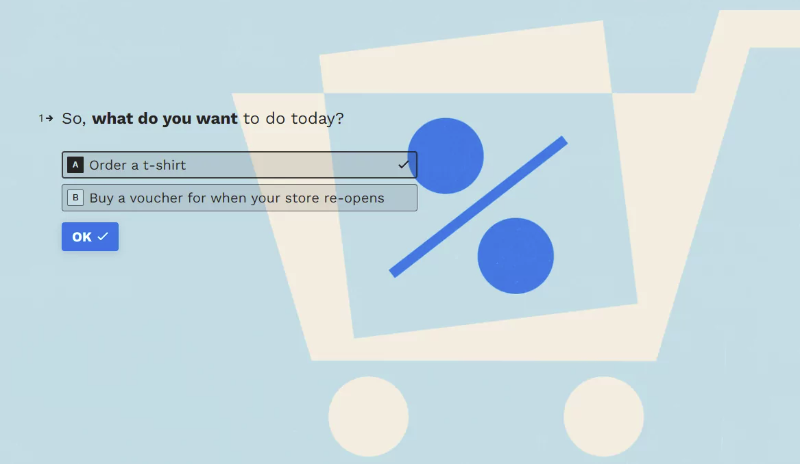
Since online order forms are custom-made, they can handle many of the quirks when executing custom orders. See how this t-shirt order form allows the customer to submit an order or get a coupon:
Now that you’ve seen these examples, we hope to inspire you to create new forms or give a twist to optimize the ones you already have. It’s about using this tool creatively to get the most out of it.
The best part: It’s very easy to create forms. In fact, you can do it on our email marketing platform. The best form builders for landing pages have customization options and templates that allow you to create personalized experiences quickly.
Some final tips to increase conversions thanks to forms or subscription pages:
- Create the form in such a way that it is beneficial for both parties (both for the brand and for customers and potential customers). In addition to fulfilling a practical function, forms can be tools that allow you to obtain a benefit while solving a need for the people who fill them out.
- Use creativity. Add a creative touch to the way you design, write, or present the form.
- Remember to speak in your audience’s language. This is fundamental for them to feel confident and motivated when answering and leaving their data.
- Transparency. Communicate honestly at all times why you want the information and how the data will be handled. Do it right for everything to go well.
- Gamification. Filling out a form can be a fun experience if you approach it well and with that focus.
- Offering benefits always works to increase participation: exclusive advantages, gifts, discounts, promotions, downloadable material, etc.
- As we have seen in the examples: Forms are versatile. Perhaps the most well-known are subscription forms, but don’t limit yourself. Dare to create different types of forms that help fulfill various relevant business functions.
- Then use the information for something useful. There’s no point in creating a series of powerful forms if you’re not going to take advantage of the data collected; and, believe it or not, it’s one of the most common mistakes. Today, too much information is collected on the Internet. Unfortunately, very little is used coherently. The value of that data, well used and analyzed, is pure gold for improving customer experience, increasing conversions, and building loyalty.
Email marketing
Remember that the data requested on subscription pages or forms is also fuel for other marketing tools such as, for example, email marketing. Take advantage of them to boost your strategy. Remember that everything you do from your brand should be part of a higher integrated marketing plan and use it in such a way that everything is connected and can benefit. Avoid isolated actions.
Want to start? Sign up for free on our platform and start now.