Humans vs. Machines: Is Automated Creativity Killing Authentic Digital Marketing?
 Yacarlí Carreño · 16 Sep, 2026 · Marketing Online · 10 min
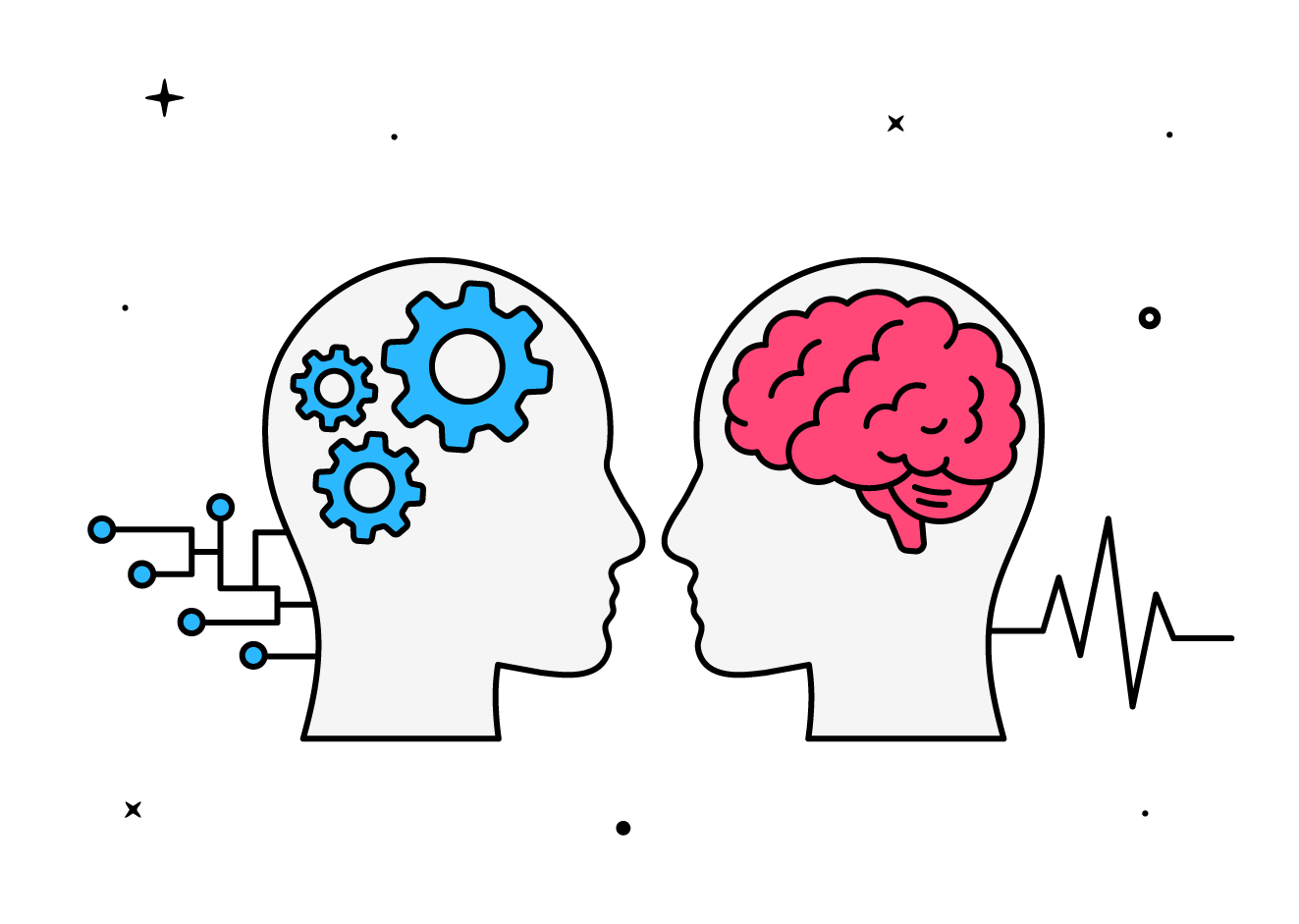
In recent years, digital marketing has gained a production capacity that would have been hard to imagine just a decade ago. Today, it’s possible to generate email campaign subjects, ad versions, images, scripts, and product descriptions in just a few minutes. The same goes for complete articles and adaptations of the same piece for different audiences or channels.
The uncomfortable question arises afterward:
What happens when all brands start working with systems trained on similar cultural repertoires, receive similar recommendations, and turn efficiency into the main creative criterion?
Automated creativity in marketing is not necessarily eliminating human creativity. But it is changing the conditions under which it is produced. It is speeding up processes, expanding execution capacity, and democratizing tasks that previously required specific technical knowledge. At the same time, it introduces a less visible risk. The ease of creating content can end up replacing the need to have something true to say.
That is, probably, the conflict worth addressing. Not whether a machine can write a good text or produce an attractive image, but what kind of marketing we are building when production is no longer the main obstacle.
We have never created so much. That doesn’t mean we are saying more.
For a long time, creating content meant accepting a series of limits. You needed time, budget, knowledge, or professionals capable of turning an idea into a publishable piece. Those limits could be frustrating, but they also forced you to choose. Not every idea became a campaign. Not every brand could produce every day. So you had to prioritize, develop a perspective and decide what truly deserved the public’s attention or budget allocation.
Generative artificial intelligence is weakening those barriers.
In a survey published by Adobe in 2024 among creative professionals already using generative tools, 58% stated that they had increased the amount of content they produced. Also, 66% considered that these tools helped them create better content. These are data from a study promoted by the company itself and should be interpreted within that context. Still, they clearly reflect the central appeal of the technology: expanding productive capacity without increasing resources in the same proportion.
Production capacity is not the same as having something to say
There is nothing inherently negative about this. Automating a format adaptation, exploring several initial compositions, or generating drafts can free up time for tasks that require more thought. In fact, another Adobe study, published in 2024, found that 90% of creators surveyed believed that generative AI could save time and money by taking on routine tasks and supporting ideation. Again, we are talking about a corporate study, not a universal truth. But it does reflect a widespread perception among those who work with these tools.
The problem begins when we confuse production capacity with the capacity to signify.
A brand can publish five times more and, still, become less and less recognizable. For example it can personalize hundreds of versions of a message without any containing a unique observation. It can generate effective subjects, correct texts, and impeccable images and, yet, leave behind a strange feeling: that of having seen something that works formally but truly belongs to no one.
The abundance of content does not solve the scarcity of criteria.
In some cases, it even intensifies it.
The creative paradox of artificial intelligence
A study published in Science Advances in 2024 helps to understand this contradiction. The study analyzed how access to AI-generated ideas affected the writing of short stories. Participants who received assistance produced stories that were rated, on average, as more creative, better written, and more entertaining, especially when their authors started with a lower initial creative capacity.
So far, the conclusion seems clear: AI can elevate individual outcomes.
However, the study also found that AI-assisted stories were more similar to each other. That is, it improved the evaluated creativity of certain pieces but decreased the collective diversity and depth of the whole.
This paradox is especially relevant for marketing.
A tool can help a brand write better. It can organize a confused idea, improve the structure of a campaign, or propose paths the team hadn’t considered. But when thousands of companies turn to similar models to solve similar problems, the sum of results can become progressively homogeneous.
Not necessarily bad. Homogeneous.
And in marketing, that difference matters a lot. A piece can be correct, clear, and persuasive and, still, be completely interchangeable with that of another company. It can meet all style recommendations, incorporate the right call to action, respect the structure that supposedly converts. Yet it can still leave no trace
Authenticity doesn’t disappear because a machine intervenes. It disappears when no one takes responsibility for deciding what deserves to be preserved, what should be discarded, and what truly represents the brand.
The real risk is not using AI, but stopping to think
As these tools integrate into daily work, there is a temptation to treat them as an automatic solution to the lack of time, ideas, or resources. An instruction is entered, several proposals are received, and the one that seems most polished is chosen. The process is efficient. It can also become intellectually passive.
A study disseminated by MIT Sloan in 2025 reached a particularly useful conclusion. Generative AI can boost professional creativity, but its benefits are greater among people capable of reviewing their own mental process, questioning the responses received, and consciously adapting the way they use the tool. Therefore, the researchers warn that AI does not function as a “plug and play” creative solution. The outcome depends on the human ability to interact critically with it.

Source: Unsplash
This observation changes the focus.
The difference is no longer between those who use artificial intelligence and those who refuse to do so. It’s between those who use it to expand their thinking and those who use it to avoid it.
In the first case, the machine can function as an interlocutor: it proposes, challenges, organizes, combines, and accelerates. In the second, it becomes a substitute for judgment. And when that happens, marketing begins to lose precisely what no automation can decide on its own: from where a brand speaks, what it is willing to defend, what nuances it recognizes, and what relationship it wants to build with people.
Where this shows up most: email marketing
This is especially evident in email marketing. Automating a sequence, personalizing a send, or adapting messages according to user behavior can improve the relevance of communication. Acumbamail allows, for example, creating automatic flows conditioned by subscriber actions. But automation only decides when a previously designed message is delivered. It cannot resolve on its own whether that message adds value, respects the relationship with the recipient, or reproduces exactly the same tone that hundreds of companies are using.
Technology can handle the journey. The intention remains ours.
When all brands start to sound the same
There is a curious phenomenon that we have probably all experienced over the past year, although we may not always know what to call it.
We open LinkedIn, read a post. Move on to the next. Then another… And there comes a point where it’s hard to distinguish who’s writing.
The structures are similar, the conclusions too.
Even certain expressions start to repeat with surprising frequency.
It doesn’t happen because all professionals have suddenly lost their judgment.
It happens because many of the tools they use to produce content are based on the same linguistic patterns, the same argumentative structures, and the same cultural references.
The consequence is not that the content is bad, it’s something much more subtle: it starts to seem interchangeable.
Creativity has never been about producing more
There is an idea that artificial intelligence has reinforced almost unintentionally: that creativity is a matter of speed.
- The more proposals we can generate…
- The more versions of an ad we can test…
- The more posts we can launch…
… The more chances we have of finding a good idea.
The logic seems flawless, but the history of creativity tells another story.
Source: Unsplash
The campaigns we remember were not the ones that produced the most versions, they were the ones that defended a point of view.
- Nike didn’t build a brand by publishing more ads than anyone else.
- Patagonia didn’t become a benchmark by writing more posts.
- LEGO didn’t create a global community by automating more content.
They all did something much harder: they maintained a coherent voice for decades… And that coherence cannot be automated… because it doesn’t depend on a tool, it depends on decisions, renunciations… On accepting that a brand also defines who it doesn’t want to be.
AI can help you write a manifesto, but it can’t decide what it should be. It can’t decide who you are, or who your brand is.
Judgment begins where the prompt ends
Perhaps this is one of the most important questions we should ask ourselves as marketing professionals.
If two teams use exactly the same artificial intelligence tool, why will some brands remain memorable and others not?
The answer probably has little to do with technology. It has to do with judgment.
The prompt will never be smarter than the strategy behind it.
A tool can suggest twenty headlines, can reorganize an argument, synthesize a study. It can even propose a fairly convincing campaign. But it doesn’t know which of those twenty options best represents a brand’s personality. It doesn’t understand what conversation that company has been building for years; it doesn’t know the decisions that shaped its culture; and it doesn’t know what risks are worth taking to stand out.
All that remains deeply human. And it probably will be for a long time.
Email marketing demonstrates better than any other channel where the real value lies
There is a reason why email marketing is particularly interesting for understanding this debate.
- Automating an email is relatively simple.
- Personalizing the recipient’s name too.
- Creating a welcome sequence takes just a few minutes with tools like ours.

Source: Unsplash
The challenge begins afterward:
Why should that user keep opening our emails six months from now?
The answer will never be: because we have good automation. It will be something else: because every time that person receives an email, they feel there is someone behind it who understands what they need.
And there lies a huge difference between automating processes and automating relationships. Automations are extraordinary for eliminating repetitive tasks, but:
- They shouldn’t eliminate intention.
- Nor should they replace empathy.
- Much less the ability to surprise.
In fact, the more automated a channel is, the more important it is that what the user receives retains a sense of authenticity.
The problem has never been that an email is automated. The issue arises when the recipient feels they could have received exactly the same message from any other company.
Perhaps the future doesn’t belong to those who use AI best
There is a fairly established conversation around artificial intelligence. There is constant talk of productivity, efficiency, time-saving…
… But I suspect that in a few years there will be another much more important question:
It will no longer be (I hope): Who uses artificial intelligence best?
But: Who remains recognizable despite using it? Who uses it intelligently?
Because there will come a time —and it’s probably closer than we think— when all companies will have access to very similar tools.
The advantage will then cease to be in technology. It will return to where it always was: in ideas; judgment; sensitivity; people; and, above all, in the ability to build a voice that no artificial intelligence can replicate exactly.
When technology amplifies an identity that already exists
An interesting example of this balance is Create Real Magic, the initiative launched by Coca-Cola in 2023. The company created, together with OpenAI and Bain & Company, a platform that allowed artists and users to generate images using artificial intelligence with some of the most recognizable visual assets from its archive, from the contour bottle to certain historical depictions of Santa Claus.
Technology played a central role, but it didn’t start from a blank page. It operated within a brand universe built over more than a century. Participants could reinterpret its symbols, combine them, and take them to new territories, but they were still working within a culturally recognizable identity. Some of the selected works were even displayed in advertising spaces in New York and London.
The case doesn’t prove that any application of artificial intelligence produces a good campaign. Nor does it allow for measuring its commercial impact on its own. What it does show is a fundamental difference: Coca-Cola didn’t ask technology to invent its personality. It allowed it to experiment with codes the brand had already defined.
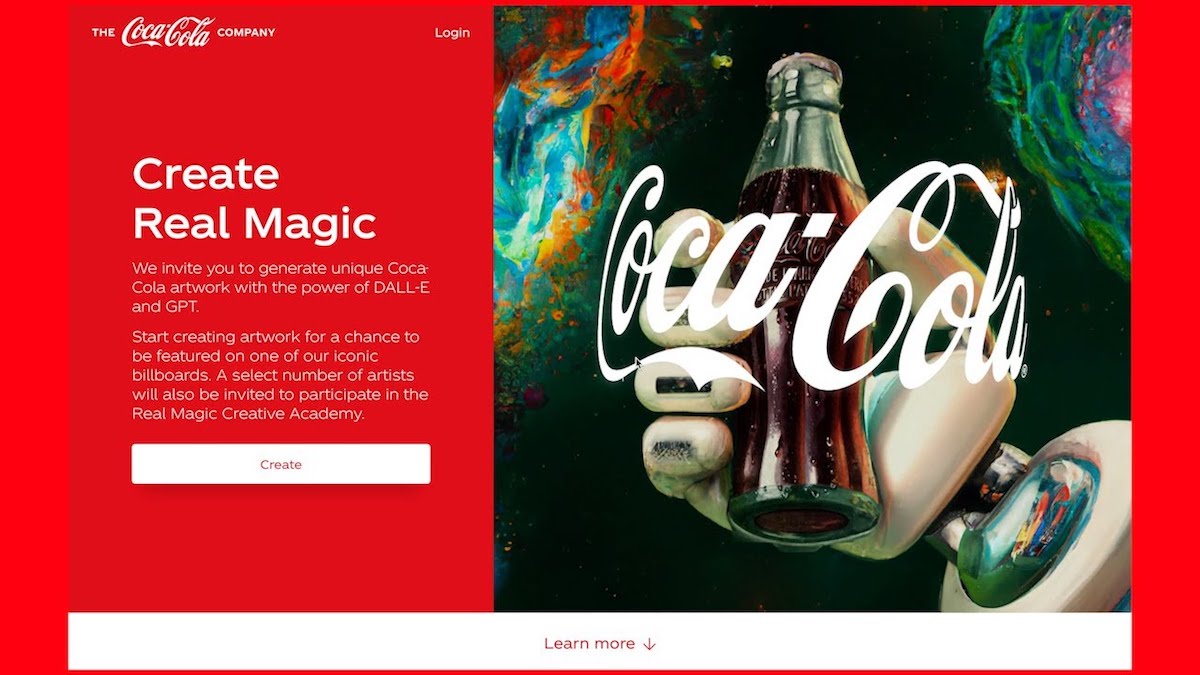
This distinction is useful for any company, even if it doesn’t have a historical visual archive or its budget. A brand needs to know who it is before automating how it expresses itself. Otherwise, artificial intelligence doesn’t amplify an identity: it fills its absence with the most probable solutions.
Personalization is not enough to build a relationship
Technology allows for segmenting subscribers, adapting content, automating sequences, and sending each message based on user behavior. All of this can make a campaign more relevant. But technically personalized communication can still be emotionally generic.
Including the recipient’s name doesn’t make an email personal. Recommending a product based on a previous purchase doesn’t guarantee the brand truly understands that person. Trust is built when there is coherence between what a company promises, what it does, and how it communicates.
The special report on brands from the Edelman Trust Barometer 2024 indicates that consumers who fully trust a brand are more willing to buy it, remain loyal to it, and recommend it. Trust, therefore, is not an emotional add-on to conversion but a condition that sustains the relationship beyond a specific campaign.
The marketing automation tools from Acumbamail can help deliver relevant messages at the right time. But the quality of that relationship will still depend on human decisions: what is said, why it is said, what commercial pressure is considered acceptable, and what type of bond is desired when there is no immediate sale at stake.
Authenticity will be more valuable the easier it is to produce
Automated creativity is not necessarily killing authentic marketing. It is doing something perhaps more uncomfortable: it is revealing which brands had their own voice and which relied solely on the formulas of the moment.
The future of marketing doesn’t belong to those who reject artificial intelligence or those who automate every step before their competitors. It belongs to those who know how to use it without giving up their ability to observe, choose, dissent, and build meaning.
Machines can help us produce faster. They can detect patterns, multiply versions, and execute processes with precision impossible for a human team. But they cannot decide what is worth defending. They cannot feel when a campaign is opportunistic, when a phrase betrays the brand’s identity, or when the seemingly less efficient option is precisely the one that can make it memorable.
The question, therefore, is not to what extent artificial intelligence can create for us. The issue would rather be: how much thought are we willing to preserve when it’s no longer essential to think to produce.