Year-End Impact: How to Review Your Metrics and Prepare Your 2027 with Data
 Yacarlí Carreño · 17 Nov, 2026 · Email Marketing: First Steps · 8 min

November often brings a contradictory feeling in marketing departments. On one hand, there are still campaigns to execute, goals to achieve, and budgets to justify. On the other hand, the need to look back, evaluate achievements, and decide where to focus efforts for the next fiscal year begins to take hold.
It’s the time for annual reports, results presentations, and the first forecasts for 2027. However, among graphs, percentages, and comparisons, there is a risk that rarely receives enough attention: confusing the accumulation of information with the ability to extract useful conclusions.
Digital marketing metrics allow us to understand what has happened over a certain period. But data, by itself, doesn’t necessarily explain why it happened or what should be done next. A campaign can exceed its reach goals and not generate relevant business opportunities. A newsletter may register fewer openings than the previous year and, yet, contribute to increasing sales. Even an apparently profitable channel may be benefiting from purchase decisions that began much earlier, at other touchpoints.
Therefore, reviewing 2026 requires more than just collecting the indicators from the last few months. It involves questioning how results have been measured, which goals still make sense, and what learnings should guide the investments of 2027.

The problem is not the lack of data, but the questions we ask
Analytics tools allow us to observe virtually any digital interaction. We can know where visits come from, which content generates interest, how many people complete a purchase, or how campaign results evolve.
However, having more information does not guarantee a more accurate interpretation. In fact, the greater the number of available indicators, the more important it becomes to distinguish those that describe activity from those that truly allow us to evaluate the impact on the business.
This difference is especially noticeable in visibility metrics. Impressions, reach, or traffic can provide valuable information about a campaign’s distribution. But their relevance depends on the intended goal. Getting thousands of visits does not necessarily constitute a good result if those visits do not correspond to the right audience.
Google Analytics 4 makes this distinction through the so-called key events, which allow identifying actions that are especially important for a company. These may include purchases, registrations, or information requests, depending on the defined goals. Their documentation, updated in June 2025, explains how to use these events to analyze the performance of marketing actions.
The fundamental issue is that not all companies should measure success in the same way. A brand seeking to increase its awareness needs different indicators than an ecommerce focused on improving its profitability. Similarly, a company aiming to retain customers should pay attention to behaviors that do not always produce an immediate sale.
Before building the annual report, it is advisable to revisit a seemingly simple question: what did we need to achieve when 2026 began, and what evidence do we have of having progressed towards that goal?
Measuring results is not the same as attributing them correctly
One of the most common mistakes when evaluating a marketing strategy is analyzing each channel as if it operated independently.
Imagine a person discovers a brand through a social media campaign, later reads several articles on its blog, and subscribes to its newsletter. Weeks later, they receive an email with a commercial proposal and end up making a purchase.
Which channel generated that conversion?
The answer depends, in part, on the attribution model used. Google Analytics 4 allows working with data-driven and last-click models. The former distributes credit among different interactions according to their estimated contribution; the latter assigns it to the last eligible interaction before the conversion.
Neither of these models should be interpreted as an absolute explanation of consumer behavior. They are tools that help understand complex commercial journeys, but their results depend on the available information and measurement rules.
This consideration is especially important when preparing the 2027 budget. Reducing investment in a channel because it records few direct conversions could be a hasty decision if that same channel plays a significant role in the early stages of the purchase process.
The annual review should allow identifying these relationships before redistributing resources. Otherwise, there is a risk of rewarding only the actions that appear at the end of the commercial journey and downplaying those that contributed to building the decision.
This is especially important in a world of circular funnel.
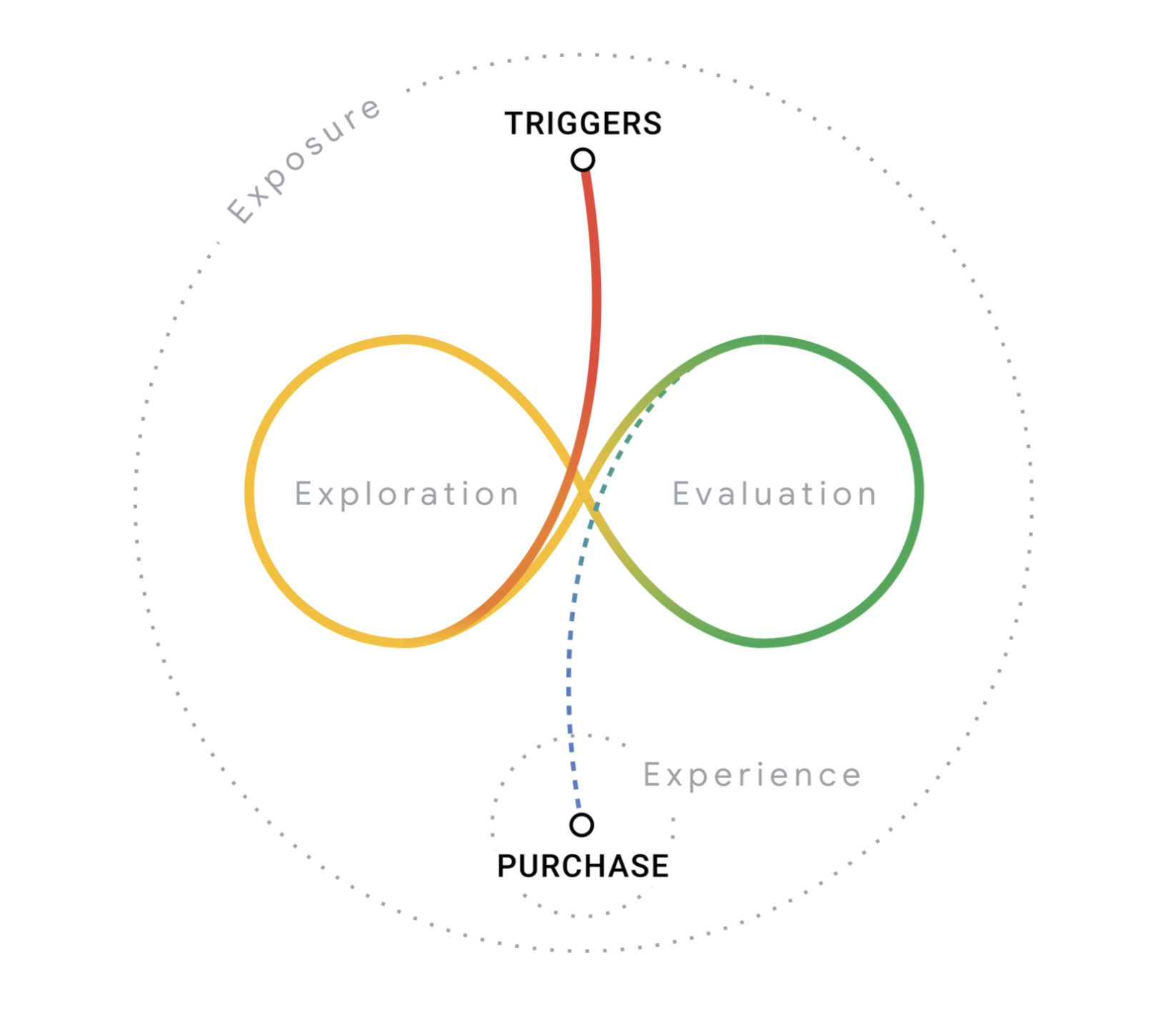
Source: The Pleasure of SEO
Email marketing metrics: what the 2026 results really tell us
Email marketing offers a particularly interesting opportunity to evaluate the evolution of a strategy. Unlike other channels, it allows observing behaviors linked to a relationship that develops over time. Each send provides information about subscribers’ interests, the relevance of the content, and a brand’s ability to maintain their attention.
However, even here it is easy to fall into superficial interpretations. A campaign with a high open rate may seem successful, even if it generates little subsequent interaction. Another, aimed at a smaller audience, may get fewer total clicks and produce much more relevant business results.
Therefore, the 2026 review should go beyond identifying campaigns with the best percentages. The goal is to understand which content sparked interest, which segments responded best, and how relationships with subscribers have evolved.
The open rate no longer tells the whole story
For years, the open rate was one of the most used indicators to evaluate a newsletter’s performance. Its interpretation seemed simple: the higher the percentage, the greater the recipients’ interest.
Today, that reading needs nuances.
Privacy protection features of certain email clients have changed how opens are recorded. Apple, for example, explains that its Mail Privacy Protection system can download remote content in the background, without waiting for the user to open the message. This makes it difficult to distinguish certain real opens from automatic content loads.
The consequence is significant: a high open rate does not necessarily demonstrate that more people have read a campaign. It also doesn’t mean we should completely abandon this indicator, but interpret it alongside other behavioral signals.
Unique clicks, for example, allow identifying how many recipients interacted with the links. Subsequent conversions help assess whether those interactions have translated into actions relevant to the business.
The question then shifts from how many people opened an email to something more significant: what happened afterward.

Source: Unsplash
From clicks to conversions: measuring the value of each campaign
The key is to connect email marketing metrics with the results that truly matter to each company.
For this, it is particularly useful to combine campaign reports with web analytics tools. Google Analytics 4 allows identifying traffic from email through UTM parameters. These parameters distinguish the source, medium, and campaign, facilitating the analysis of visits and subsequent actions.
On platforms like Acumbamail, campaign reports allow analyzing the behavior of sends. Complementing that information with the conversions recorded on the website helps build a more complete view of performance.
It’s not just about determining which newsletter got the most clicks. It’s about understanding which ones contributed to generating business opportunities, recovering customers, or strengthening relationships that can produce long-term results.
The health of the database is also part of the review
There is another aspect that often gets relegated compared to immediate performance metrics: the evolution of the audience itself.
A database can grow considerably over a year and, yet, lose quality. The growth in the number of contacts does not guarantee that those subscribers maintain interest in the communications or that there is a relevant business relationship.
Therefore, the review should also consider unsubscribes, bounces, segment evolution, and contact participation over time. It’s advisable to observe if new additions interact with the content and if certain audiences show signs of disinterest.
These metrics should not be interpreted as isolated problems needing immediate correction. An unsubscribe may simply reflect a change in a person’s interests. The important thing is to identify patterns that allow reviewing the frequency, content, or expectations generated during the subscription.
When preparing for 2027, it might be more valuable to improve the relationship with an engaged audience than to continue expanding a list without paying attention to its quality.
Because the true asset of an email marketing strategy is not the number of stored addresses, but the trust that exists behind them.

Source: Unsplash
From 2026 results to 2027 strategic decisions
Once the metrics have been analyzed, probably the most important part of the annual review arrives: deciding what to do with the obtained information. Because identifying the most profitable campaigns, the content with the highest interaction, or the most engaged segments has little value if those learnings do not change future decisions.
The first step is to distinguish temporary results from patterns that deserve attention. An especially successful campaign may respond to a one-time promotion, while a sustained improvement in conversions may indicate a deeper change in consumer behavior. Similarly, a drop in traffic does not always represent a problem if accompanied by higher quality visits.
This interpretation should guide the distribution of the 2027 budget. Instead of automatically replicating the previous year’s investments, it’s advisable to identify which actions have proven to add value, which need adjustments, and where there are opportunities that have not yet been sufficiently explored.
In November, additionally, it’s important to recognize that the fiscal year is still open. The available results allow building a provisional balance, but the closing forecasts must be differentiated from real data. This distinction is especially relevant in businesses where holiday campaigns represent a significant part of the annual revenue.
Planning with data also means learning to experiment
One of the biggest mistakes when developing an annual strategy is turning past results into certainties about the future. Data allows identifying trends and formulating hypotheses, but it does not guarantee that an action will produce exactly the same results again.
Therefore, a solid plan should reserve space for experimentation. If certain email campaigns have achieved better conversions, the next step is not necessarily to repeat them. It may be more useful to investigate which elements contributed to their performance: segmentation, timing of the send, value proposition, or content.
A/B testing allows testing some of these hypotheses through controlled comparisons. However, to obtain useful conclusions, it’s important to define beforehand what is intended to be tested and which indicator will determine the result.
Google explains this principle in its documentation on experiments, highlighting the importance of setting goals and evaluating results before implementing changes on a large scale.
Applied to email marketing, this approach allows transforming each campaign into a learning opportunity. The email marketing tools from Acumbamail facilitate the execution and tracking of sends, while strategic criteria determine which questions are worth investigating.
The goal should not be to experiment constantly, but to build cumulative knowledge that allows making better decisions over time.

Source: Unsplash
The true value of data lies in the decisions it provokes
Perhaps the main lesson we should take from the close of 2026 is that measuring more does not necessarily mean understanding better.
Companies have increasingly sophisticated tools to record behaviors, analyze commercial journeys, and evaluate campaigns. However, no platform can completely replace the human ability to interpret context, recognize the limitations of a measurement, or question a decision seemingly backed by numbers.
A good annual review is not, therefore, the one that gathers the most graphs or presents the results in the most favorable way. It is the one that allows recognizing successes, understanding mistakes, and establishing priorities with greater foundation.
Preparing 2027 with data means accepting that some decisions will need to change, that certain investments will need to be justified again, and that there will be hypotheses worth testing before becoming consolidated strategies.
Because data is not valuable solely for what it tells us about the past. Its true utility appears when it helps us formulate better questions about the future.
And perhaps that is the best way to close the year: not with the satisfaction of having measured everything, but with enough clarity to know what is worth doing next.