
Ranch-Style SEO: The Content Strategy That Transforms Your Search Engine Ranking
 Alicia Zunzunegui · 25 Feb, 2026 · Marketing Online · 7 min

The world of SEO has undergone countless transformations in the last decade. What once worked like a magic formula now barely moves the needle in search results. Among those methods that have lost strength is the famous Skyscraper SEO, a strategy that aimed to create the most extensive and comprehensive content possible and was highly relevant for a long time. Now what works is Ranch-Style SEO.
Google’s algorithms have evolved, and with them, so have user expectations and the emergence of Artificial Intelligence. In this context arises Ranch-Style SEO, a methodology that prioritizes the creation of specific and granular content, perfectly adapted to search intent. The great advantage? Attracting more qualified traffic without having to compete for the most contested keywords.
In this article, I will explain what it consists of, what differences exist with skyscraper SEO, and some success stories to inspire you.
What is Ranch-Style SEO and why is it revolutionizing web positioning?
Ranch-Style SEO is a content strategy focused on creating articles that focus on very specific subtopics, directly addressing the questions, doubts, and specific interests of users.
This methodology was popularized by Bernard Huang, co-founder of Clearscope, a SEO platform. He defined it as the most effective way to adapt to an environment where Google rewards specialization, real experience, and thematic authority.
Why does it arise?
The emergence of generative artificial intelligence and the continuous updates of Google’s algorithm, such as Hummingbird, RankBrain, or the most recent focus on EEAT (Experience, Expertise, Authority, and Trustworthiness), have changed the rules of the game.
Now, it’s no longer about being the longest, but about being the most useful and specific. Users don’t want to read 5,000 words to solve a simple doubt. They want clear and direct answers. And both Google and other AI assistants know this.
In this article, we delve into AEO (Answer Engine Optimization) and how to master SEO to appear in AI engines.
Differences between Ranch-Style SEO and Skyscraper SEO
In this summary table, you can see the main differences between the two:
| Feature | Ranch-Style SEO | Skyscraper SEO |
| Content type | Specific and granular | Extensive and general |
| Competition | Low (long-tail keywords) | High (broad topics) |
| Creation time | Faster | Requires extensive research |
| Ideal for | Blogs, niches, thematic authority creation | Comprehensive resource pages |
| Limitations | Requires multiple pieces | Difficult to rank without backlinks |
When to use each strategy?
Ranch-Style SEO is ideal for content creators looking to dominate a specific niche or create authority in a very specific topic.
If you have limited resources or operate in highly competitive sectors, this strategy will allow you to achieve results without having to face the giants of the industry.
For example, if you manage a blog specialized in “digital minimalism,” instead of trying to rank a generic article about productivity, you can create content like “How to organize your inbox in 15 minutes” or “5 apps to reduce time on social media”.
Skyscraper SEO, on the other hand, still has its place when you seek to create the “ultimate guide” on a topic and have the resources to promote it intensively.
It is especially useful if you have a consolidated backlink strategy or collaborate with other media to give visibility to your content.
How does Ranch-Style SEO work? The step-by-step strategy
Step 1: Analyze specific search intents
The first step is to understand exactly what your users are searching for.
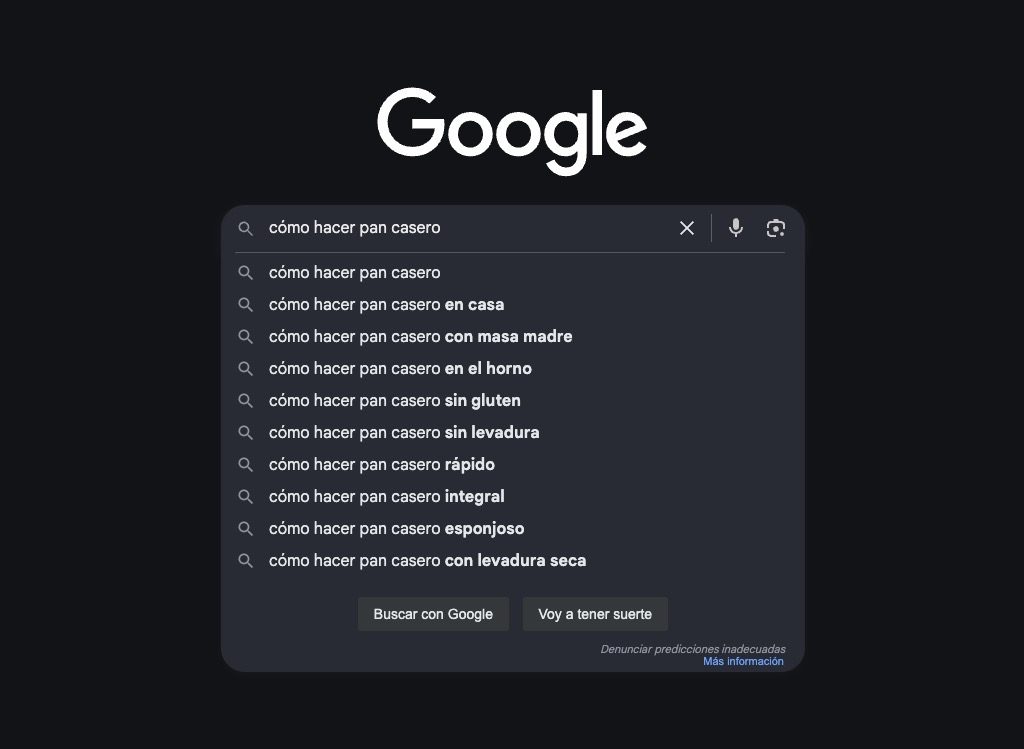
Are they searching for “how to make homemade bread” or “how to make gluten-free homemade bread in 30 minutes”?
The latter is a clear example of a specific and less competitive search intent.
To identify these opportunities, you can use free tools like Google Search Console, Answer the Public, or Google’s own autocomplete suggestions.
There are also specialized SEO tools that will help you much more in this first phase.
Step 2: Create granular, direct, and useful content
Avoid the temptation to tackle large topics in a single article.
Divide your content into smaller pieces aimed at solving specific doubts.
If you manage a gardening blog, instead of writing a post titled “All about indoor plants,” it is much more effective to publish several articles like:
- “How to care for a pothos indoors with low light”
- “5 tricks to make your monstera grow faster”
- “How to clean plant leaves according to the type of plant”
Each article answers a specific doubt and has a better chance of ranking on Google, ChatGPT, or Perplexity for specific searches.
Step 3: Strategically connect your content
Ranch-Style SEO is not about creating content islands, but about building a content ecosystem.
Make sure to strategically link your related articles. This not only helps the user delve deeper into the topic but also signals to Google that your website is an authority in that niche.
Advantages and disadvantages of Ranch-Style SEO (and when NOT to apply it)
✅ Advantages
- More opportunities to capture traffic through long-tails
Ranch-Style SEO allows you to focus on long-tail keywords (long-tail), which, although they have less search volume, present lower competition and a much clearer purchase or action intent.
This means you will attract users who are truly interested in a specific solution and are closer to converting.
For example, instead of competing for “digital marketing,” you can easily rank for “digital marketing strategies for local businesses in 2025.”
- Better user experience: quick answers to specific questions
How many times have you entered an article that promises to answer your question and, after 5 minutes of reading, you still haven’t found the answer? This frustration is exactly what Ranch-Style SEO avoids.
By creating highly specific content, the reader finds exactly what they are looking for without detours. This not only increases satisfaction but also improves metrics like time on page and bounce rate, two factors that Google values when ranking.
- Building real thematic authority
Google rewards websites that demonstrate expertise in a specific area. By creating a “ranch” of related content, you are sending clear signals to the algorithm that you dominate that topic. This strategy, in the medium and long term, consolidates your thematic authority, making it easier for future content to rank more easily even with less effort.
❌ Disadvantages
- Requires creating many different contents
The main entry barrier of this strategy is the amount of content it demands.
It’s not enough to write one great article; you will have to develop multiple pieces focused on different aspects of the same topic. This implies greater editorial planning effort, writing, and, in many cases, investment in human resources or specialized freelancers.
- Not ideal for product pages or local SEO strategies
If your business is focused on local SEO or direct product promotion, this strategy may not be the most efficient.
Ranch-Style SEO is designed to build authority through informative content, not so much to target immediate purchase intents or generate visits to product pages. In these cases, strategies like local SEO or eCommerce SEO will be more effective.
- If not structured well, it can disperse your site’s authority
By creating a lot of content on a topic, you run the risk of Google not knowing which is the main piece or that they all compete with each other, known as keyword cannibalization.
This happens when a clear internal linking strategy and content hierarchy are not implemented. The key to avoiding it is to properly structure internal links and clearly define which content piece should be the main reference (known as pillar content).
How to start implementing Ranch-Style SEO?
1. Choose an umbrella topic
Define a thematic area you want to rank for.
For example, “Personal Productivity”.
2. Identify associated microtopics
Make a list of linked subtopics, such as:
- “How to make an effective to-do list.”
- “5-minute productivity methods.”
- “Free tools to improve your focus.”
3. Create articles focused on each subtopic
Write specific content pieces for each microtopic.
Each article should clearly and directly answer a specific question or need.
4. Interconnect the content
Use internal links to relate the articles to each other, guiding the user from one topic to another naturally.
Practical case
Suppose you want to work on the topic of personal productivity. Instead of writing a macro article titled “The mega guide to productivity”, opt to divide that large topic into articles like:
- “What is the Pomodoro Technique and why does it work?”
- “How to plan your day in just 10 minutes”
- “5 free apps to organize your tasks”
In this way, you will not only attract traffic through multiple long-tails but also position yourself as a reference in that field.
Success stories: How real brands are applying Ranch-Style SEO
Decathlon
Decathlon applies a Ranch SEO strategy in its blog and product pages, especially in very specific sports categories.
Instead of limiting itself to extensive product pages, it publishes granular articles that answer specific user questions, such as:
- “How to choose the best yoga mat for home?”
- “5 tips for starting to run if you’ve never done it before”
- “What type of footwear do you need for summer hiking”
Each article targets a specific search intent, helps the customer make informed decisions, and indirectly leads to the purchase of related products.

This strategy not only improves the SEO positioning of their website but also increases the conversion of their visits into sales.
Le Cordon Bleu Cooking School
Le Cordon Bleu, in addition to offering haute cuisine courses, has created a blog with very specific recipes and techniques that attract both amateur and professional cooks. Instead of large recipe compilations, they produce articles like:
- “How to master the perfect soufflé technique”
- “Common mistakes when preparing artisanal croissants (and how to avoid them)”
- “Why isn’t your sourdough rising? Causes and solutions”
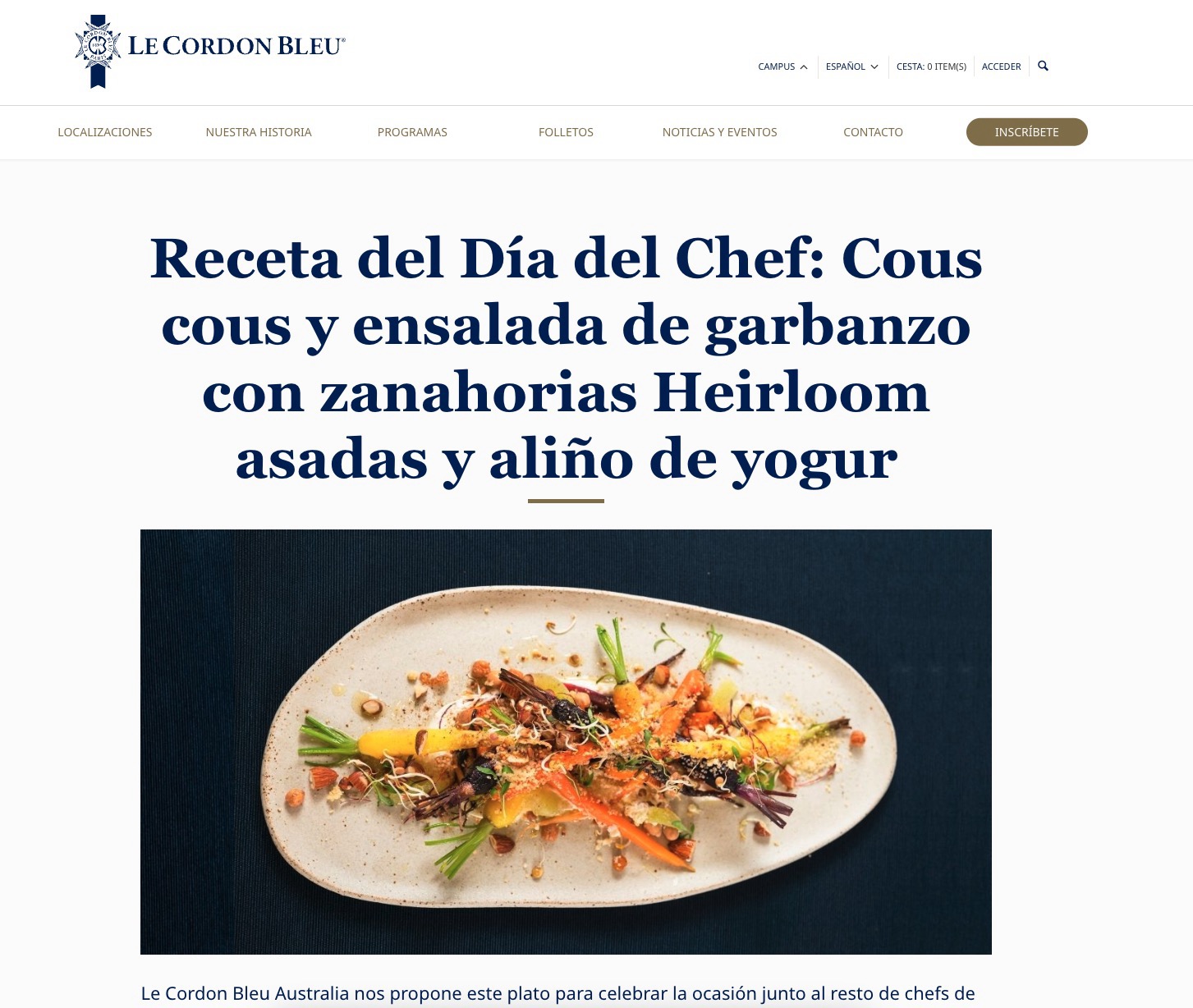
This type of content targets technical and practical questions that have frequent searches, capturing the attention of cooking enthusiasts looking to perfect their skills. Additionally, it serves as an entry funnel for their in-person and online courses.
The Pleasure of SEO
The Pleasure of SEO is another example of how a specialized medium has implemented the Ranch-Style SEO strategy to position itself as a reference in the field of modern SEO in Spanish.
Instead of focusing on long general guides about web positioning, their bet is to create hyper-focused content that addresses very specific doubts and topics within the discipline.
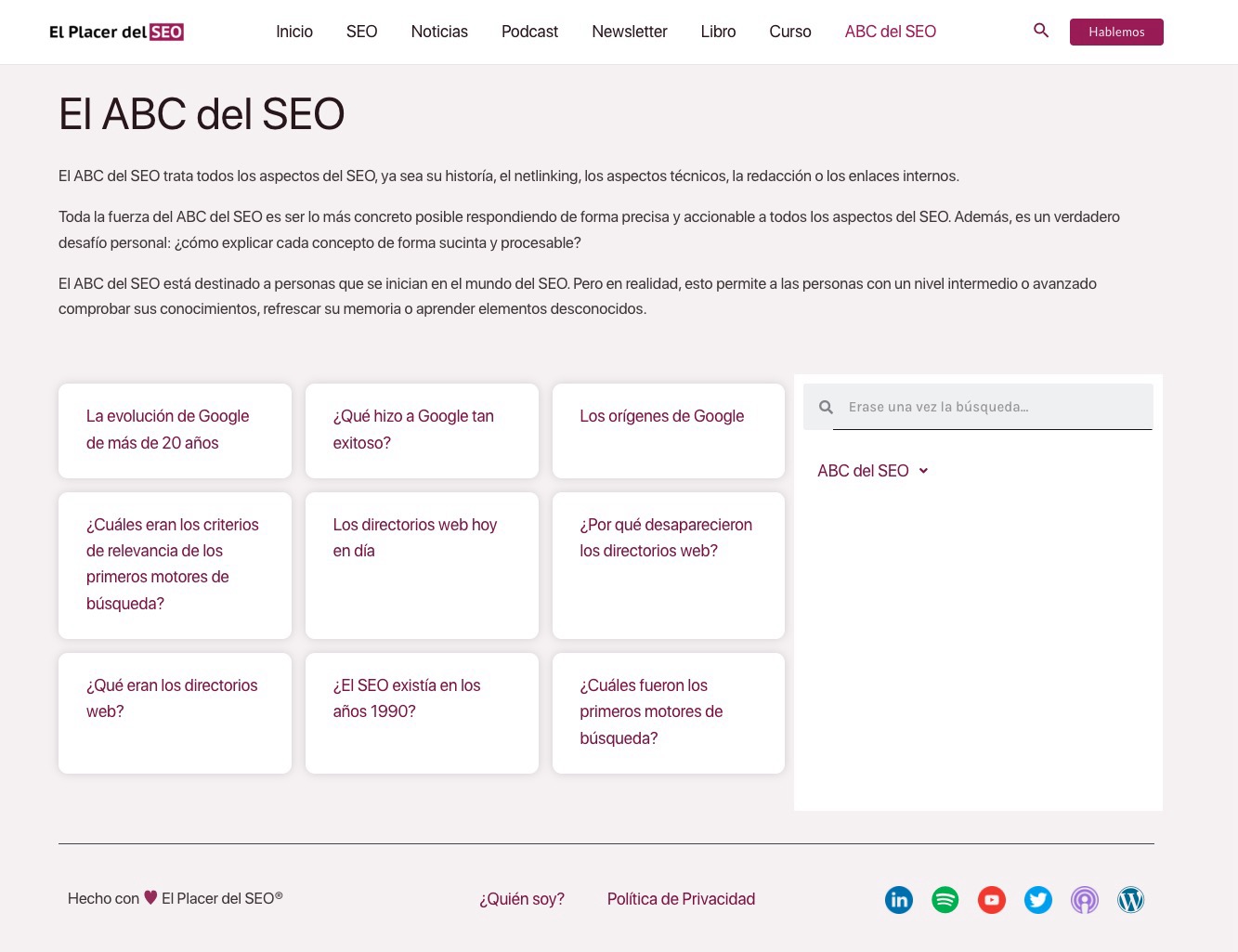
For example, instead of publishing a generic article about “How to rank a website on Google”, they produce specific pieces like:
- “What is EEAT and how does it affect your site’s SEO”
- “How to optimize URL structure to improve SEO”
- “Does it make sense to use nofollow on internal links? We explain it to you”
This approach allows them to attract qualified traffic seeking to resolve specific and technical questions. Additionally, by covering topics that other media often overlook, they have managed to establish themselves as a relevant and updated source of information for industry professionals.
Conclusion
Ranch-Style SEO is not just a tactical response to Google’s changes, but a content creation philosophy that prioritizes quality, relevance, and true utility for the user.
If you’re tired of fighting in the arena of the big players, this is your opportunity to gain authority in specific niches, build a solid base of recurring traffic, and improve your visitors’ experience.
Are you ready to try it?