Do You Know How Your Brand Appears on ChatGPT and Other LLMs? These Tools Will Tell You
 Pablo Díaz · 27 Jan, 2026 · Marketing general · 6 min

Artificial Intelligence is revolutionizing everything, even how we search for information. If traditional SEO was once the gateway to visibility, LLMs (Large Language Models) like ChatGPT, Claude, Gemini, and Google’s new AI Overview are now transforming the rules of the game.
Users are no longer just searching on Google; they’re asking Artificial Intelligence directly and expecting a single, immediate, and contextualized answer.
This raises a new strategic question: Is your brand present in those answers? And if so, in what terms does it appear? What position does it hold against your competitors? With what tone and accuracy are your name or products mentioned?
This is where LLM visibility monitoring comes into play. Just as SEO measures your position on Google, this new approach tracks and analyzes how language models mention your brand, whether they include it in lists, recommend your services, and with what level of accuracy they do so.
Knowing this information isn’t just a matter of digital ego; it can mean gaining or losing relevance in a channel that already influences the purchasing decisions of millions of people.
In this article, we will delve into this aspect while also discussing some tools that enable this monitoring.
What is LLM monitoring and how does it work?
LLM monitoring involves systematically tracking the mentions, appearances, and context of a brand, product, or person in the responses generated by language models.
This includes everything from direct queries (“What are the best digital marketing agencies in Spain?”) to more indirect questions (“How can I increase my online sales?”) where your brand might appear as a recommendation.
The logic is similar to media monitoring or SEO tracking, but with a key difference: LLM responses are not lists of links but fluid text.
This means it’s not enough to know if you appear; you need to analyze how you appear.
Tools specialized in this process work by sending programmed queries to different AI models, collecting the responses, and processing the information to extract key metrics:
- Brand mention or absence
- Relative position against competitors
- Accuracy and veracity of information
- Sentiment or tone of the content
- Context of the recommendation
At this point, it’s important to recommend that you don’t just measure mentions. Also evaluate the degree of control you have over the content that appears. If an LLM provides outdated or erroneous data, act proactively to correct it by optimizing your digital footprint.
5 Key Metrics for Evaluating Your Presence in AI Responses
Monitoring isn’t just about counting how many times your brand appears. The key is to interpret the right metrics:
- Mentions: The number of times your brand is included in relevant responses.
- Relative Ranking: Position against competitors in “best options” or “top recommendations” type responses.
- Sentiment: The positive, neutral, or negative tone associated with your mention.
- Accuracy: The precision of the data the AI provides about you.
- Latency: The model’s response time, which can affect user experience.
These metrics allow you to move from a superficial view to a data-driven strategy.
For example, if your brand appears in second position with a neutral tone, there’s room to optimize content and improve that perception.
The Best Tools for Monitoring Your LLM Visibility
Currently, the market offers a wide variety of solutions for tracking and analyzing how brands appear in responses generated by language models. Among the most notable are these six:
Omnia
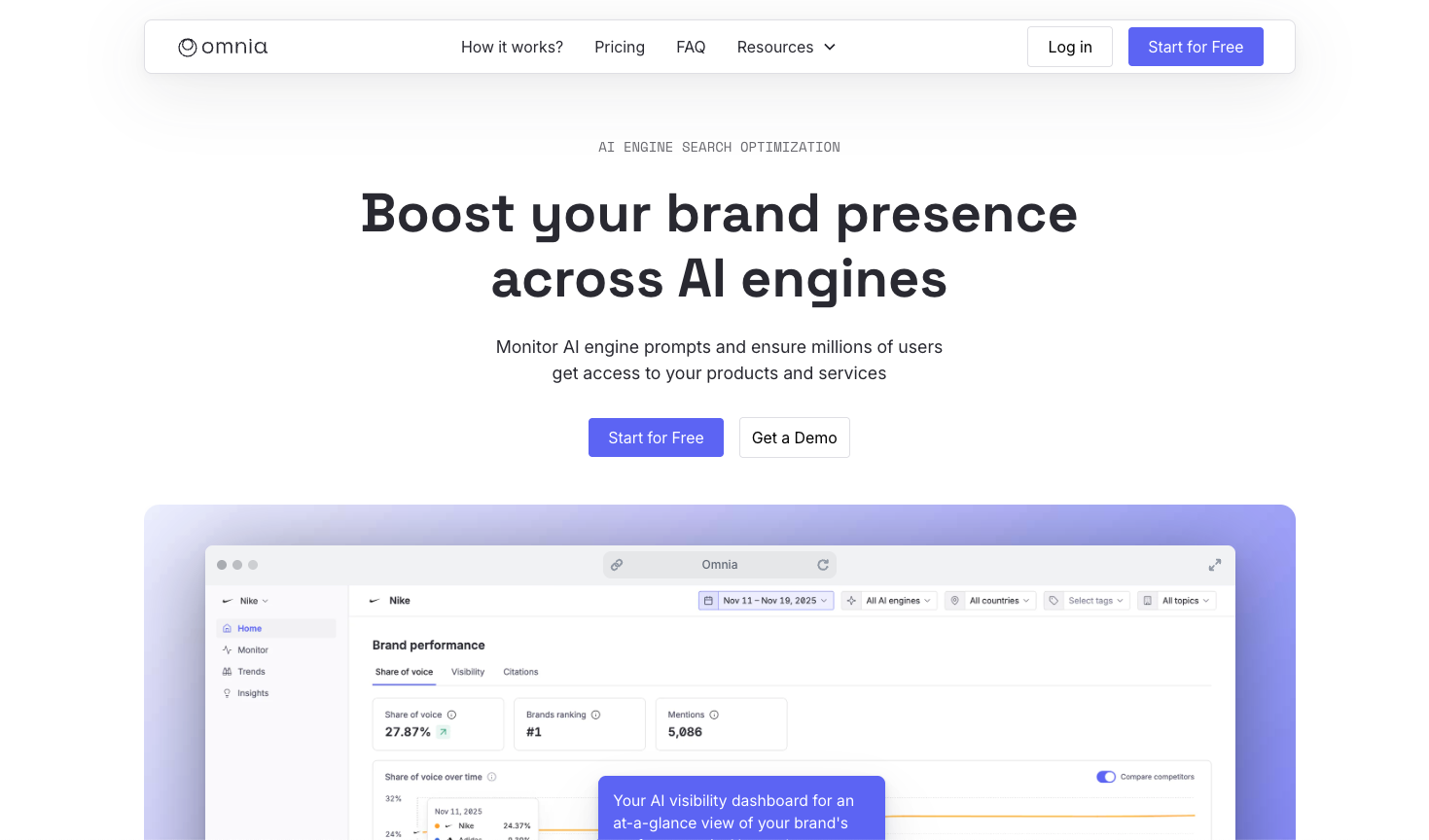
Omnia monitors AI platforms, extracts common patterns, and transforms them into actions. It allows you to create AI-optimized content on your own blog and helps you identify opportunities to position your content on the sites AI looks at most frequently.
Key Features
- Identifies the most relevant topics and prompts in your category or niche.
- Detects patterns in the citations of the prompts you monitor and suggests visibility actions, replacing hours of manual research.
- Content creation based on the patterns that work best in AI.
- No limit on the number of brands or countries.
Drawbacks
- Does not have SOC 2 certification.
- Does not have integrations with ecosystems like Microsoft, SAP, or other similar enterprise platforms.
Recommended for
Omnia is especially well-suited for tech startups and scaleups with small to medium-sized marketing teams looking to stand out within their niche.
Profound
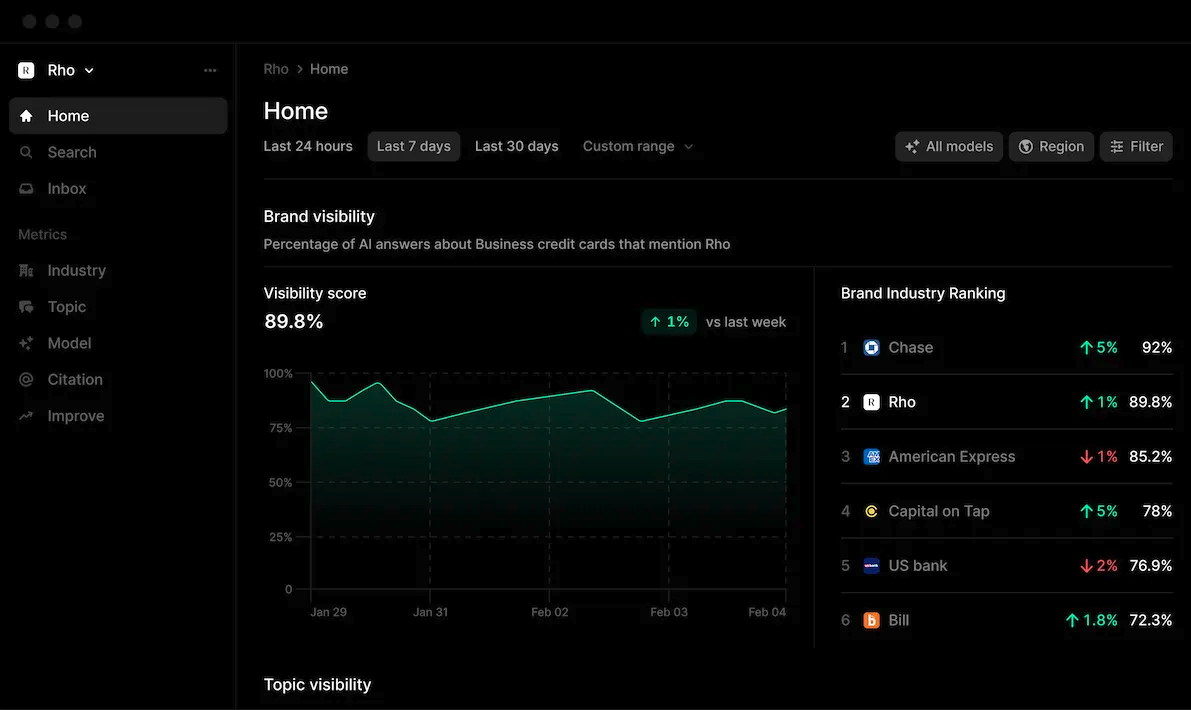
Profound is a platform specializing in LLM visibility monitoring for companies operating at scale. It allows you to track brand mentions across multiple AI models and compare your presence with that of direct competitors.
Key Features
- Automated tracking of predefined queries across different LLMs
- Sentiment and information accuracy analysis
- Real-time competitive comparisons
- Report export in multiple formats
Drawbacks
- High cost, geared towards corporations and not so much for SMEs
- Somewhat steep learning curve for non-technical teams
Recommended for:
Profound is ideal for marketing departments and data analysts who need a detailed and continuous view of brand positioning against competitors in AI environments.
Scrunch AI
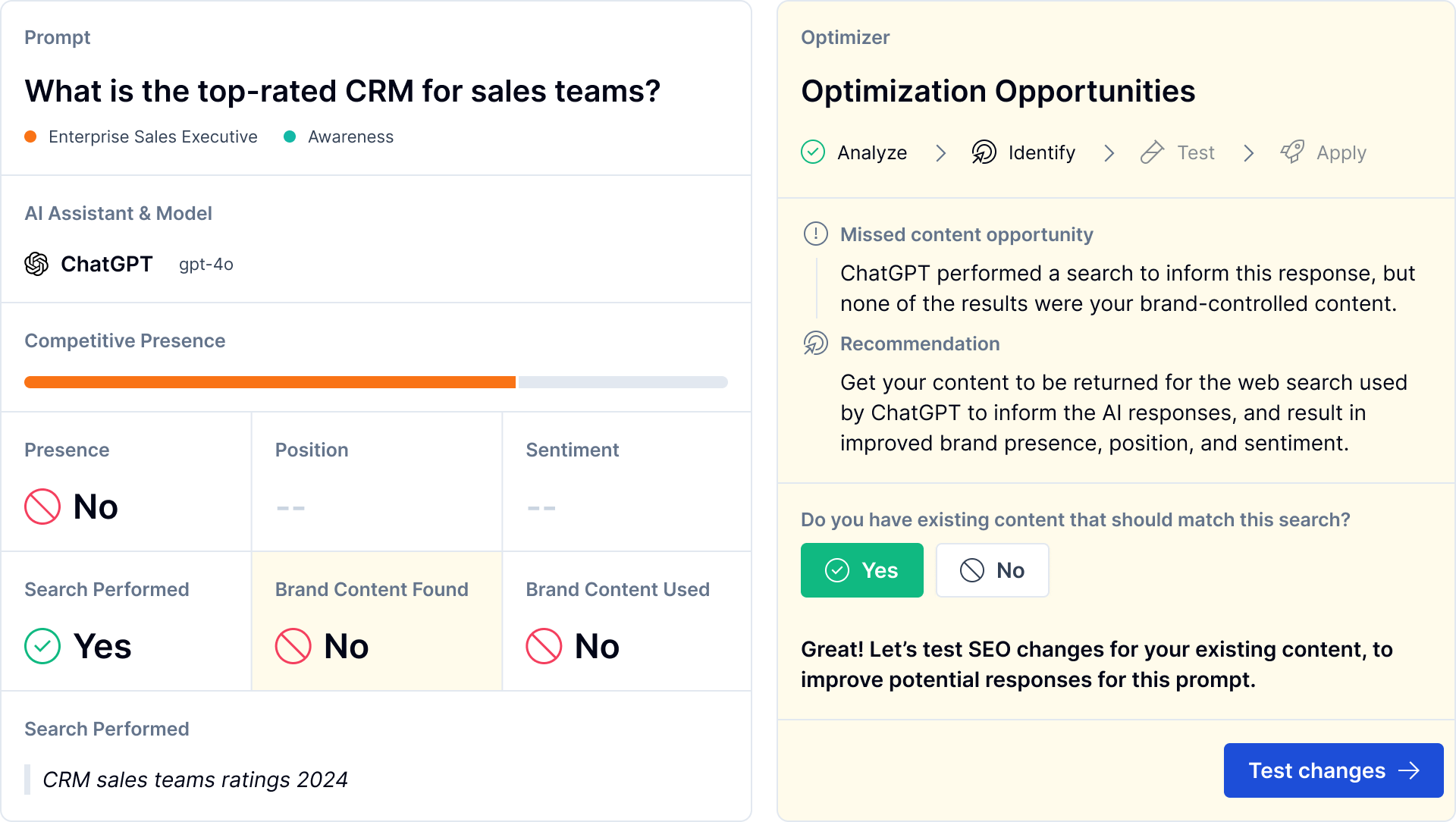
Scrunch AI combines LLM monitoring with digital reputation analysis, allowing you to identify patterns of how a brand is presented and in what context it appears.
Key Features
- Mention detection with relevance filtering
- Contextual analysis to understand how the brand is framed in each response
- Real-time alerts for significant changes in visibility or tone
- Segmentation by question type or thematic category
Limitations
- Query customization is more limited than in purely technical solutions
- Less focus on direct SEO metrics
Recommended for:
Very useful for communication and PR teams who want to manage brand reputation and narrative in generative AI.
Peec AI
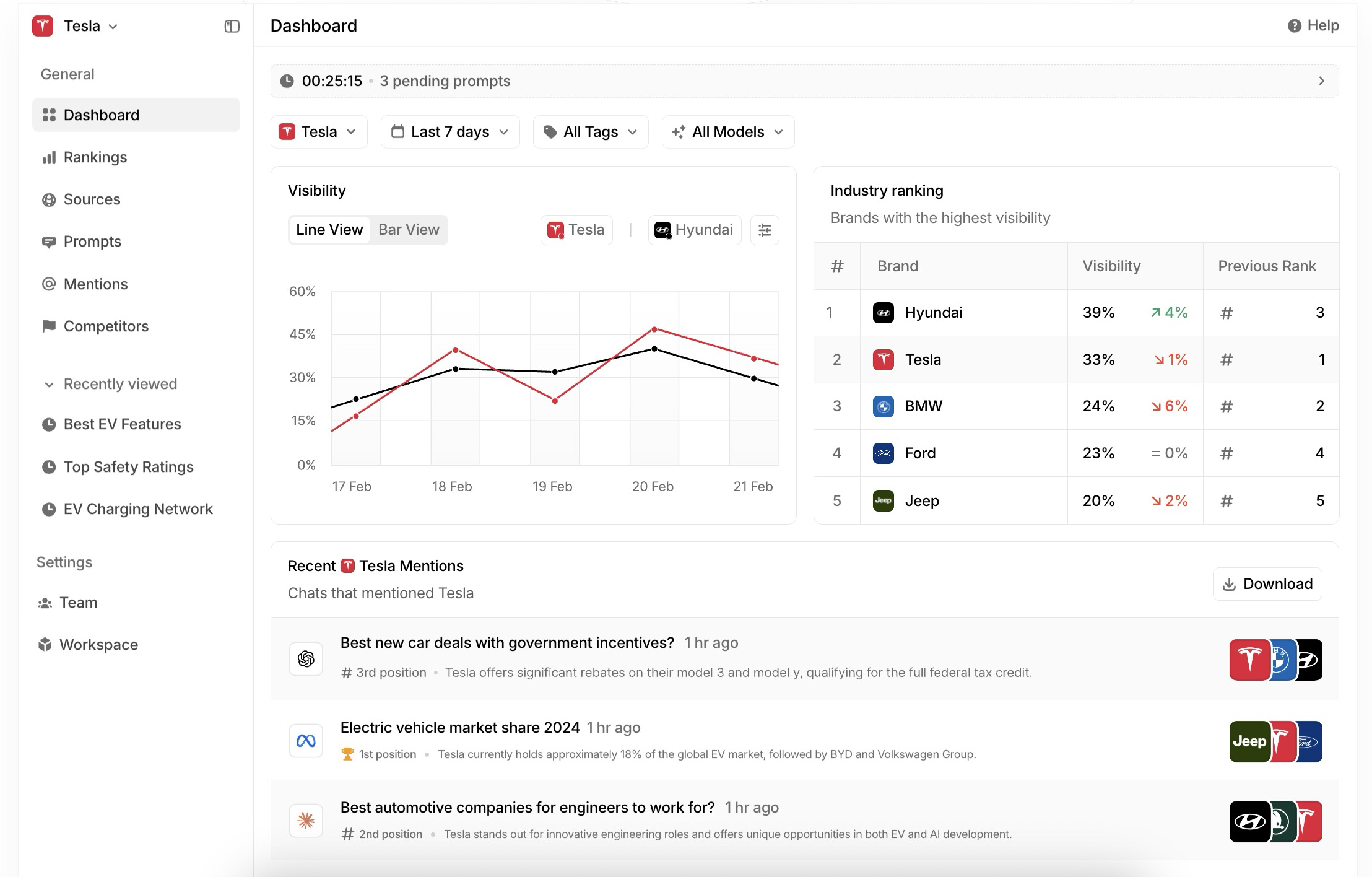
Peec AI focuses on the intersection between LLM visibility and organic positioning, helping to identify opportunities to improve both areas in a coordinated manner.
Key Features
- Monitoring of mentions and ranking in AI responses
- Integration with SEO metrics to detect correlations
- Analysis of content accuracy and consistency about the brand
- Recommendations to optimize digital presence
Things to consider
- Not the most comprehensive option for pure competitive analysis
- Some advanced features require integration with other SEO tools
Recommended for:
It’s perfect for digital marketing teams who want to connect SEO strategy with generative AI visibility.
Semrush Enterprise AIO
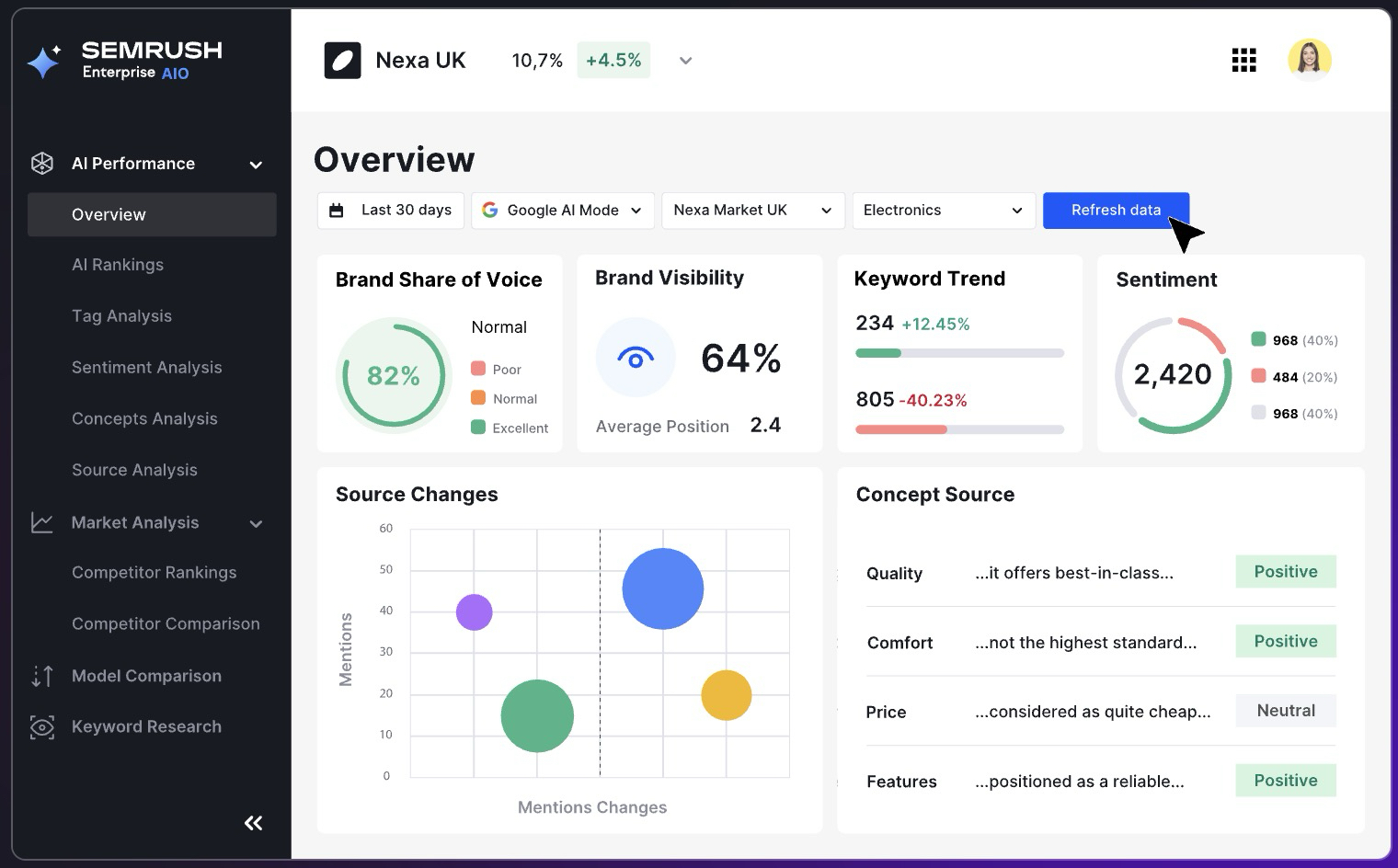
The enterprise version of Semrush (Semrush Enterprise AIO) is geared towards advanced AI monitoring, combining SEO data history with LLM tracking capabilities.
Key Features
- Tracking of mentions in language models and traditional search engines
- Combined reports on organic and AI visibility
- Competitive analysis and content audit tools
- Integrations with CRMs and internal systems
Current Limitations
- More powerful features reserved for high-cost Enterprise plans
- May be overkill for small teams with basic needs
Recommended for:
It is highly focused on large organizations that already use Semrush and want to extend their reach to the AI ecosystem without changing platforms.
Otterly.AI
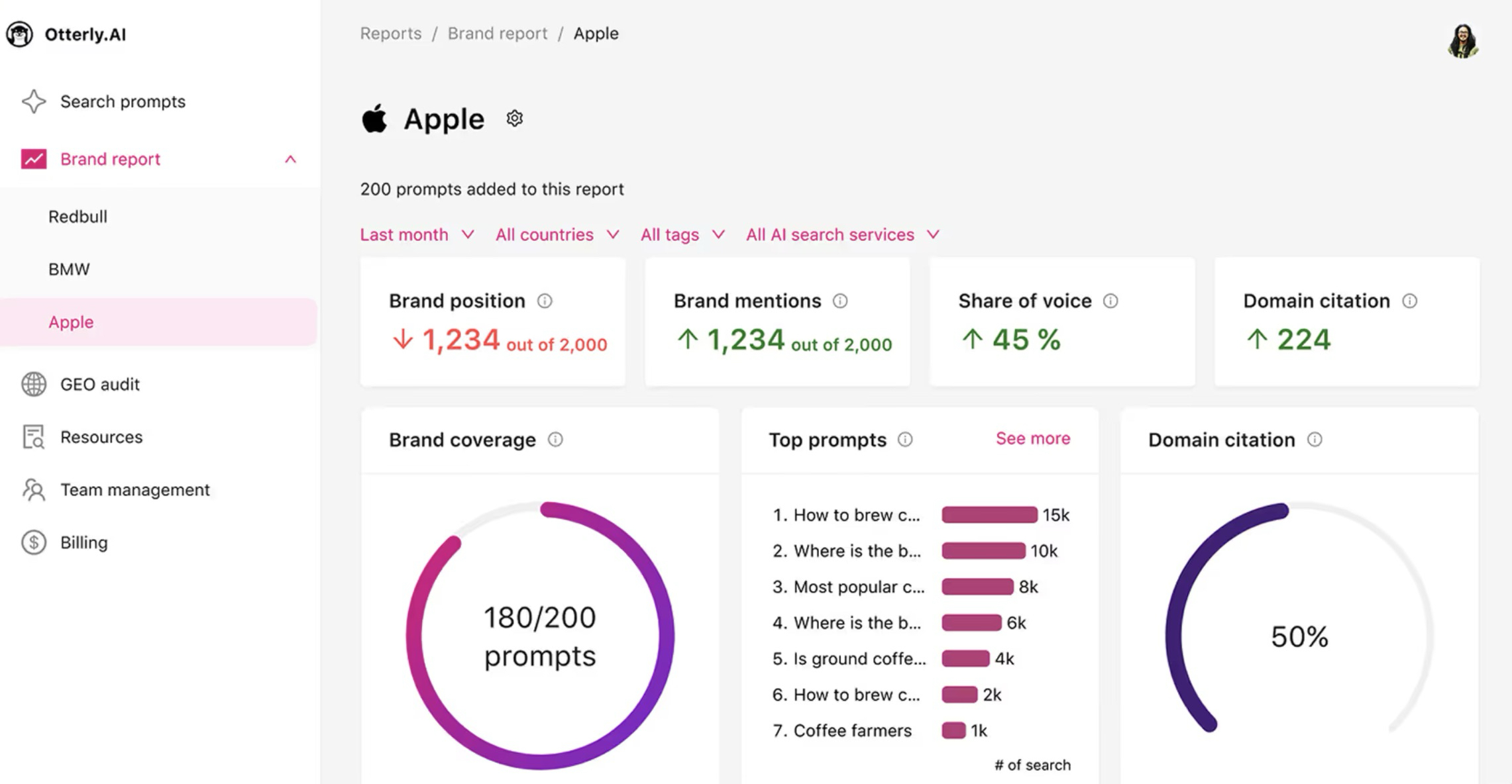
Otterly.AI is designed to simply and visually track how and where a brand is mentioned across different LLMs, with a focus on speed and clarity of information.
Key Features
- Automatic queries across multiple AI models
- Data visualization in intuitive dashboards
- Configurable alerts for visibility changes
- Quick export functions for executive reports
Areas for Improvement
- Less in-depth technical analysis compared to enterprise-level solutions
- Few advanced query customization options
Recommended for:
Otterly is highly recommended for small and medium-sized teams looking for clear and actionable data without technical complexity.
Now that we’ve looked at some tools on the market, let’s discuss what we should consider when choosing one over another.
How to Choose the Right Tool for Your Business?
Not all businesses have the same needs or resources. To choose the right tool, consider:
- Primary Objective: Do you want to measure general visibility or delve into accuracy and sentiment?
- Budget: Some solutions offer basic plans starting from €50 per month, others exceed €500.
- Integration: If your team already uses dashboards in Looker, Power BI, or SEO tools, look for compatibility.
- Scalability: Think about whether the tool can grow with you as your queries or markets expand.
A wise decision will not only provide data but also actionable insights to improve your presence.
Don’t just be swayed by price. Evaluate the quality and relevance of the metrics each tool offers before deciding.
Integrating LLM Monitoring into Your Marketing and SEO Strategy
LLM visibility tracking shouldn’t be an isolated process. By integrating it into your overall strategy, you can:
- Identify opportunities to create content that increases your presence in AI responses
- Identify high-value queries where you don’t yet appear
- Improve the consistency of your message across all channels
- Coordinate actions between SEO, PR, and content marketing
The Future of Monitoring in Generative AI Environments
The trend indicates that LLMs will continue to gain importance as search and information interfaces.
This means brands will have to:
- Adapt to a scenario where visibility doesn’t solely depend on Google
- Work on improving the accuracy of publicly available information about them
- Collaborate with AI providers to ensure up-to-date data
In this future, proactive monitoring will be the difference between being a visible and relevant brand or becoming invisible in the new digital ecosystem.
Conclusion
LLM visibility isn’t a fleeting trend; it’s a new discipline that is already impacting digital marketing. Monitoring how, when, and with what tone your brand appears in AI responses is key to protecting your reputation, identifying opportunities, and optimizing your strategy.
The key is to combine the right tool with constant analysis and the integration of this data into your overall marketing plan. Brands that start today will be better positioned to lead the conversation in the age of artificial intelligence.