Zero Click Marketing: How to Stop Depending on Clicks
 Pablo Díaz · 27 Jan, 2026 · Marketing Online · 7 min
Zero Click Marketing describes a shift in distribution: a growing portion of marketing value is consumed without a visit to your website. Users get an answer, a comparison, or a recommendation within Google, within a social network, or within an AI assistant, and only “leave” when they need to perform a specific action (buy, book, request a demo, subscribe, etc.).
The most visible symptom is usually a drop in organic or social traffic, but the real phenomenon is that the click stops being the center of the funnel.
Understanding this matters for three reasons.
First, because many diagnoses become incorrect: “traffic is down = things are going worse” ceases to be a reliable rule.
Second, because the levers change: optimizing for clicks is no longer the only (or the main) objective in informational and comparison phases.
And third, because the metrics change: you need to measure visibility, influence, and brand demand, in addition to conversions.
So then…
What is Zero Click Marketing and what changes if you understand it today?
Zero Click Marketing doesn’t mean “I don’t want clicks.” It means that marketing cannot depend on clicks to demonstrate impact.
Attention and decision-making shift to surfaces where your website is not the primary place of consumption: search engine result modules, native social content, communities, and AI/LLM answers.
If you understand it today, your work priorities change:
- From “more traffic” to “more presence at the decision moment.”
- From “optimizing CTR” to “optimizing clarity, citability, and recall.”
- From “my website as the center” to “my website as a conversion asset and source,” with deliberate distribution on influential surfaces.
Why is the click no longer the center? SERPs, Social Media, and AI Assistants
There are three engines driving zero click.
- Zero click in Google and search engines
- Zero click on social media
- Zero click in AI and LLMs
Zero click in Google and search engines
With AI Overviews, Google not only displays modules; it builds a composite answer that resolves a large part of the intent on the SERP itself.
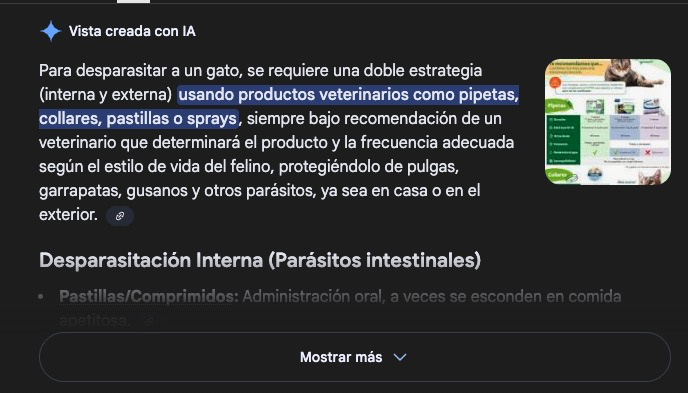
In that context, even when your website appears as a source, users typically read the summary, make a decision, and continue without clicking. This shifts the battle from “ranking” to “being one of the chosen sources for the synthesis” and, above all, to “staying in memory” so that the next step is a brand search or a direct access.
Takeaway: your objective shifts from maximizing CTR on informational queries to maximizing presence in AI Overviews and rich results (citations, brand mentions, answer clarity), while driving conversions to brand searches and transactional pages.
This aligns with recent studies: when an AI summary appears, the probability of clicking decreases, and cited links are clicked infrequently.
Zero click on social media
Platform logic is to retain. That’s why they reward native consumption: carousels, short videos, long posts, threads, live streams, saved and shared messages. Even when there’s commercial intent, many platforms reduce friction with in-app forms and experiences.
Takeaway: content must function as a complete unit within the platform, not as a “teaser” that only exists to drive a click.
Platforms will likely “penalize” you if you force clicks and reduce your visibility.
Zero click in AI and LLMs
Conversational assistants respond with summaries, lists, and recommendations. Sometimes they cite sources with links; sometimes they don’t. In many cases, users make decisions based on that answer and then directly search for the brand or product when they are ready to act.
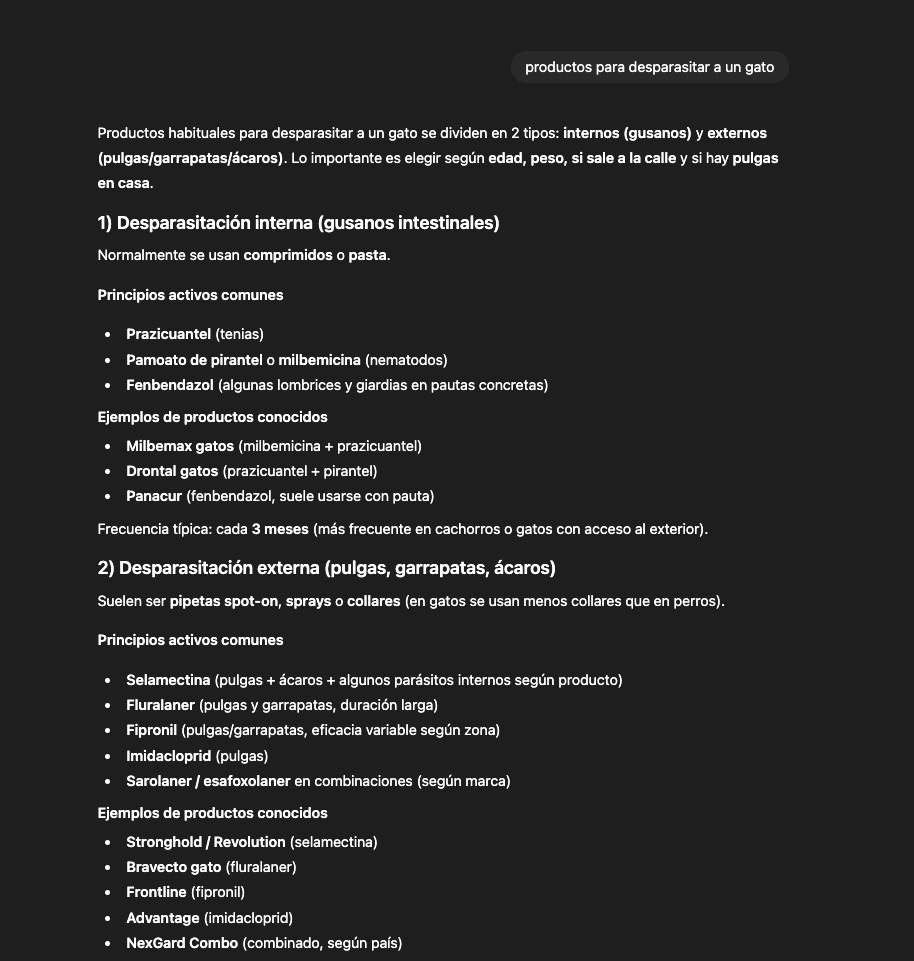
Takeaway: you need your information to be easy to extract, understand, and cite (by humans and by systems), and you need external trust signals (mentions, reviews, community) because the answer is built with broader signals than just “your website.”
We previously discussed Answer Engine Optimization (AEO) in this post
Tip: map your attention surfaces by intent
Create a map by intent (informational, comparative, transactional) and write, for your category, where each phase occurs today:
- Informational: Google? YouTube? TikTok? ChatGPT/Perplexity/Gemini?
- Comparative: Reddit/forums? reviews? marketplaces?
- Transactional: own website? marketplace? DM? form?
Then prioritize 2–3 surfaces per intent. This avoids the error of “being everywhere” and allows for the design of a coherent content and distribution system.
The funnel has moved: from “traffic” to “influence” and how to measure it
In the classic funnel, the click was evidence that “something happened.” In the zero-click funnel, what happens first is exposure and partial decision without a visit. Users can:
- See your brand mentioned in a snippet or module
- Consume a full post on social media
- Read a community discussion
- Receive a recommendation from an LLM
And only afterward search for your brand directly or go to your website to close.
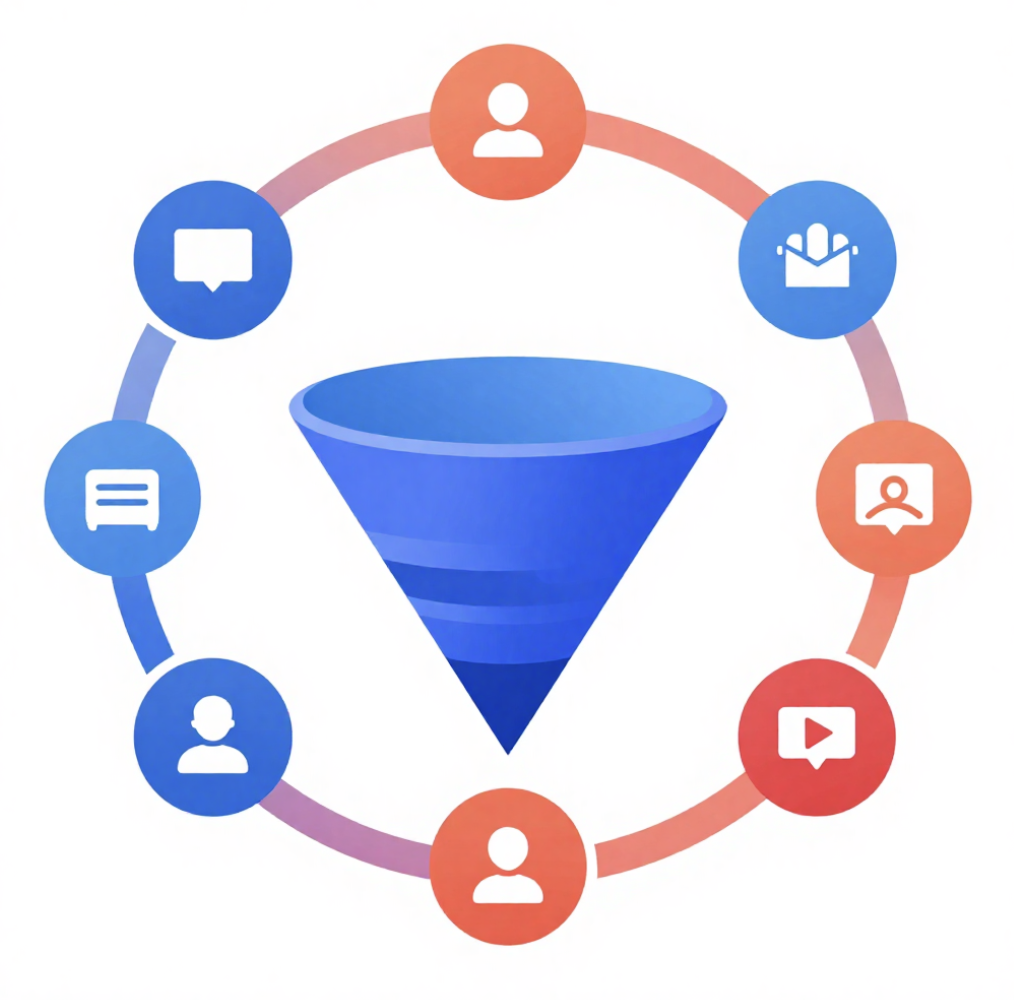
The new Zero Click Marketing funnel
This funnel summarizes typical behavior:
- Impression without click (visibility on SERP/social/AI)
- Recall (familiarity, trust, preference)
- Brand search (or direct access)
- Conversion (on website, marketplace, booking, demo, subscription)
The main consequence is that intermediate traffic can drop without conversion dropping, because users still arrive when the intent is already high.
What metrics replace CTR?
CTR doesn’t disappear, but it loses centrality. To manage the new funnel, you need metrics for presence and influence:
- Share of voice per topic: how many times you (or your brand) appear in the set of relevant results/spaces for a category.
- Brand demand: volume of brand searches, variations, navigational searches (brand + product, brand + price, etc.).
- Mentions and citations: in media, communities, reviews, third-party content.
- Native engagement: saves, shares, comments, video completions, reading time on platform.
- Reputation signals: review ratio, sentiment, recurring themes, conversation quality.
- Final conversion metric: sales, registrations, demos, bookings (this remains the output of the funnel).
The key is to build a dashboard that can explain “why traffic is down” without assuming “things are going poorly.”
Why does classic attribution break (and what to do)?
When users consume value on platforms that don’t send clicks (or send them intermittently), last-click attribution becomes less representative. Even complex models become fragile: more touchpoints, more noise, more measurement biases.
What to do instead:
- Separate objectives: visibility/influence (top) and conversion (bottom).
- Accept proxy metrics at the top (share of voice, brand demand, mentions) and rigorously measure conversion at the bottom.
- Design experiments: “If I increase presence on X for intent Y, Z should increase” (e.g., brand searches or direct leads).
- Compare trends, not just absolute values: changes over 30/60/90 days and by content cohort.
Tip: shift the goal from “more visits” to “more brand demand + more share of voice“
Define a north star metric at the top (e.g., brand demand or share of voice) and a north star metric at the bottom (e.g., conversion). From there, decide where to invest: content, distribution, reputation, product.
This reduces defensive decisions based solely on traffic.
How to win without clicks in search engines: content designed to answer
To “win” in search engines, in a zero-click context, means two things:
- To be chosen as the source of the answer
- To be remembered even without a visit.
For that, content must be easy to extract.
Answer first: answer before selling
An effective pattern is to place the direct answer at the beginning and then expand. Not for aesthetics, but because users and synthesizing systems look for early information density.
What this implies:
- Clear definitions in one or two sentences
- Ordered lists when there are steps or criteria
- Comparisons when the user is evaluating options
- Avoid detours: solve first, then contextualize
Structure that facilitates extraction
Useful structure for humans and systems:
- Consistent H2/H3 headings (one idea per section)
- Short paragraphs for technical concepts
- Lists and tables for criteria and comparisons
- FAQs for recurring questions
- Concise and precise examples
Freshness and maintenance
In AI-driven environments, content isn’t just “publish and done.” It requires maintenance: updates, link checks, claim reviews, incorporating changes.
Tip: decide which pieces are “evergreen” and which pieces have an “expiration date”. For those with expiration dates, schedule reviews (monthly or quarterly depending on the sector).
Citable authority
To be used as a source, you need credibility signals:
- Your own data (even simple internal benchmarks, aggregations, test results),
- Explicit methodology (how you arrive at a recommendation),
- Stated limitations (when it doesn’t apply)
- Consistency (same criteria over time).
Resolution tip: create answer first + citable pieces
Build a backlog with two types of content pieces:
- Answer first pieces to capture questions and comparisons
- Citable pieces with proprietary assets: definitions, frameworks, criteria, data.
The combination increases the probability of visibility without clicks and reinforces brand recall.
Zero click is not won solely through SEO. It’s won through deliberate presence in the places where users get inspired, compare, and validate.
Native content that functions as a complete unit
On social media, content needs to “close” the idea within the format. This requires adaptation, not duplication:
- An article can become a carousel with criteria and a checklist
- It can become a short video with an idea and a criterion
- It can become a thread with 5 actionable points
What matters is not how many pieces you create, but strategic repetition: appearing multiple times with the same concept from different angles, until the market associates it with you.
Communities and forums as a trust layer
In many categories, comparative decisions occur in communities: forums, Reddit, groups, comments, reviews. That’s where marketing claims are validated.
Participating well is not self-promotion. It is:
- Answering questions clearly
- Providing criteria
- Recommending alternatives when appropriate
- And only mentioning your solution when it fits the question and context
Reputation in communities becomes a cross-cutting asset: it feeds SEO, social media, and trust in AI responses.
Earned media and mentions
In a world where answers are composed with external signals, mentions count. Not just press; also podcasts, newsletters, lists, comparisons, and collaborations.
The logic is simple: if others talk about you with clear criteria, you increase the probability of appearing as a valid option without depending on clicks.
Tip: native distribution system + 1–2 key communities
Choose:
- One primary network: where you have consistent publishing capacity
- One secondary network: for adapted repetition
- One community: where your audience discusses
- One dominant format per network: carousel, video, long post, etc.
Then define a minimum cadence and a quality standard (what you publish, how you measure it, what you don’t do). This creates consistency and avoids dispersion.
Final checklist: what to do this week to start with Zero Click Marketing
- Map surfaces by intent and choose 2–3 priorities
- Define your target funnel: impression without click → recall → brand search → conversion
- Change KPIs: add brand demand, visibility, and native engagement to your dashboard
- Publish 1 answer first piece (direct answer + extractable structure)
- Publish 1 citable asset (your own criteria or data, even if small)
- Adapt the idea to 1 native format on your primary network
- Participate in 1 community with a useful answer (no self-promotion)
- Review results at 7 and 30 days in terms of trends, not just clicks
Zero-click marketing doesn’t eliminate conversion: it shifts where influence occurs.
If you accept that much of the decision-making happens on SERPs, social media, communities, and AI responses, the work shifts from “chasing clicks” to building presence, credibility, and recall on those surfaces, measuring what truly drives demand.
The advantage is strategic: when your system is designed to gain visibility without clicks and convert when intent is high, you depend less on a single traffic source and improve your resilience to platform changes.