Inclusive Language in Email Marketing
 Alicia Zunzunegui · 20 Feb, 2026 · Email Marketing · 5 min
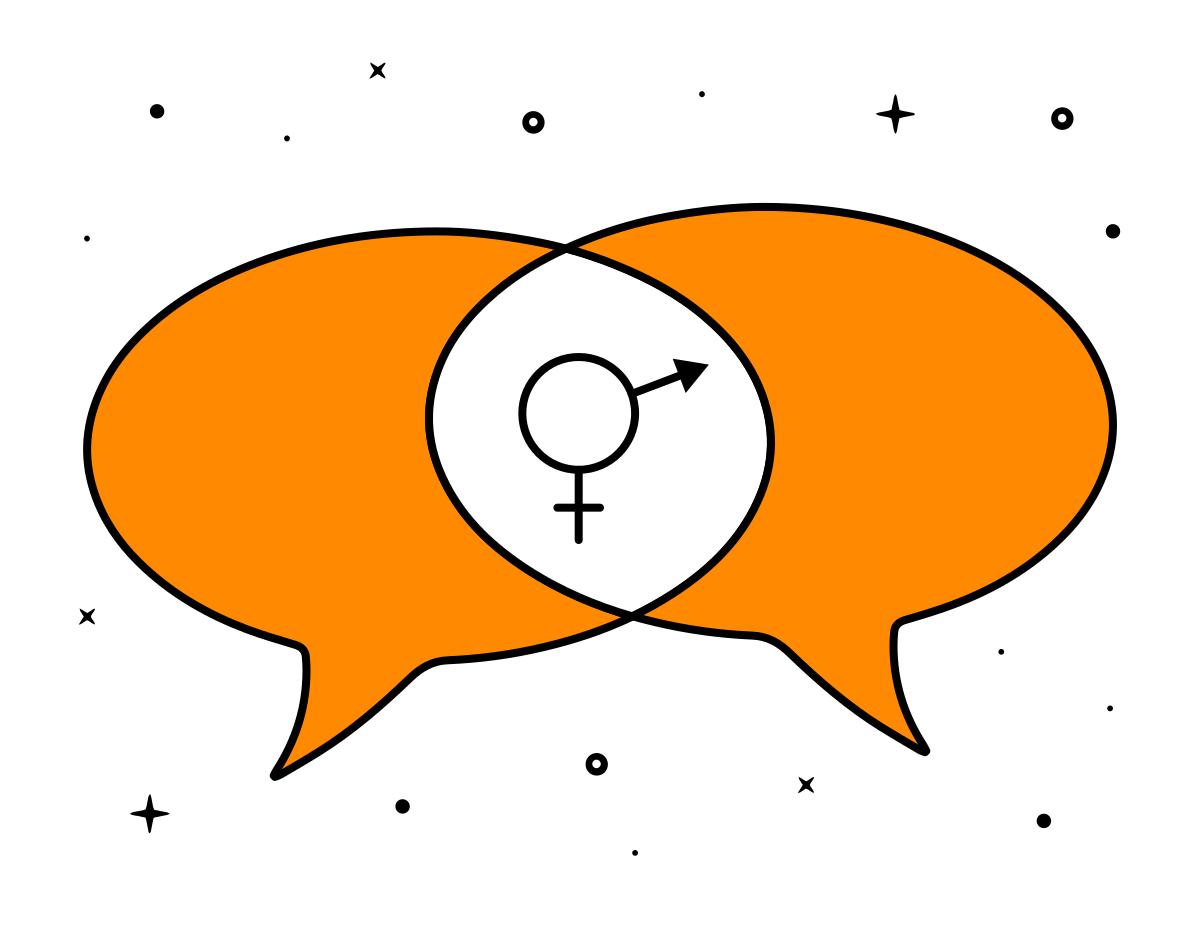
Welcome, María. Welcome, Paco 👋 Have you ever read this type of greeting? I bet you have. They are not inclusive at all and have probably bothered you on more than one occasion.
If you’re here, it’s because you’re interested in learning more about inclusive language in communication, particularly in email marketing.
Make yourself comfortable or comfortx because this will surely be very useful for you.
But before…
What is inclusive language?
Due to the evolutionary, social, and cultural aspects of language, the generic masculine has been used to refer to a group of people. But what happens if there are more women than men in that group? What about the LGBTIQ+ community and non-binary people?
To address this issue present in today’s society, some movements have emerged that advocate for inclusive language so that all of humanity (not just men) are represented in speech or writing.
This way, the generic masculine is no longer used by default, and alternatives are proposed to avoid discriminating against anyone by eliminating genders.
If you’re wondering what the RAE (Royal Spanish Academy) thinks about this type of language, it must be said that it does not recognize it. For now. Language evolves, and I hope (and wish) that little by little they will incorporate these more inclusive terms. For this reason, you are more likely to read more inclusive words on social media than in award-winning novels.
Below, we will see some solutions and best practices so you can make good use of inclusive language in your communication strategy. But first, let’s look at some advantages of using it.
Benefits of Inclusive Language for Your Brand
Using this type of gender-neutral language brings several benefits to brands:
- It brings fresh and renewed air to the communication style, leaving behind sexist and chauvinistic ideas that Spanish has traditionally inherited.
- It conveys brand values to connect with an audience more aware of social inequalities.
- It shows recognition and support for communities like LGTBI+ and non-binary people, so often forgotten in many sectors of society.
👉 A note. Don’t overlook something basic in any marketing strategy, which is your target audience. If you haven’t conducted a study of your buyer persona, which you should, it probably doesn’t make sense to use inclusive language. For example, if you are addressing exclusively men or women. In this case, it makes perfect sense to use either masculine or feminine throughout your communication strategy.
Keeping this in mind, let’s move on to the practical part.
Best Practices for Using Inclusive Language in Your Email Strategy
Many companies and brands are opting for inclusive communication in their emails and social media. Let’s look at seven ways to apply inclusive language that you can use to start practicing.
Mentioning Both Genders with a Slash (/)
This practice involves splitting the gender to include both masculine and feminine.
It can be done in two ways:
- Writing both words. For example: boys and girls
- Using the slash to add the feminine ending. For example: boys/girls
As you can see, it’s a solution, but it can be a bit cumbersome to write and even read.
On the downside, you would leave out non-binary people, or gender-fluid, and perhaps part of your audience might feel marginalized.
Replacing the Gender Letter with “x” or “@”
The “x” and “@” are considered neutral letters within a gendered word. For this reason, you may have encountered more than one word written this way in an email or social media.
For example: alumnxs or tod@s.
Where do these terms come from?
- The “x” refers to the x chromosome, present in both men and women. Hence, it is more inclusive.
- The “@” is an “a” inside an “o”, so it is understood to encompass both genders.
Problems with Using Inclusive Language
But not everything is advantageous in inclusive communication. Let’s look at a couple of accessibility issues that may arise because, if you notice, this solution is only found in written and not spoken language.
The use of “@” is old and sometimes confusing on social media or emails.
Regarding the use of “x,” we have mentioned that it is common to see it as a substitute for “o” or “a” to eliminate gender. Even so, it should be noted that it is not recommended to use it in emails, as it confuses text processors with auditory transcription systems. This way, we would not be including the audience with vision problems.
As you can see, you can’t please everyone 🤦🤦♀️
Replacing the Gender Letter with an “e”
This solution is, to date, the most inclusive. It involves replacing the letter that marks the gender with an “e.”
For example: students, children, offspring, everyone…
The good part is that it can be written, pronounced, and read perfectly (by audio transcribers too).
The downside is that many people consider it a bad practice if we adhere to the correct use of language. But here we enter the debate of whether everything should remain the same or evolve…
In Sweden, in the 60s, the neutral pronoun “hen” (an equivalent to our “elle”) was proposed, and today even newspapers use it. A sign of evolution and adaptation.
Using Neutral Collectives
Another technique that involves inclusive language and also a change in writing is the use of collectives instead of the generic masculine.
Let’s see some examples you can apply.
| Generic Masculine | Collective or Abstract Term |
| Everyone | Everyone |
| Candidate | Candidacy |
| Students | Student body |
| Client | Clientele |
| Readers / users | Audience / Public |
| Author | Authorship |
| Workers | Team / staff |
As you can see, it involves a change in the use of words to avoid using non-inclusive terms.
Many times, you’ll have to rethink what you already have written. For example, the following case with a possible solution comes to mind.
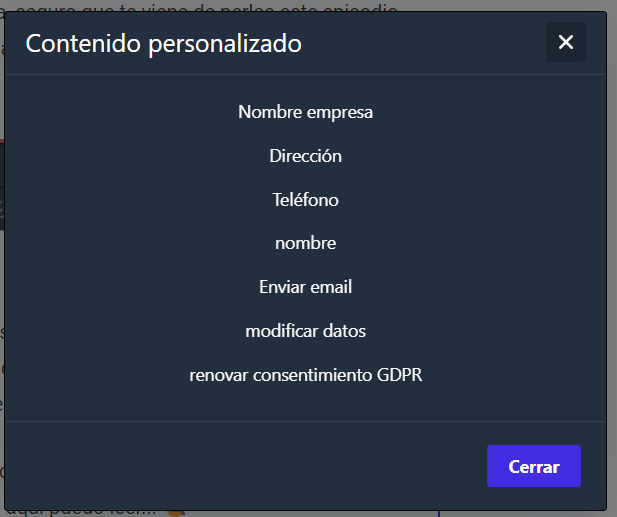
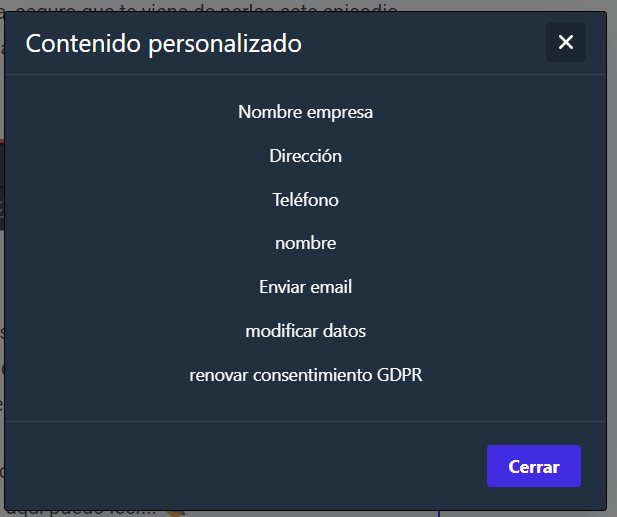
In a welcome email, instead of saying Welcome, NAME you can change it to Hello, NAME. This way, you can personalize the text with personalized content within the email body.
At Acumbamail, we offer this possibility so that the text NAME is auto-completed with each subscriber’s name.
Changing Third Person to Second Person
Simply making a change in number can solve the gender problem ✌️
Look at this example of how changing the plural to singular eliminates the problem of masculine or feminine.
Interested parties can register here to You can register here
Undoubtedly, this is one of the changes that requires the least effort and that you can apply starting today in your emails.
Replacing the Articles “los” and “el” with “quienes” or “cualquiera”
This practice also involves a change in writing style but perfectly solves the issue we are addressing.
For example, instead of saying: the interested parties, it is proposed those who are interested or the one who wants to register can be said as anyone who wants to register.
A good use that you can also start applying today.
Speaking in Feminine
Finally, we completely turn the tables to use the generic feminine. This practice is used by some brands and corporations to highlight the gender issue today by opting to give a twist to the generic style of writing.
Undoubtedly, a risky but necessary practice to raise awareness of the issue.
Do you think your company would fit into this practice?
Conclusions on Inclusive Language
If you look around, you can still see “traces” of masculine language. However, there are many proposals on the table and in communication campaigns to break down language barriers and have a more inclusive language where genders disappear and everyone is included.
If you want to address your entire audience, you better start considering a strategy of this type and applying it both in your email marketing campaigns and in other channels.
I end with a fragment from FundéuRAE, an association to promote the proper use of Spanish in the media.
If the goal is to present a more representative image of reality and, above all, to make reality more inclusive, language is one of the most effective tools. Naming what we want to exist, what we want to identify, promote, and care for. Naming is always one of the first steps, precisely because it enables the recognition that is at the very foundation of existence.
Source: Fundéu, language and reality
As you can see, reality is what it is, and language must evolve and adapt. Don’t wait for rules to be dictated and adapt before your audience feels discriminated against.