Email Marketing for Agencies: Complete Guide
 Pablo Díaz · 27 Jul, 2026 · Email marketing avanzado · 7 min
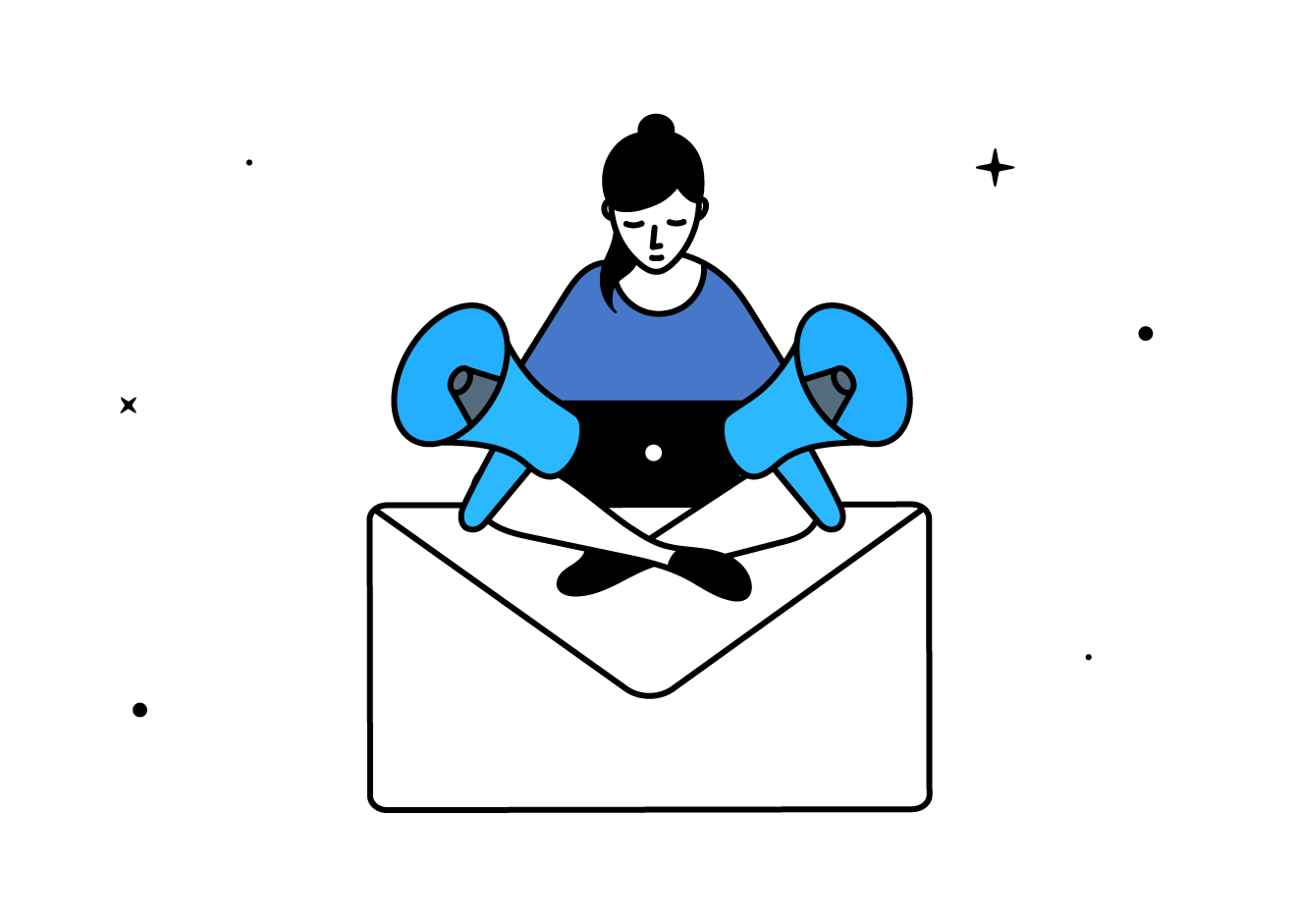
It’s nine in the morning and you have twelve tabs open: a fashion client’s newsletter going out today, the monthly report for another client who bills based on results, and a welcome automation requested by a third client two weeks ago that you still haven’t touched. Each account uses a different tool, each template is built from scratch, and each report is manually copied into a PDF before the eleven o’clock meeting.
If you manage email marketing for multiple clients at once, this scene sounds familiar. Email is one of the most profitable services per hour invested, but also one of the most strained when there’s no clear process behind it. Without a system, each campaign becomes an urgent favor, and each new client adds another layer of chaos.
The good news is that well-managed email marketing not only improves the results you report: it is also the lever that generates the most retention for your agency. A client who sees attributable opens, clicks, and sales every month doesn’t question whether it’s worth continuing to pay you. They see it in the spreadsheet.
This guide covers how to structure email marketing when working for multiple accounts at once: what processes to set up, how to report without losing half a day each month, and what campaigns you can launch today to demonstrate quick value, whether you’ve just signed a new client or have been with an account for years that needs a boost.
Advantages of Email Marketing for Agencies
It’s the easiest channel to justify in the monthly report
When managing social media or SEO, explaining the return on your work requires detours: reach, engagement, six-month positioning. Email needs no translation. A campaign sent on a Tuesday generates opens on Tuesday, clicks on Tuesday, and, if you connect the form or store, sales on Tuesday.
This makes email the quickest proof that your agency is doing something, not just charging a monthly fee. In the account meeting, a report with open rate, clicks, and attributable billing carries more weight than any argument about “brand presence.”
Scale without your workload scaling at the same rate
Managing 3 email clients manually is feasible. Managing 15 without processes is a constant source of errors: the wrong client’s name in the subject, another account’s link pasted into the template, the report sent two weeks late.
Email marketing is one of the few services that can be almost completely systematized: reusable templates, automations that are set up once and run on their own, reports generated with the same fields each month. Setting up that foundation well at the beginning is what allows you to add clients without adding hours in the same proportion.
It’s the most direct way to sell more service to the same client
A client who only hires you for social media management is an easy client to lose if a cheaper agency appears. A client to whom you also manage email, with set-up automations and a history of results, has a real switching cost: they would lose continuity, data, and processes that already work.
Moreover, email is often the entry point for selling adjacent services: if you detect in the statistics that a client has a high click rate but few conversions on their website, there’s a CRO or landing page conversation you can propose with data in front, not as a blind sale.
Best Practices for Managing Email Marketing in an Agency
Build your (or your clients’) list correctly
The first mistake that repeats when taking on a new account is inheriting a purchased list or one imported from a trade show three years ago without reviewing it. Before sending the first campaign, audit the origin of each contact: if they didn’t give explicit consent to receive commercial communications, they don’t go into the send.
Each client should have at least one active subscription form: on their website, in the footer of their transactional emails, on social media if you also manage that channel. It’s work done once per client and avoids the most costly problem of all: a high bounce or spam rate that damages the sender score and drags down other clients sending from the same infrastructure if you share IPs or domain.
Also document the unsubscribe process. A client who receives a complaint because they couldn’t find the unsubscribe link is a client who starts to doubt your management, even if the error is minor.
Segment from day one
Sending the same campaign to an entire client’s list is the quickest way for the open rate to drop month by month. Segment from the first campaign, not when you already have a results problem to fix.
The criteria that yield the most in agency-managed accounts are simple: list tenure (new subscriber versus two-year-old contact), behavior (opened the last 3 campaigns versus hasn’t opened any in 6 months), and origin (came from a paid campaign landing page versus subscribed from the blog).
With these three intersections, you can justify different messages without needing a complex CRM. And it’s a direct sales argument: “we segment by behavior” sounds better in the commercial proposal than “we send a monthly newsletter to the entire base.”
Automate what repeats across all accounts
There are flows that almost all clients need regardless of the sector: welcome upon subscription, abandoned cart if they sell online, reactivation of inactive contacts. Set up an automation template for each of these flows and adapt it per client by changing texts and images, not the entire logic.
This is what truly frees up hours: a well-configured automation continues sending welcome or cart recovery emails without anyone on your team having to remember to do it each week. The time you spend setting it up once is returned with each client that uses it, month after month.
Design the reporting before signing the client
Manual reporting —screenshots pasted into a PDF, each month with a slightly different format— is the task that consumes the most hours without generating added value. Define from the start of each account what metrics are reported (opens, clicks, unsubscribes, attributed revenue if there’s ecommerce) and how often.
A fixed report template by client type saves you from deciding the format each time and allows you to compare an account’s performance month to month without reconstructing the history. If your email marketing tool generates real-time statistics per campaign, export those data directly instead of recalculating them manually.
Document the process to be able to delegate it
The most common bottleneck in a small agency is that only one person knows how to set up each client’s campaign: what template to use, what segments exist, where the personalized unsubscribe link is. If that person takes a vacation or leaves, the account suffers.
A brief document per client —one page, not a manual— with the list of active automations, defined segments, and agreed sending frequency is enough for anyone on the team to cover a campaign without starting from scratch. It’s the difference between depending on one person and depending on a process.
Examples of Real Campaigns
Monthly Newsletter for a Professional Services Client
An advisory or architecture firm doesn’t have a catalog to promote every week, but it does have authority to demonstrate. A monthly newsletter with a resolved case, a relevant regulatory update for their sector, and a contact reminder keeps the brand present without sounding like constant selling.
The result that usually convinces the client in the quarterly meeting is not direct sales, but the sustained open rate above 25% and clicks back to the website, which feed the rest of the channels you manage (SEO, social media).
Launch Sequence for an Ecommerce Client
When a client launches a new product or collection, a single campaign doesn’t take full advantage of the moment. A sequence of three emails —announcement with a preview for subscribers, reminder with featured product 48 hours later, and last call with real urgency (limited stock, end of presale) 5 days later— multiplies the conversion window.
It’s an easy campaign to repeat for every ecommerce client you manage, changing only the product and images, making it one of the most profitable per hour of work invested.
Quarterly Report Turned into Internal Retention Campaign
For clients with annual contracts, a campaign not seen by the final subscriber but by the paying client: a quarterly email with the evolution of their email metrics compared to the previous quarter, in the same format each time. It’s not a creative novelty, but it’s the campaign most often cited in agency contract renewals because it turns months of scattered work into a narrative of progress that the client can show to their own team or management.
5 Campaign Ideas to Launch Today
1. Express Audit for the New Client
As soon as you take on an account, send a first “reconnection” email to the entire base before launching anything else: thank them for staying subscribed, explain in two lines what they will receive from now on, and offer the option to update their preferences. It serves to naturally clean the list (those who don’t open or click in 3 consecutive sends go to a reactivation segment) and to give a professional first impression of the management change.
2. Welcome Sequence in 3 Emails
Email 1 (immediate): welcome and what to expect. Email 2 (day 3): value content related to the client’s product or service. Email 3 (day 7): welcome offer or specific call to action. This sequence is automated once and works for any client with an active subscription form, whether B2B or B2C.
3. Reactivation of Dormant Contacts
Segment those who haven’t opened any email in 90 days and launch a sequence of 2 emails: the first with a direct subject like “Are we still in touch?” and the second, if there’s no response, with the explicit option to unsubscribe. Cleaning the list improves the deliverability of all subsequent campaigns, something you can report as a direct improvement in the monthly report.
4. Social Proof Campaign with the Client’s Own Data
Gather 3-4 real testimonials or reviews from the client and create a unique campaign focused on social proof: reviews, success stories, numbers of clients served. It works especially well for service clients where trust weighs more than price, and it’s a campaign that can be prepared in less than two hours if you already have the reviews collected.
5. Results Report as Content, Not Just an Internal Deliverable
If you manage the list for a media outlet, event, or community, turn the results report itself (attendees, event figures, monthly summary) into a campaign directed at subscribers, not just an internal PDF for the client. It reinforces your client’s perception of transparency to their own audience and gives you one more template to reuse each month.
Empieza con Acumbamail: tu primera campaña en menos de una hora
Acumbamail es la plataforma de email marketing con la que las agencias pueden gestionar las cuentas de todos sus clientes desde un mismo panel, con listas separadas por cliente, automatizaciones que se configuran una vez y reporting claro que no exige recopilar capturas de pantalla cada mes. Todas las campañas de esta guía se pueden montar directamente desde el panel, cliente a cliente.
- Plan gratuito hasta 250 suscriptores y 2.000 envíos al mes
- Automatizaciones visuales con condiciones de comportamiento
- Estadísticas por campaña: aperturas, clics y bajas en tiempo real
- Soporte en español incluido en todos los planes
In Summary
Managing email marketing for multiple clients at once stops being chaotic once you set up three things: clean lists with real consent per client, basic segmentation from the first campaign, and automations that are configured once and run on their own.
Reporting is what turns that work into retention: a clear and timely report each month is the most direct proof that your agency is generating results, not just billing a monthly fee.
Start with a single account, set up the complete process —list, segments, welcome automation, report template— and replicate that base for the rest of the clients. It’s faster to scale a process that already works than to improvise a new one every time you sign a client.