What is Answer Engine Optimization (AEO)? Master SEO for AI Before Your Competition
 Alicia Zunzunegui · 26 Feb, 2026 · Marketing Online · 6 min

Search engines have been the primary source of traffic for most digital businesses for years. However, with the advent of artificial intelligence and answer engines, the way users access information is changing drastically.
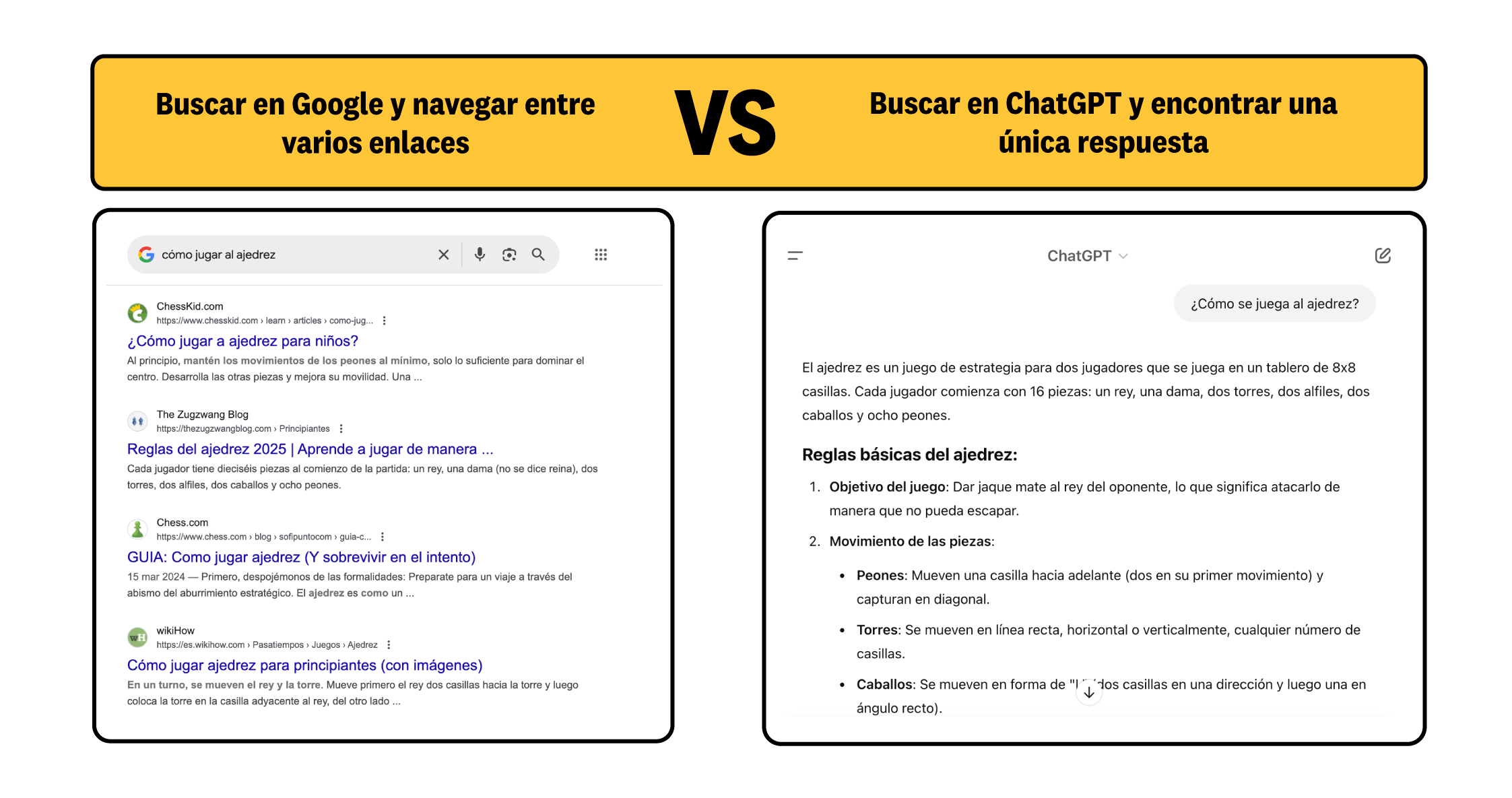
Searches no longer rely solely on links in Google, as tools like ChatGPT, Google Assistant, Siri, and Bing AI offer direct answers without the need to click on a website.
This shift has given rise to Answer Engine Optimization (AEO), a new content optimization strategy aimed at positioning answers within these AI engines.
Adapting to AEO is key to maintaining relevance in a digital ecosystem where clicks on links are no longer the sole indicator of success.
What is Answer Engine Optimization (AEO) and why is it important?
Answer Engine Optimization (AEO) is the process of optimizing content to be selected by answer engines and artificial intelligence assistants.
Unlike traditional SEO, which aims to improve ranking in search results, AEO focuses on providing concise and accurate answers that AI engines can use directly.
Examples of answer engines include Google Assistant, Siri, Alexa, and tools like ChatGPT, Gemini, and Bing AI, which extract information from multiple sources and present it as an immediate response to users.
This has changed the way we consume content: instead of browsing through multiple results, users now expect an instant and accurate response.
Optimizing for AEO means structuring information clearly and reliably so that these engines consider it a priority source. This approach is essential to maintain visibility and relevance in an ever-evolving search ecosystem.
Key Differences Between SEO and AEO
While AEO and SEO share similar goals, there are key differences between the two approaches.
| Feature | Traditional SEO | AEO (Answer Engine Optimization) |
| Main Objective | Rank in search results (SERP) | Appear in answer engines and AI assistants |
| Content Format | Pages optimized with keywords | Concise and structured answers |
| Focus | Optimization to get clicks and web traffic | Providing immediate answers without the need for clicks |
| Key Factors | Backlinks, UX, page optimization, and long content | Structured data, natural language, and answer accuracy |
| Search Medium | Text and some voice searches | Greater use of voice searches and conversational language |
| Success Metric | Position in SERPs and organic traffic | Inclusion in featured answers and direct AI responses |
While traditional SEO remains fundamental for driving traffic to a website, AEO allows content to be referenced and used directly by AI assistants, which influences the perception of a brand or company’s authority.
Will AEO Replace SEO?
AEO does not replace SEO; it complements it.
Although the number of clicks on links may be reduced by the proliferation of direct answers, content optimized for AEO increases brand visibility and credibility.
The key is to combine both strategies to achieve a strong presence in search engines and answer engines.
How Do Answer Engines and AI Assistants Work?
Answer engines use artificial intelligence and natural language processing (NLP) to interpret questions and select precise answers.
Instead of analyzing only keywords, these tools understand the context and search intent to offer the best possible answer.
AI and Natural Language Processing (NLP)
AI models have advanced to the point of being able to interpret the full meaning of a question and select the most relevant information. This means that content must be logically structured, with clear and direct answers.
Sources Used by Answer Engines
AI engines extract information from multiple sources, including knowledge databases, well-structured articles, pages with structured data, and reference content in formats accessible to AI.
Implementing Schema Markup and other data structuring techniques is key for content to be considered by these engines.
7 Strategies to Optimize Content for AEO
Answer Engine Optimization (AEO) requires a different approach than traditional SEO, as, as we have mentioned, answer engines prioritize clear, structured, and precise information.
To improve the chances of content being selected by AI assistants and answer engines, it is essential to apply the following strategies.
1. Create Clear, Concise, and Direct Content
Answer engines select snippets of information that can immediately answer the user’s query. Therefore, the content should:
- Include direct answers in the first paragraph or in a question-answer format within the text
- Avoid long explanations before providing the key information
- Use short paragraphs and simple sentences, optimizing for quick reading
- Include bullet lists to better structure the information
Example:
If someone asks “What is AEO?”, an optimal answer for AEO would be:
✅ “Answer Engine Optimization (AEO) is the process of optimizing content to be selected by answer engines like Google Assistant, Siri, or ChatGPT. It is based on providing concise, precise, and structured answers that AI can easily interpret.”
Instead of:
❌ “Over the years, search engine optimization has evolved, and we are now in an era where answer engines are gaining relevance. In this context, AEO plays an important role because it allows…”
2. Use Question and Answer Format (FAQ Schema)
One of the most effective ways to optimize for AEO is to structure content in a question and answer (FAQ) format. This makes it easier for answer engines to extract information efficiently.
How to Implement It?
- Identify frequently asked questions related to the topic
- Include the answers within the content in a clear and structured format
- Implement structured data (FAQ Schema) on the website to help answer engines recognize them
Example of Questions That Could Improve AEO Optimization:
- How does Answer Engine Optimization work?
- What are the differences between SEO and AEO?
- How to adapt my content for voice searches?
- What are the best practices for optimizing for AI assistants?
3. Implement Structured Data and Schema Markup
The use of structured data is essential for answer engines to better understand the content. Schema Markup allows tagging specific information within the content, increasing the likelihood of being used in direct answers.
The most useful types of structured data markup for AEO include:
- FAQ Schema → For questions and answers.
- How-To Schema → For step-by-step guides.
- Article Schema → For optimized editorial content.
- Speakable Schema → For content suitable for voice searches.
4. Optimize for Voice Searches
More and more users are making queries through voice assistants, which changes the way searches are formulated. To optimize content for voice searches, it is advisable to:
- Use conversational language in the content
- Write answers in a natural and fluid style
- Include terms that people would use in a real conversation (Example: “How to improve my SEO?” instead of “SEO Strategies 2025”).
- Answer questions directly and without unnecessary jargon
5. Improve the Authority and Reliability of Your Content
AI and answer engines prioritize content from reliable sources. To increase the authority of the content:
- Include citations and references to verified sources
- Use internal and external links to relevant content
- Ensure information is up-to-date and aligned with recent trends
- Optimize user experience with a clean design and fast loading times
Google, Bing, and other engines evaluate content authority through the E-E-A-T system (Experience, Expertise, Authoritativeness, Trustworthiness). This means that AI engines will give more priority to sites with:
- Experience in the topic
- Authors with credibility
- Trust signals like certifications or mentions in major media
6. Create Rich Format Content (Lists, Tables, and Featured Paragraphs)
Answer engines often select content with easy-to-process structures, such as:
- Bullet lists (like the one you are reading)
- Comparative tables that summarize information clearly. (like the one I used comparing SEO with AEO)
- Featured paragraphs with key information
Example of Effective Format for Answer Engines:
To optimize your content for answer engines, follow these steps:
- Structure content with clear headings.
- Use questions and answers in your content.
- Implement structured data like FAQ Schema.
- Write in a conversational and direct tone.
- Ensure content comes from reliable sources.
This type of format is more likely to be selected as a featured answer.
7. Measure the Impact of AEO Optimization
Measuring the impact of Answer Engine Optimization (AEO) on answer engines like ChatGPT, Bing AI, Perplexity AI, and other AI assistants is a challenge (as of today), as these platforms do not offer direct traffic metrics like Google Search Console or Bing Webmaster Tools.
However, there are some strategies and indirect methods that can help evaluate if your content is being used or cited by these tools.
One of these manual methods is to perform direct searches in ChatGPT and other AI engines like Perplexity and see if your website appears in the sources.
If your domain appears in the list, it means your content is being considered relevant by the answer engine.
If it does not appear, you may need to adjust the optimization, improve content structure, or implement more structured data (FAQ Schema, How-To Schema, Speakable Schema…).
How to Prepare for the Future of Positioning in Answer Engines with AI?
AEO will continue to evolve with the development of new AI technologies. In the coming years, we will see greater integration of answer engines into everyday life and a reduction in reliance on traditional SERPs.
To stay relevant, you must start structuring your content with clear answers, optimize it for voice searches, and ensure your pages are interpretable by AI engines.
Conclusion
Answer Engine Optimization (AEO) is a natural evolution of SEO and a key strategy to adapt to the new digital ecosystem.
It’s not just about generating traffic, but ensuring that content is referenced by the artificial intelligence tools that millions of people use daily.
To compete in this new landscape, it is essential to structure content clearly, leverage structured data, and adapt to the growing importance of direct answers.
Applying these strategies now can make a difference in digital visibility and authority in the coming years.